What to Buy in Budapest Beyond the Central Market Hall Stalls
Where to find Zsolnay porcelain, Hungarian contemporary design, and edible souvenirs in Budapest that are not mass-market paprika tins from Váci Street.
Budapest Shopping That is Not Paprika in a Tourist Tin
Herend And The Factory Seconds Trap
Buy Herend porcelain at the flagship store on József nádor tér 11 in District V, not from a market hall stall. Herend has been in business since 1826. The Victoria pattern, introduced in 1874 and still in production, costs roughly three times what a market vendor charges for a similar-looking plate. The market version is not Herend. The difference is more than price.
The same logic applies to the ceramics from Pécs. The factory opened in 1853 and developed the eosin glaze, an iridescent metallic reduction finish that looks like liquid copper and gold. You find genuine pieces at Váci utca 19-21, not upstairs at the Central Market Hall. The flagship stores employ staff who can explain the eosin technique and tell you which pieces are current production versus vintage. Walk into either store and tell them what you want to spend. They will show you everything from a 12,000 HUF tea light holder to a serving set costing hundreds of thousands. If the store is sold out or you arrive on a Sunday, the Great Market Hall is closed anyway, so head to the Herend boutique in the Four Seasons Hotel at Roosevelt tér. It has a smaller selection but the same guarantee.
Where Locals Shop for Porcelain and Contemporary Design
Factory Stores And The Flagship Alternative
Hungarian collectors buy Herend and the Pécs ceramics at the factory stores in Herend and Pécs, not in Budapest. You are not driving two hours west. The District V flagships are the only reliable source for first-quality pieces. The József nádor tér store carries Herend's complete catalogue, including the Rothschild pattern with its butterfly and flower motif. The Váci utca store has the largest Budapest selection of eosin-glazed vases and architectural tiles. Both stores process VAT refund forms on the spot. Bring your passport. The minimum per shop per day for a refund in 2026 is HUF 54,001. The VAT rate is 27%, one of the highest in Europe. The refund matters.
Contemporary Design In The Jewish Quarter
Skip the Váci street stalls and Gozsdu Udvar Sunday market. Walk to the Jewish Quarter in District VII and find the working studio spaces on Dob utca and Király utca. These are not galleries with gallery markups. They are workshops where designers print textiles, throw ceramics, and cut leather. Several operate informal front rooms where you can buy direct. The failure case: most studios close by 18:00 and some do not open on Saturday. Go on a weekday afternoon between 14:00 and 17:00. If every studio is dark, walk to the Budapest Design Emporium on Nagymező utca in District VI. It is a collective retail space with a curated selection of Hungarian designers, open until 19:00 daily and Sunday from 10:00 to 18:00. You pay more than at a studio door but less than at a Váci utca souvenir shop that imports half its stock from China.
Markets Where Locals Really Buy Food
The Great Market Hall, Done Right
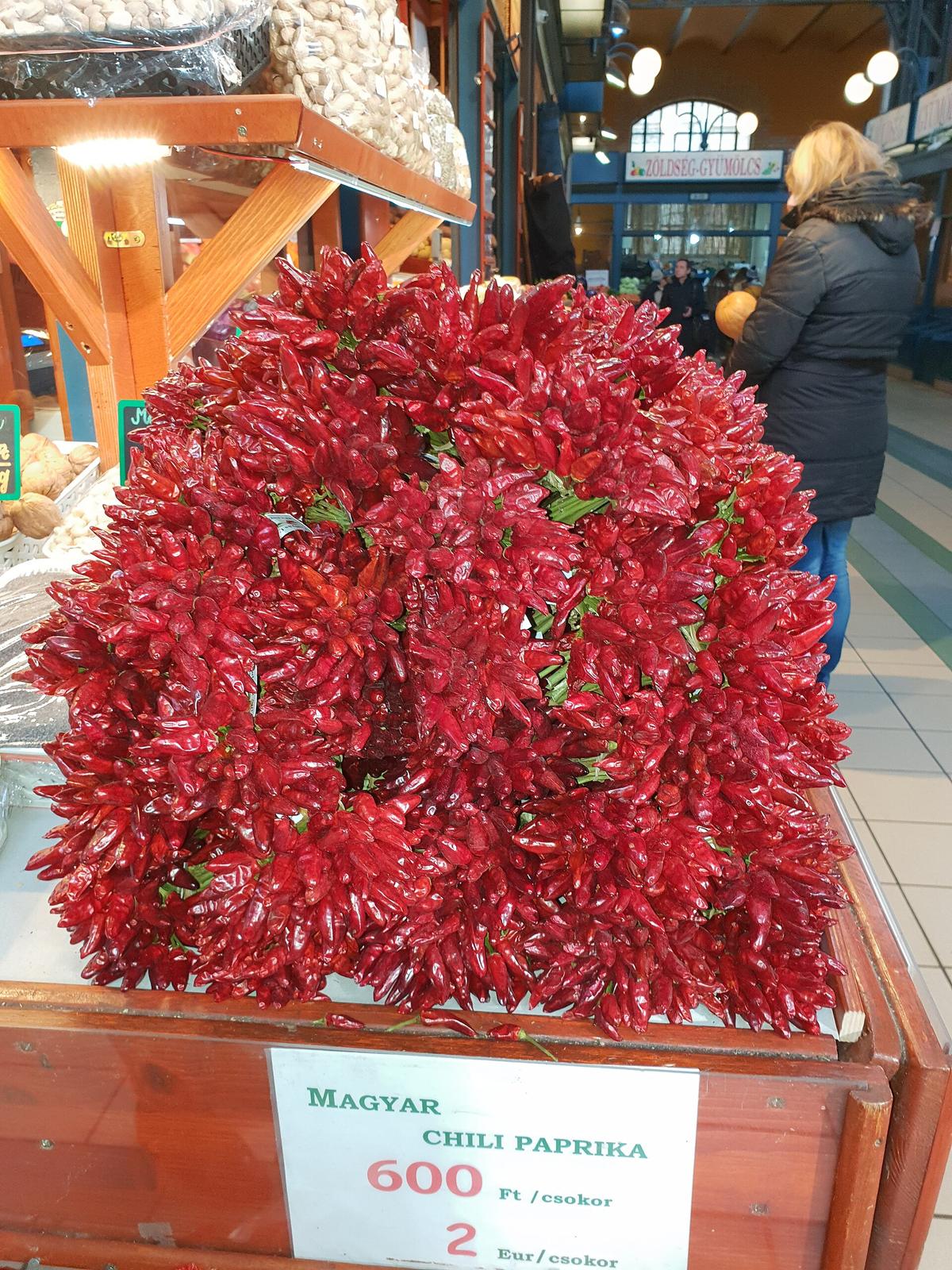
The Great Market Hall ground floor is the genuine fresh produce market. Arrive by 09:00 on a Tuesday, Wednesday, Thursday, or Friday. Go straight to the ground floor and buy your paprika from a vendor selling Kalocsai Fűszerpaprika Zrt. or Szegedi Paprika Zrt. branded bags. These are the two cooperatives that supply most Hungarian kitchens. The unnamed purple and red tins upstairs are for tourists. Buy the bags of genuine rose paprika or noble sweet paprika. The hall opens 06:00 to 18:00 Tuesday through Friday, 06:00 to 15:00 Saturday, and is closed Sunday and Monday. The basement has the fish market and pickled goods, including jars of töltött káposzta ready to heat.
Tokaji Without The Heat Damage
Do not buy Tokaji Aszú from Central Market Hall stalls that keep bottles in warm, sunlit windows. Heat degrades the wine. Go to a dedicated wine shop like Bortársaság at Radnóti Miklós utca 6 in District XIII, or the Tokaji specialist on Váci utca. Tokaji Aszú must have at least 120 grams per liter of residual sugar, a minimum 9% ABV, 18 months aging in wood, and 24 months total aging before release. The old puttonyos system still appears on pre-2014 vintages. Post-2014 bottles label by sugar content alone. Expect to pay 6,000 to 12,000 HUF for a decent entry-level Aszú and 20,000 HUF plus for a five or six puttonyos equivalent. If Bortársaság is closed, the Spar at Nyugati tér carries a usable selection of Tokaji for 3,000 to 5,000 HUF. Do not expect the Spar staff to give you tasting notes.
| Market Hall | Ground Floor | First Floor | Basement | Sunday |
|---|---|---|---|---|
| Great Market Hall (District IX) | Fresh produce, meat, dairy, paprika vendors | Prepared food stalls, souvenir stalls, textiles | Fish market, butcher shops, pickled goods | Closed |
| Lehel Market Hall (District XIII) | Produce, meat, dairy | Clothing, household goods | No basement | Closed |
| Fehérvári úti Market Hall (District XI) | Produce, meat, dairy | Prepared foods, basic household | No basement | Closed |
| Rákóczi tér Market Hall (District VIII) | Produce, meat, dairy | Prepared foods | No basement | Closed |



Edible Souvenirs Beyond the Tin
Paste, Curd Bars, And What The Locals Pack
Real Hungarian paprika paste comes in a tube, not a tin. Look for the brand Piros Arany or Univer, sold at any Spar or at the ground floor of Lehel Market Hall. It tastes nothing like the powdered stuff in the souvenir stalls. The other local essential is Túró Rudi, the chocolate-covered curd cheese bar sold at every Spar. Buy a six-pack at the airport after security. It does not need refrigeration for the flight home.
The Imports: Rose Oil, Pottery, Embroidery
Bulgarian rose oil and Romanian pottery appear in Budapest markets, but the quality varies. The Great Market Hall first floor has stalls selling both. The Bulgarian rose oil sold there is often diluted with jojoba oil. Real Rosa damascena steam-distilled oil from the Rose Valley requires roughly 3,000 to 4,000 kilograms of petals to produce one kilogram of oil. A 10 ml bottle of pure oil costs upward of 20,000 HUF. If you see it for 3,000 HUF, it is not pure. The Romanian pottery is mostly Horezu-style unglazed red pottery, produced in the ceramic centre of Horezu in Maramureș. The Maramureș region also produces the geometric cross-stitch embroidery in red and black thread. The Poltava region of Ukraine does white-on-white embroidery, which occasionally appears at the Rákóczi tér Market Hall. None of these are Hungarian. Buy them if you want them, but know you are paying the Budapest markup for something you could get for half the price at the source.
Common Questions
Can I get a VAT refund if I buy porcelain at the Herend flagship store?
Yes, if you spend at least HUF 54,001 per shop per day in 2026. The Herend and Pécs porcelain flagship stores both process Global Blue and Planet Payment forms. Get the form stamped at Budapest Airport Terminal 2 before security, either in Terminal 2A or 2B. For land routes exiting the EU, get the customs stamp at the border crossing point. Non-EU residents must file the form by the last day of the month following the quarter of purchase. EU residents cannot get a VAT refund for goods taken to another EU country.
Where do Budapest locals buy paprika if not at the Great Market Hall?
At any grocery store. Spar, Tesco, and Auchan carry Kalocsai Fűszerpaprika Zrt. and Szegedi Paprika Zrt. bags. The ground floor of Lehel Market Hall and Fehérvári úti Market Hall also sell these brands. The product inside the bag is identical to what the Great Market Hall ground floor vendors sell. The only difference is you do not get the demonstration.
What is the difference between the Pécs eosin glaze and standard ceramic glaze?
Eosin is an iridescent metallic reduction glaze developed by the factory in the 1890s. The glaze contains metal oxides that shift color depending on the light angle, from deep green to gold to copper. Standard glazes do not have that iridescent effect. Only pieces made in Pécs use the eosin formula. Imitations from other factories use a different chemical process and lose the color shift over time.
Are the souvenir stalls on Váci Street selling Hungarian design?
No. Most goods on Váci Street are imported from China and assembled in Hungary. The embroidered textiles, wooden toys, and painted eggs sold there are not produced in Hungary. The Romanian and Ukrainian crafts that do appear are genuine, but priced for tourists. If you want Hungarian design, go to the District VII studios or the Budapest Design Emporium on Nagymező utca.
Can I buy Tokaji Aszú at the Central Market Hall on a Sunday?
No. The Great Market Hall is closed Sunday. The Lehel, Fehérvári úti, and Rákóczi tér market halls are also closed Sunday. The Bortársaság wine shop on Radnóti Miklós utca is closed Sunday. Your only Sunday option for Tokaji Aszú is a supermarket like Spar at Nyugati tér, which stocks a limited selection of Tokaji from 3,000 to 5,000 HUF. None of it will be aged Aszú; you get dry Furmint or late harvest.
Read next
-

 Budapest Hotels With Thermal Baths, Danube Views and Design Cred
Budapest hotels that deliver real thermal-bath access, Danube panoramas, and design character, from the Gellért's Art Nouveau spa wing to Palace Quarter sleepers.
Budapest Hotels With Thermal Baths, Danube Views and Design Cred
Budapest hotels that deliver real thermal-bath access, Danube panoramas, and design character, from the Gellért's Art Nouveau spa wing to Palace Quarter sleepers.
-
 Where to Stay in Budapest for First-Timers Who Want the Right Vibe
Match your Budapest district to your travel style, from grand Belváros cafes to the ruin-bar hum of Erzsébetváros, with honest notes on noise and hill climbs.
Where to Stay in Budapest for First-Timers Who Want the Right Vibe
Match your Budapest district to your travel style, from grand Belváros cafes to the ruin-bar hum of Erzsébetváros, with honest notes on noise and hill climbs.
-
 Budapest Flights and Airport Transfer Traps to Avoid in 2025
Which budget airlines serve Budapest Ferenc Liszt Airport, how to get from BUD to the centre, and the taxi and bus ticket traps that catch first-timers.
Budapest Flights and Airport Transfer Traps to Avoid in 2025
Which budget airlines serve Budapest Ferenc Liszt Airport, how to get from BUD to the centre, and the taxi and bus ticket traps that catch first-timers.
-
 Budapest Things to Do That Are Not Just the Parliament and a Bath
Go beyond the Parliament and thermal baths with Budapest's nuclear bunker museum, exiled Soviet statues, ruin-bar farmers markets, and City Park boat rides.
Budapest Things to Do That Are Not Just the Parliament and a Bath
Go beyond the Parliament and thermal baths with Budapest's nuclear bunker museum, exiled Soviet statues, ruin-bar farmers markets, and City Park boat rides.
-
 When to Visit Budapest Around the Sziget Crush and the Christmas Markets
Plan Budapest around the Sziget Festival accommodation spike, the August 20 fireworks gridlock, and the F1 squeeze, then find the quiet-season spa mornings.
When to Visit Budapest Around the Sziget Crush and the Christmas Markets
Plan Budapest around the Sziget Festival accommodation spike, the August 20 fireworks gridlock, and the F1 squeeze, then find the quiet-season spa mornings.
-
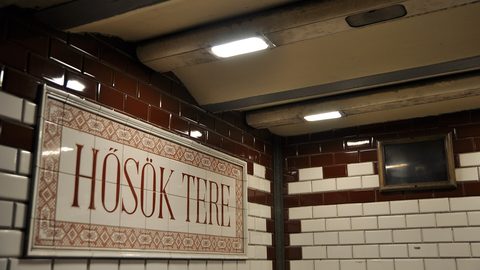 Getting Around Budapest Without Getting a 12000 Forint Fine
Master Budapest's BKK network: validate paper tickets before boarding, use the BudapestGO app offline, and know which metro lines inspectors patrol most.
Getting Around Budapest Without Getting a 12000 Forint Fine
Master Budapest's BKK network: validate paper tickets before boarding, use the BudapestGO app offline, and know which metro lines inspectors patrol most.
-
 Hungary Beyond Budapest: Danube Bend Towns and the Great Plain
Hungary beyond Budapest packs Roman ruins, Baroque riverside towns, and the vast Puszta plain into a country you can cross by train in half a day.
Hungary Beyond Budapest: Danube Bend Towns and the Great Plain
Hungary beyond Budapest packs Roman ruins, Baroque riverside towns, and the vast Puszta plain into a country you can cross by train in half a day.
-
 What Budapest and Central Europe Actually Cost Now, From a Lángos to a Thermal Bath Pass
Budapest still runs at roughly half the cost of Vienna for accommodation, meals, and attractions, but prices have risen sharply in the Jewish Quarter and Castle District.
What Budapest and Central Europe Actually Cost Now, From a Lángos to a Thermal Bath Pass
Budapest still runs at roughly half the cost of Vienna for accommodation, meals, and attractions, but prices have risen sharply in the Jewish Quarter and Castle District.
-
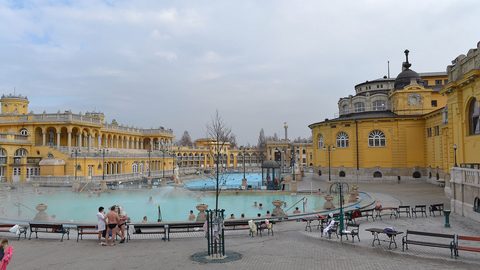 Budapest Thermal Baths Compared Which One and How It Works
Széchenyi, Gellért, Rudas, Király, or Lukács—which Budapest thermal bath fits your trip based on architecture, crowds, gender rules, and local authenticity.
Budapest Thermal Baths Compared Which One and How It Works
Széchenyi, Gellért, Rudas, Király, or Lukács—which Budapest thermal bath fits your trip based on architecture, crowds, gender rules, and local authenticity.