Choosing a Budapest Thermal Bath Széchenyi Gellért Rudas or Király
Széchenyi, Gellért, Rudas, Király, or Lukács—which Budapest thermal bath fits your trip based on architecture, crowds, gender rules, and local authenticity.

You Need to Know This Before Choosing
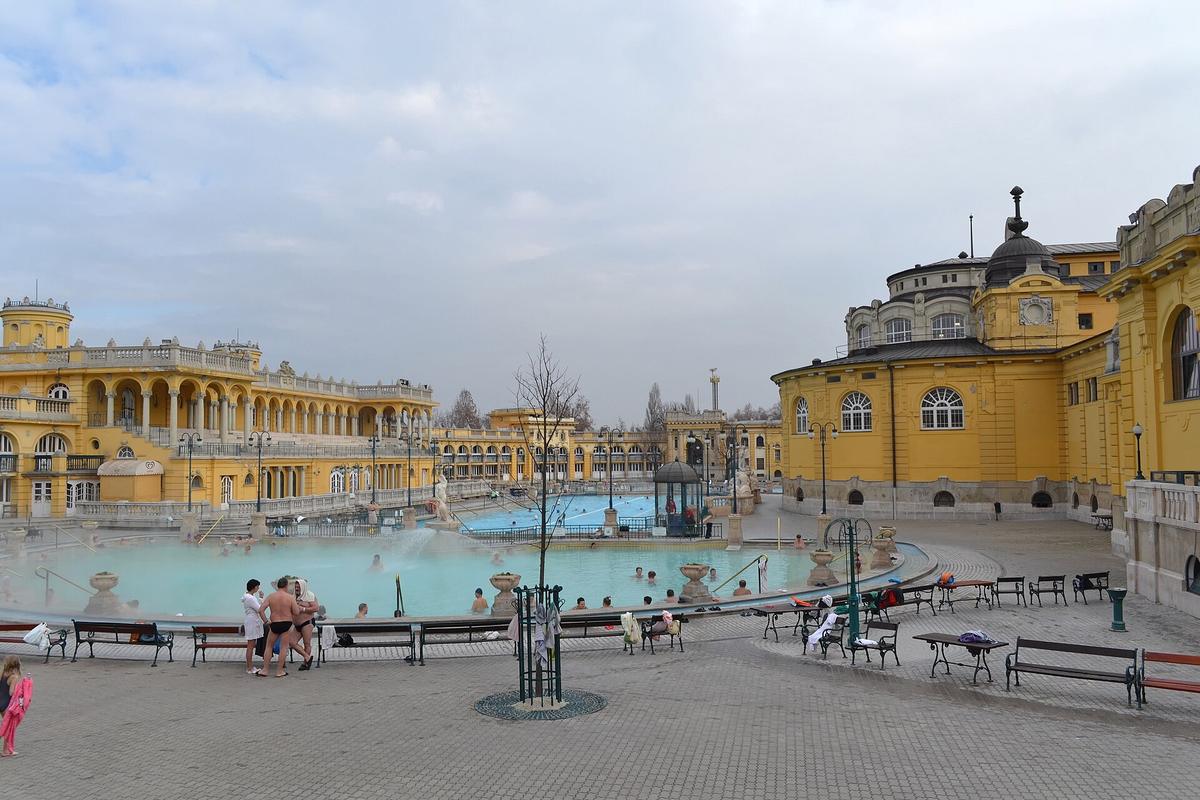
Széchenyi holds 6,000 to 7,000 people on a peak summer Saturday. Király holds 200 to 400. That single range is your decision shortcut. If you want a vast open-air complex where you can swim year round in 18 to 40 °C water and the crowd is part of the spectacle, pick Széchenyi. If you want an intimate 16th century Turkish dome with no outside space, 26 to 40 °C pools, and a chance to soak beside local pensioners rather than stag parties, pick Király. Every other bath in Budapest sits somewhere between those extremes, and your choice depends on four variables: architecture, crowd density, gender segregation rules, and the balance of visitors to locals.
All six baths require you to bring a towel. Rental costs 1,500 to 2,500 HUF at Széchenyi, Gellért, Rudas, and Lukács, plus a deposit of 2,000 to 3,000 HUF or your ID. Swim caps are optional everywhere. Flip flops are not required but strongly recommended; you can buy them on site for 2,000 to 4,000 HUF at the four largest baths. Swimwear rental is available at Széchenyi and Gellért for roughly 2,000 HUF. Bathrobe rental costs roughly 2,500 HUF.
How the Locker and Cabin Process Works
Locker vs Cabin
You buy either a locker ticket or a cabin ticket. A locker ticket gives you access to a shared changing hall with a lockable storage cubicle; you change in the open. A cabin ticket gives you a private lockable changing room assigned to you for your entire visit. The cabin surcharge is 1,000 to 1,500 HUF at every bath. On peak days at Széchenyi and Gellért, cabins sell out. If you arrive at Széchenyi at 10:00 on a Saturday in July and did not book online, you will queue for 40 minutes and probably get a locker only. Book online and select cabin if you value privacy. The single biggest failure case: visitors buy the cheapest ticket without realising the locker hall is communal, then spend 15 minutes wandering confused. You have been told.
Entry and Wristbands
The process is the same at all six baths. Pay at the main counter, receive a wristband with an embedded chip, find your assigned locker or cabin number, tap the band against the sensor to secure and release. Do not lose the wristband. Replacement fee varies but expect 5,000 to 10,000 HUF. Exit the changing area to the pool deck. You can re enter the changing area anytime. Towel rental is usually on the way to the pools, not at the main counter.
Széchenyi Outdoor Spectacle vs Gellért Art Nouveau Hall
Széchenyi Thermal Bath
Three open-air pools and 15 indoor pools, 10 saunas and steam cabins, water from the St. Stephen's Well at 1,246 metres deep, 76 °C at source. The outside pools run year round at 18 to 40 °C, including in snow. The crowd is 80 to 90 percent visitors in peak hours, and the Saturday night SPArty runs from late spring to early autumn with house and EDM music, 1,500 to 2,000 people, full bar service, and tickets from 15,000 to 25,000 HUF in 2026. Minimum age 18. The bath is fully mixed every day. Ticket prices in 2026: weekday with locker 7,800 HUF, weekend or holiday with locker 8,200 HUF, weekday with cabin 8,800 HUF, weekend or holiday with cabin 9,200 HUF. Fast track entry costs an extra 2,000 to 3,000 HUF.
Gellért Thermal Bath
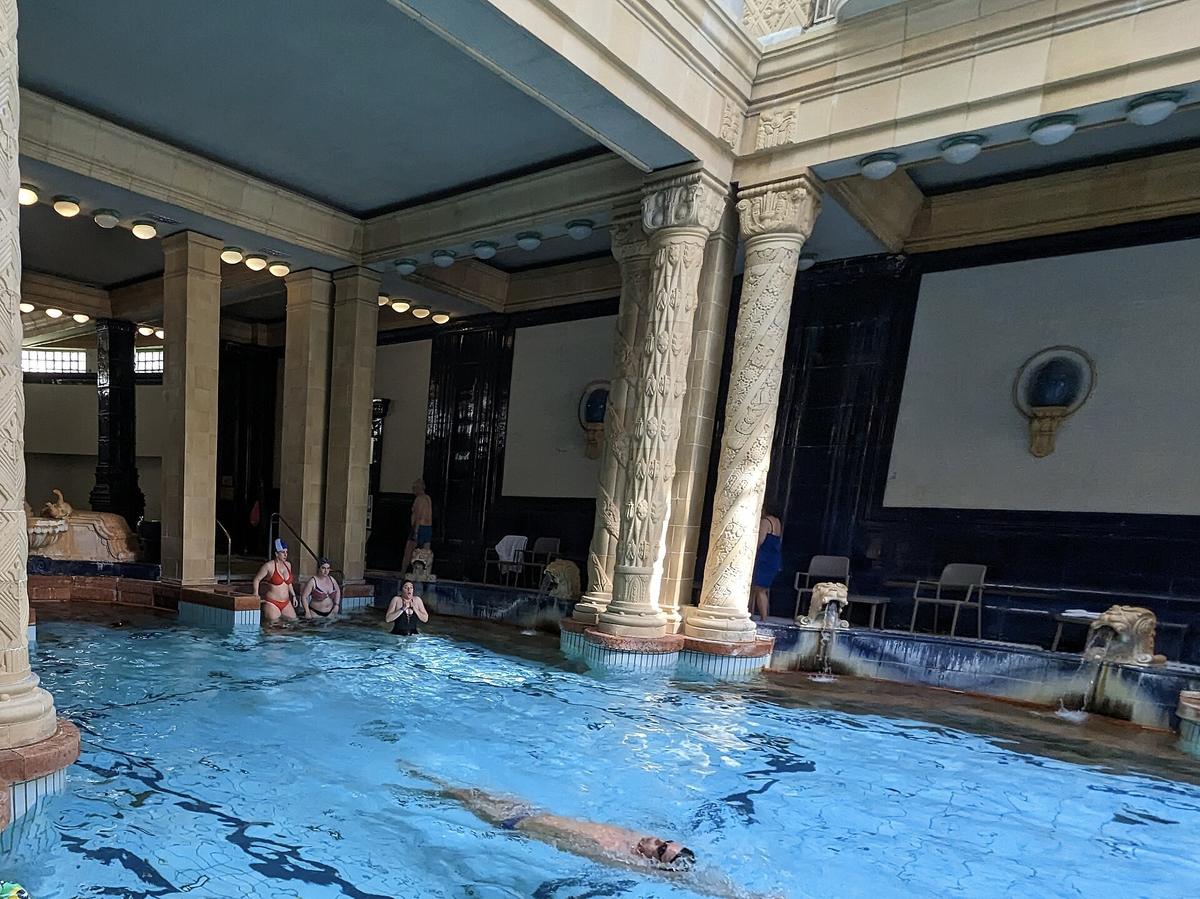
One historic pool hall with a glass roof, 10 indoor pools, two exterior pools including a seasonal wave pool open May to September, plus six saunas and steam cabins. Water temperature range 19 to 40 °C, source from Gellért Hill springs at 43 to 46 °C. Peak summer Saturday crowd is 2,000 to 3,000 visitors, which is busy but rarely at capacity. Arrive before 09:00; by 11:00 the queue reaches the road. Visitors make up 70 to 80 percent of the crowd. The architecture is Art Nouveau with Zsolnay ceramic tiles and coloured glass, the most photogenic interior of any Budapest bath. Fully mixed every day. Ticket prices in 2026 are identical to Széchenyi: weekday with locker 7,800 HUF, weekend or holiday 8,200 HUF, cabin surcharge same.
Rudas Thermal Bath
Six pools in the historic Turkish section plus five in the wellness and sauna world, eight saunas and steam cabins, and one rooftop panorama pool at 36 °C open all year. Water temperature range 10 to 42 °C, source from the Hungária, Juventus, and Attila springs at 21 to 42 °C, containing significant radon. Peak Saturday crowd 800 to 1,200 visitors. The Turkish section is quieter on weekday mornings. The foreign crowd is 40 to 50 percent on mixed days, lower on single sex days, higher on the weekend. The single sex schedule is the most complicated in Budapest: the Turkish section is men only on Monday, Wednesday, Thursday, and Friday during day hours; women only on Tuesday during day hours; mixed on Saturday, Sunday, and all night bathing. Night bathing runs Friday and Saturday from 22:00 to 04:00 for 7,500 HUF. Day ticket in 2026: weekday 6,800 HUF, weekend or holiday 7,500 HUF.
Király Thermal Bath
Four indoor pools under a historic Turkish dome, two saunas and steam cabins, water temperature 26 to 40 °C. No outside pools. Peak Saturday crowd is 200 to 400 visitors. This is the smallest and quietest of the four main baths. Out-of-towners are 30 to 40 percent of visitors; the rest are locals who come for the cheaper price and the calm. Ticket in 2026: weekday 4,800 HUF, weekend or holiday 5,200 HUF. Fully mixed every day. The architecture is pure Ottoman, a low dim dome with star shaped light holes, not the grand Habsburg halls of Széchenyi or Gellért. If you want social silence and mineral water without the visitor infrastructure, this is your pick.
Lukács Thermal Bath
Six indoor pools, three exterior pools, five saunas and steam cabins, water temperature 18 to 40 °C, source from the Lukács springs at 22 to 40 °C. Peak Saturday crowd 1,000 to 1,500 visitors. Foreign guests are only 20 to 30 percent of visitors, the lowest proportion among the big baths. Weekday mornings the crowd is almost entirely local regulars, many with medical prescriptions covered by Hungarian national health insurance. The day hospital on site provides outpatient physiotherapy and balneotherapy, but you cannot access that as a visitor without a Hungarian doctor's referral. Ticket in 2026: weekday with locker 5,500 HUF, weekend or holiday with locker 6,000 HUF, weekday with cabin 6,500 HUF, weekend or holiday with cabin 7,000 HUF. Fully mixed every day. The architecture is functional and unremarkable; you come for the local atmosphere and the price, not the beauty.
Veli Bej Thermal Bath
Five indoor pools under a historic Turkish dome, three saunas, water temperature 20 to 40 °C. No outside pools. Peak Saturday crowd 150 to 300 visitors, capacity strictly limited. Day-trippers are 20 to 30 percent. Ticket in 2026: 5,500 HUF. Fully mixed every day. Veli Bej is the smallest and least known bath on this list. It sits near the Buda end of Margaret Bridge. If Király is quiet, Veli Bej is a whisper. You go here when all other baths are crowded or you specifically want an uncrowded Ottoman dome with no queue.

Read next
-
 Budapest Hotels With Thermal Baths, Danube Views and Design Cred
Budapest hotels that deliver real thermal-bath access, Danube panoramas, and design character, from the Gellért's Art Nouveau spa wing to Palace Quarter sleepers.
Budapest Hotels With Thermal Baths, Danube Views and Design Cred
Budapest hotels that deliver real thermal-bath access, Danube panoramas, and design character, from the Gellért's Art Nouveau spa wing to Palace Quarter sleepers.
-
 Where to Stay in Budapest for First-Timers Who Want the Right Vibe
Match your Budapest district to your travel style, from grand Belváros cafes to the ruin-bar hum of Erzsébetváros, with honest notes on noise and hill climbs.
Where to Stay in Budapest for First-Timers Who Want the Right Vibe
Match your Budapest district to your travel style, from grand Belváros cafes to the ruin-bar hum of Erzsébetváros, with honest notes on noise and hill climbs.
-
 Budapest Flights and Airport Transfer Traps to Avoid in 2025
Which budget airlines serve Budapest Ferenc Liszt Airport, how to get from BUD to the centre, and the taxi and bus ticket traps that catch first-timers.
Budapest Flights and Airport Transfer Traps to Avoid in 2025
Which budget airlines serve Budapest Ferenc Liszt Airport, how to get from BUD to the centre, and the taxi and bus ticket traps that catch first-timers.
-
 Budapest Things to Do That Are Not Just the Parliament and a Bath
Go beyond the Parliament and thermal baths with Budapest's nuclear bunker museum, exiled Soviet statues, ruin-bar farmers markets, and City Park boat rides.
Budapest Things to Do That Are Not Just the Parliament and a Bath
Go beyond the Parliament and thermal baths with Budapest's nuclear bunker museum, exiled Soviet statues, ruin-bar farmers markets, and City Park boat rides.
-
 When to Visit Budapest Around the Sziget Crush and the Christmas Markets
Plan Budapest around the Sziget Festival accommodation spike, the August 20 fireworks gridlock, and the F1 squeeze, then find the quiet-season spa mornings.
When to Visit Budapest Around the Sziget Crush and the Christmas Markets
Plan Budapest around the Sziget Festival accommodation spike, the August 20 fireworks gridlock, and the F1 squeeze, then find the quiet-season spa mornings.
-
 Getting Around Budapest Without Getting a 12000 Forint Fine
Master Budapest's BKK network: validate paper tickets before boarding, use the BudapestGO app offline, and know which metro lines inspectors patrol most.
Getting Around Budapest Without Getting a 12000 Forint Fine
Master Budapest's BKK network: validate paper tickets before boarding, use the BudapestGO app offline, and know which metro lines inspectors patrol most.
-
 Hungary Beyond Budapest: Danube Bend Towns and the Great Plain
Hungary beyond Budapest packs Roman ruins, Baroque riverside towns, and the vast Puszta plain into a country you can cross by train in half a day.
Hungary Beyond Budapest: Danube Bend Towns and the Great Plain
Hungary beyond Budapest packs Roman ruins, Baroque riverside towns, and the vast Puszta plain into a country you can cross by train in half a day.
-
 What Budapest and Central Europe Actually Cost Now, From a Lángos to a Thermal Bath Pass
Budapest still runs at roughly half the cost of Vienna for accommodation, meals, and attractions, but prices have risen sharply in the Jewish Quarter and Castle District.
What Budapest and Central Europe Actually Cost Now, From a Lángos to a Thermal Bath Pass
Budapest still runs at roughly half the cost of Vienna for accommodation, meals, and attractions, but prices have risen sharply in the Jewish Quarter and Castle District.
-
 What Budapest Ruin Bars Are Like Now and Which Ones Still Matter
Budapest's ruin bars evolved from squatted courtyards into a global nightlife brand. Here is what remains worth your evening in the Jewish Quarter and what to skip.
What Budapest Ruin Bars Are Like Now and Which Ones Still Matter
Budapest's ruin bars evolved from squatted courtyards into a global nightlife brand. Here is what remains worth your evening in the Jewish Quarter and what to skip.