Ukraine: The Reality of Visiting During War and the Lviv That Will Return
Ukraine travel now demands clear-eyed awareness of the war, but Lviv's Habsburg streets and coffee-house culture endure as a city worth planning for.
- Flag
-
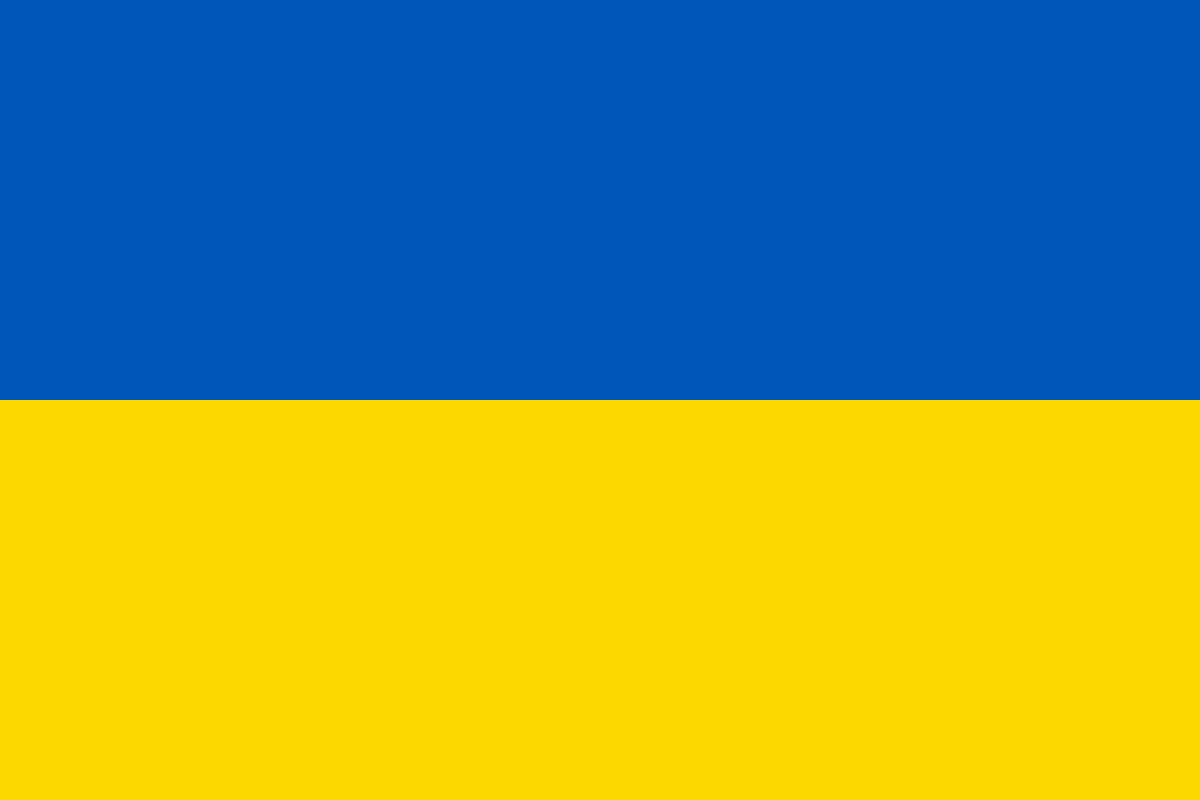
- ISO code
- UA
- Population
- 40,000,000
- Currency
- UAH
- Dial code
- +380
Ukraine Travel Advisory: What the Warnings Actually Say Today
The UK Foreign, Commonwealth and Development Office, as of August 2026, advises against all travel to parts of Ukraine and against all but essential travel to the rest of the country. The US State Department assigns a Level 4 Do Not Travel rating across the entire nation. Civil aviation has been closed since February 2022. You cannot fly into Ukraine. Every traveller who does enter must cross one of the eight road or six rail border crossings from Poland, the three road and one rail crossing from Slovakia, or the five road and one rail crossing from Hungary. You must register with the Ukrainian government upon entry for the long-stay period allowed under martial law. The nationwide Air Alert mobile app and regional sirens are not theoretical warnings. They are the system you will experience if you are in the country. You need to know exactly what to do when that alert sounds: move immediately to the nearest shelter, stay there until the all-clear, and do not assume a distant explosion is safe. This is not a trip for spontaneous travel. This is a trip for people who have a concrete, necessary reason to be in Ukraine, who have security protocols in place, and who understand that the situation can change in hours.
Western Ukraine remains the region most accessible by land from the European Union. Lviv sits roughly 70 kilometres from the Polish border. Reach it via the Medyka-Shehyni crossing in about ninety minutes from the Polish city of Przemyśl. The rail journey from Przemyśl to Lviv takes between two and three hours depending on border procedures. Ukrzaliznytsia, the national railway operator, runs passenger services throughout the country, including overnight long-distance trains. The Kyiv to Lviv journey takes between five and a half and seven hours by train. The Kyiv to Warsaw route runs fifteen to eighteen hours. These services stay operational. What varies is the atmosphere on board, the frequency of checks, and the mood at border control. Western Ukraine is not the front line. It is also not peacetime. Air raid alerts happen. Curfews apply. You need a plan for each.

Lviv Now: the City That Travel Advisory Mentions in Its Exception
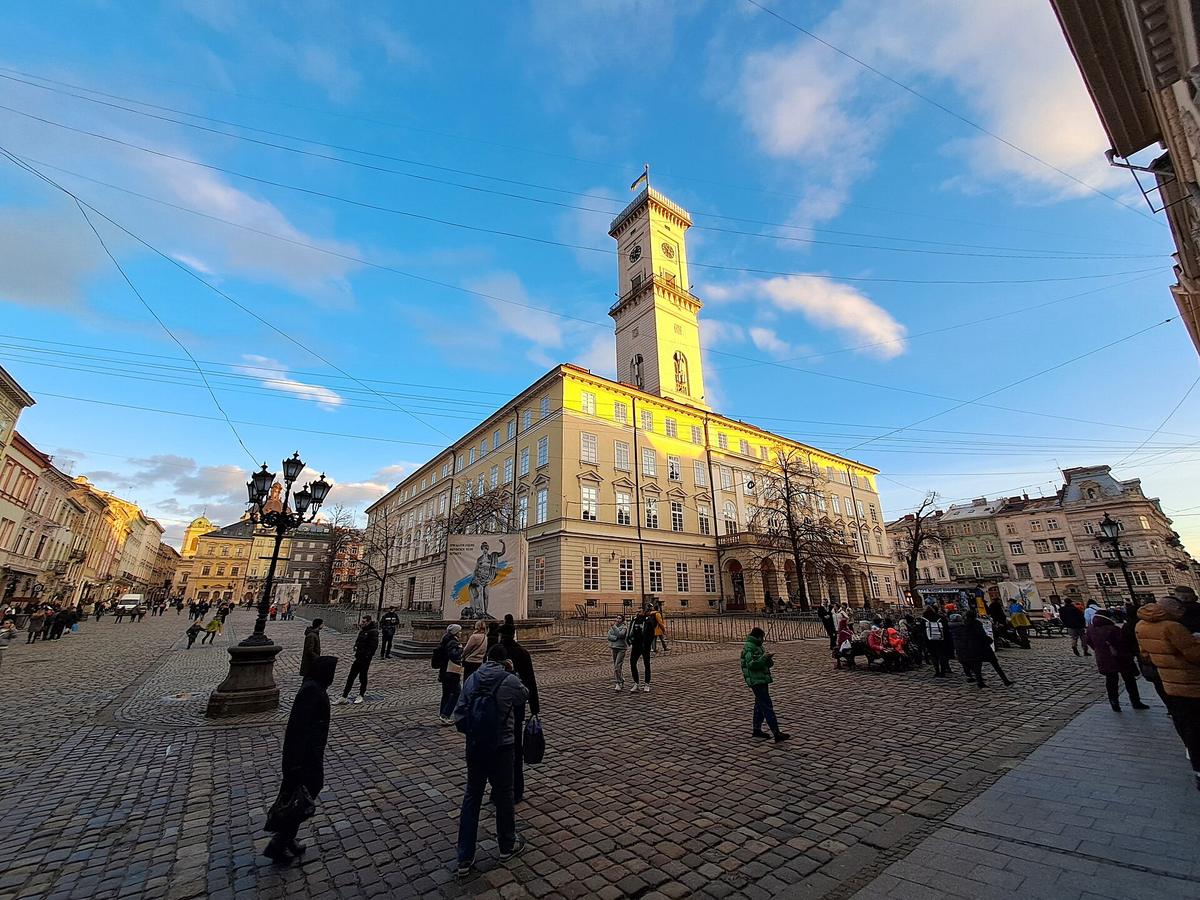
Lviv has a population of 717,273 people as of the 2022 estimate from the State Statistics Service of Ukraine. That number is down from pre-war levels but the city functions. Trams run. Cafes serve coffee. Universities hold classes. The Opera House hosts performances. The difference is the rhythm. The day starts later because curfew lifts around dawn. The evening ends earlier because you need to be indoors before the curfew begins. Pay for nearly everything in Ukrainian hryvnia cash. Card acceptance exists in the city centre but cash is required for taxis, market stalls, and rural transport. The exchange rate sits at roughly 41 to 42 hryvnia per US dollar, set by the National Bank of Ukraine daily fixing, but that figure moves. Check the rate on the day you cross the border. Your spending lands predominantly in the local private sector: accommodation, food, guides, transport. State revenue comes through the 20 per cent VAT and railway tickets. That matters because your presence has a direct economic effect on people who are managing a war economy.
What You See When You Walk the Centre
The architecture has not changed. Lviv is a Habsburg city, not a Soviet one. The core was built when this was Lemberg, the capital of the Kingdom of Galicia and Lodomeria within the Austro-Hungarian Empire. The Market Square, Rynok, is ringed by townhouses from the 16th and 17th centuries, but the real visual signature is the later Austro-Hungarian layer: the Opera House, a Viennese Secessionist gem that opened in 1900, the Potocki Palace on Copernicus Street, the grand boulevard of Svobody Avenue. You see this fabric immediately. The streets are cobbled in the centre. The facades are painted in pistachio, ochre, and cream. The courtyards are deep and shadowed. Lviv was the easternmost outpost of the Habsburg world, and that identity is written into every cornice and balcony. The Soviet period added grey concrete blocks on the periphery but never managed to dominate the centre. That architectural continuity is why Lviv will matter when tourism returns.
What To Do Now If You Go
Visit the Lviv National Art Gallery. Walk the city walls at the High Castle for the panorama. Eat at the Baczewski restaurant, which dates to the 18th century and was re-established after independence. Attend a performance at the Solomiya Krushelnytska Opera House, which operates on a reduced schedule but still stages events. Use the Lviv-Kyiv train for overnight travel. Book a first-class sleeper cabin through the Ukrzaliznytsia app well in advance. Book accommodation with a basement shelter. Confirm the nearest shelter to any restaurant or cafe you plan to visit. Download the Air Alert app before you cross the border and test that it works. Do not treat the app as optional. It is the single most important tool you carry.
The Coffee House Tradition and Lviv as Ukraine’s Cultural Redoubt
Lviv claims to be the city where coffee was first brewed in Ukraine. The story goes that the first coffee house opened in the 1680s, a claim that is disputed but widely believed and that tells you something about how the city sees itself. The coffee house culture here is not a tourist imitation. It is a social institution that survived Soviet suppression and the war. A true Lviv coffee house, the kind that has operated for decades or centuries, serves coffee on a tray with a glass of water and a small pastry. The business is slow. The furniture is worn. The customers argue about politics, literature, and football. The two names you will hear most often are Svit Kavy on Svobody Avenue, which is the most polished of the traditional cafes, and The Coffee Manufacture on Ukrainian Street, which roasts its beans on site. The city has a Coffee Museum on Rynok Square, but the museums are less important than the habit. You go to a coffee house in Lviv to sit. That is the ritual. You sit, you drink, you read, you talk. The war has made that ritual more deliberate, not less.
The City as a Cultural Redoubt
Lviv is also Ukraine's cultural redoubt because it has been, for centuries, the place where Ukrainian language, literature, and national identity were preserved when they were suppressed elsewhere. Under Austrian rule, Lviv was relatively tolerant. Under Soviet rule, it was not, but the city's position at the western edge of the USSR meant that nationalist and dissident movements could maintain contact with the diaspora and with Polish and Czech intellectual currents. The Shevchenko Prosvita Society, the Ukrainian Catholic University, the Ivan Franko National University. These institutions anchored Ukrainian culture when Kyiv was under tighter control. That role continues today. Lviv has become the primary hub for internally displaced people from the east and south. It hosts displaced universities, relocated businesses, and cultural organisations that moved west. The city is not a museum of a lost world. It is the working capital of Ukrainian civil society under war conditions.

What Lviv Will Offer When Tourism Returns and Why You Should Wait Well
When the airspace reopens and the advisory level drops, Lviv will still be the same city, just without the curfew and the sirens. The coffee houses will still be there. The Opera House will stage full seasons. The streets will fill with visitors again. That is when you should go for a normal holiday. The city is not going anywhere. Lviv survived the partitions of Poland, the Habsburg collapse, two world wars, Soviet occupation, and now this war. A delayed visit is not a missed visit. It is the correct response to the current conditions.
What a Two-Day Visit Covers
What you will find when you come is a compact walkable centre that you can cover on foot in two full days. You do not need more than that for the core landmarks. The Latin Cathedral, the Armenian Cathedral, the Dominican Church, the Bernardine Monastery, the Pharmacy Museum, the Lviv Brewery Museum, the Shevchenko Park open air museum of folk architecture. These are all within a two kilometre radius of Rynok Square. The city is not large. Its density is its strength.
The Food and the Jewish Quarter
You will also find a food scene that draws on Galician and Jewish traditions. Lviv is the home of the pampushka, a garlic bread roll served with borscht. It is the city where you eat varenyky, boiled dumplings filled with potato, cheese, or sour cherries. It is where you drink kvas, a fermented rye beverage, and where you finish a meal with a slice of Lviv cheesecake. The Jewish Quarter, around the Staroyevreiska Street and the former synagogue, was once a centre of Jewish life in Eastern Europe. The war and the Holocaust eliminated that community. The buildings remain. The story is not told in a single museum but in the empty spaces and the memorial plaques. That history will be part of your visit.
Regions & cities in Ukraine
Common Questions
Is it legal to travel to Ukraine right now?
Yes. The FCDO advises against all travel to parts of Ukraine and against all but essential travel to the rest. The US State Department assigns Level 4 Do Not Travel. These are advisories, not legal prohibitions. You can enter Ukraine from Poland, Slovakia, or Hungary via the open land border crossings. You must hold a valid passport, have a reason for entry that satisfies border officials, and register with Ukrainian authorities under martial law. Your travel insurance will almost certainly be void. You assume all risk.
How do I get to Lviv without flying?
Fly into Kraków, Warsaw, or Rzeszów in Poland, or Budapest in Hungary. From Poland, take the train from Przemyśl to Lviv. The journey takes two to three hours depending on border procedures. From Hungary, cross at Záhony-Chop and then take the Ukrzaliznytsia train north. The railway is operational. You cannot use the airport in Lviv. Civil aviation remains closed.
What is the security situation in Lviv specifically?
Lviv is the safest major city in Ukraine relative to the front line, but that safety is relative. Air raid alerts happen. They are not rare. You must use the Air Alert app and follow instructions. The curfew varies but runs from midnight to 5 a.m. You cannot walk on the street during curfew. Military checkpoints operate at the city limits. The atmosphere is tense but functional.
What should I budget for a trip to Lviv?
Cash. The exchange rate fluctuates but the 2024 rate published by the National Bank of Ukraine was approximately 41 to 42 hryvnia per US dollar. Budget for a coffee at 50 to 80 hryvnia, and a private room in a guesthouse near the centre at 1,500 to 2,500 hryvnia per night. Bring euros or dollars to exchange. ATMs work in the city centre but are unreliable.
When will tourism return to normal in Lviv?
No one can predict that. The preconditions are an end to hostilities, the reopening of Lviv's civil aviation, and the downgrading of travel advisories from Level 4 and equivalent. The city itself is ready. Its infrastructure, its hospitality sector, and its cultural institutions are intact and operating. The question is not whether Lviv will be a tourism destination again. The question is when the conditions allow it. Wait for that date rather than forcing a visit now.
Read next
-
 Lviv
Lviv carries the Habsburg imprint in its cobbled streets and coffee houses, and the train from Budapest still runs, though the journey now carries different weight.
Lviv
Lviv carries the Habsburg imprint in its cobbled streets and coffee houses, and the train from Budapest still runs, though the journey now carries different weight.
-
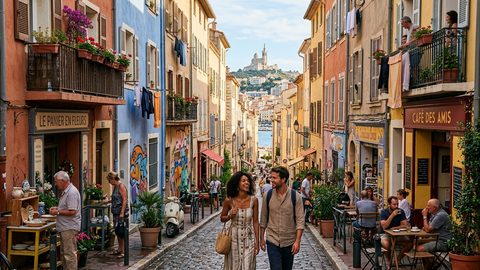 A Week in Marseille Beyond the Vieux-Port — Neighborhoods Worth Knowing
Most visitors never leave the harbor. This guide covers four Marseille neighborhoods worth a week of your time, with real prices from spring 2024.
A Week in Marseille Beyond the Vieux-Port — Neighborhoods Worth Knowing
Most visitors never leave the harbor. This guide covers four Marseille neighborhoods worth a week of your time, with real prices from spring 2024.
-
 Albania by Furgon and Coastal Ferry for Independent Travelers
A practical overland guide to Albania by local furgon and Adriatic ferry — real logistics on stations, small-town accommodation, and staying connected.
Albania by Furgon and Coastal Ferry for Independent Travelers
A practical overland guide to Albania by local furgon and Adriatic ferry — real logistics on stations, small-town accommodation, and staying connected.