Hungary: The Danube Bend, the Puszta, and What Lies East of the Capital
Hungary beyond Budapest packs Roman ruins, Baroque riverside towns, and the vast Puszta plain into a country you can cross by train in half a day.
- Flag
-

- ISO code
- HU
- Population
- 9,768,785
- Currency
- HUF
- Dial code
- +36
Hungary’s Compact Geography Packs Roman Ruins, Ottoman Minarets, and a Great Plain into Under Two Hours by Train
You land in Budapest, book three nights, and pack the itinerary with Parliament, the baths, and a ruin bar crawl. That is a good city trip. It is not a good Hungary trip. The country is compact. Its variety is severe. Roman ruins sit a train ride from Ottoman minarets. Baroque river towns and a vast steppe-like plain lie within reach. The mistake is treating the country as Budapest plus a rushed afternoon in Szentendre. East of the capital, along the Danube Bend, and across the Great Plain, every stop sits under two hours by train.
The Danube Bend: Three Towns That Each Tell a Different Story
Szentendre: Serbian Baroque from Batthyány Tér
The H5 suburban train from Batthyány tér delivers you to Szentendre in 40 minutes. This town was settled by Serbian and Dalmatian refugees in the 17th century, and the baroque Orthodox churches and pastel merchants' houses along its cobbled main square come from that period. Skip the Marzipan Museum unless you travel with a child. Prioritise the Open-Air Ethnographic Museum, called Skanzen, 15 minutes by local bus from the centre. It replays rural Hungarian life across several centuries. Budget a full morning there.Visegrád: The Citadel That Controlled the Danube Trade
Visegrád is 40 km north of Budapest. Take a train from Nyugati station to Nagymaros-Visegrád, then a ferry across the river. The reward is a 13th-century hilltop citadel whose walls gave Hungary's kings control of the Danube bend. The panorama from the fortress ramparts is the most photographed view in the region. The reconstructed Royal Palace below, where King Matthias Corvinus held court in the 15th century, is worth an hour but not more. The citadel and palace can be covered in a half day. The walk up the hill is steep. Arrive by 09:00 to avoid the midday heat in summer.Esztergom: Hungary's Largest Basilica and Its Oldest City
Esztergom lies 50 km northwest of Budapest, one hour by train from Nyugati. It is Hungary's oldest city, founded around 972. The basilica, completed in 1869, is the largest church in the country: 100 metres high, a dome 33.5 metres in diameter. Inside, the Bakócz Chapel, a red-marble Italian Renaissance structure that survived Ottoman rule, pre-dates the main building by three centuries. The Christian Museum holds a strong collection of Hungarian and Central European religious art. You can see the basilica and the museum in four hours, then take the late afternoon train back. Do not try to combine all three Danube Bend towns in one day. Pick two. Esztergom and Visegrád pair best if you want scale and history. Szentendre stands alone as a morning trip for anyone with a casual interest in art and architecture.
.jpg)
Eger, Pécs, and the Great Plain: What Lies Beyond the Bend
Eger: Castle, Wine Cellars, and a Northern Minaret
Eger is 130 km east-northeast of Budapest. A direct InterCity from Keleti station takes about 1 hour 50 minutes. The castle's 1552 siege against the Ottomans is a national legend. The minaret that survives from the occupation is the northernmost Ottoman minaret in Europe, standing 40 metres tall. After the history, walk to the Valley of the Beautiful Women, where over 200 wine cellars are carved into volcanic tuff. Buy a glass of Egri Bikavér, the red blend marketed internationally as Bull's Blood, and a bottle of Egri Csillag white. Book a cellar tour at least one day ahead in peak season. The valley gets crowded with groups from mid-morning onwards. The baroque city centre between the castle and the basilica can be walked in an hour. Eger is a full-day trip from Budapest, not a half-day sprint. If you want to stay overnight, the wine district justifies a full weekend.Pécs: Roman Tombs, a Converted Mosque, and the Sunniest Climate
Pécs sits 200 km southwest, 2 hours 30 minutes by InterCity from Déli or Keleti. It has a sub-Mediterranean microclimate and the highest annual sunshine hours in Hungary. The Early Christian Necropolis, a UNESCO World Heritage site inscribed in 2000, contains 4th-century tomb chambers with intact frescoes hidden beneath a modern city square. The Gázi Kászim Pasha Mosque, built in the 16th century, now functions as a Catholic church with a crescent still visible below the cross. The Zsolnay Cultural Quarter, built around the city's signature ceramic factory, is a quieter alternative to the cathedral district. Pécs is the best overnight destination outside Budapest if you want architecture layers from Roman to Ottoman to Art Nouveau in a single afternoon.The Great Plain and the Puszta
Hungary's Great Plain, the Puszta, stretches east of the Danube. It is not a single town but a landscape: flat, dry, and dotted with farmsteads and herons. The most practical access is through Debrecen or Szeged, each about 2 hours 20 minutes by train from Budapest. You go here for the space and the pace, not for monuments. The Hortobágy National Park, a steppe region and UNESCO World Heritage site, is best visited on a guided tour from Debrecen unless you have your own car. Horse shows and carriage rides operate between April and October. If you have only three days in Hungary, skip the Great Plain and spend that day on the Danube Bend or Lake Balaton instead.Lake Balaton: Hungary’s Inland Sea is Not a Beach Holiday
Which Shore Suits You
Lake Balaton stretches 77 km and averages just 3.2 metres deep. The south shore, anchored by Siófok, offers shallow sandy beaches and family-friendly resorts. The north shore is steeper, with volcanic hills, wine terraces, and historic towns like Tihany and Keszthely. Tihany's Benedictine Abbey, founded in 1055, is the burial place of King Andrew I. The surrounding lavender fields bloom in June. Balatonfüred, the oldest spa town on the lake, has a lakeside promenade called Tagore Promenade and an annual ball dating to 1825. The water temperature in July and August reaches 24 to 28 degrees Celsius. The lake is not a swimming destination comparable to the Mediterranean. It is a place for cycling, winery visits, and a slower version of Hungarian life. Train times from Déli station: Siófok in 1 hour 10 minutes, Balatonfüred in 1 hour 50 minutes, Keszthely in about 2 hours 30 minutes.Hévíz and the Spa Towns
Six kilometres from Keszthely lies Hévíz, home to the world's largest biologically active thermal lake. The water temperature stays between 24 and 36 degrees Celsius year-round. It is a medical and wellness destination, not a party town. Other thermal spa towns outside Budapest include Bükfürdő, Sárvár, Zalakaros, Gyula, Egerszalók, and Miskolctapolca. The Cave Bath at Miskolctapolca sits inside a natural limestone cave. Egerszalók's salt hill is a travertine formation created by water at 65 to 68 degrees Celsius. If your interest is thermal soaking as a daily practice, pick one of these towns and budget two nights. Do not attempt Hévíz as a day trip from Budapest. The round-trip travel time eats five hours.| Destination | Distance | Train/HÉV Line | Travel Time |
|---|---|---|---|
| Szentendre | 20 km | HÉV H5 from Batthyány tér | 40 min |
| Visegrád | 40 km | Train to Nagymaros-Visegrád + ferry | 40–60 min |
| Esztergom | 50 km | Train from Nyugati | 1 h 20 min |
| Eger | 130 km | InterCity from Keleti | 1 h 50 min |
| Pécs | 200 km | InterCity from Déli or Keleti | 2 h 30 min |
| Siófok (Lake Balaton) | Unknown | Train from Déli | 1 h 10 min |
| Balatonfüred (Lake Balaton) | Unknown | Train from Déli | 1 h 50 min |
.jpg)
Who Should Explore Beyond Budapest and Who Should Stay Put
Hungary beyond Budapest is for the traveller who wants Roman tomb chambers, Ottoman minarets, and volcanic wine cellars without spending half their holiday on a bus. It is for history buffs who appreciate that Hungary's layers sit on top of each other in a way that Budapest alone cannot replicate. It is not for the person with three days total and no interest in moving hotels. It is not for the luxury-first visitor who wants white-glove service and fine dining outside the capital. The high-end scene in towns like Eger and Pécs is limited compared to Budapest. And it is not for the traveller with severe mobility issues: the Danube Bend towns involve cobbled hills, the Esztergom Basilica requires stairs, and the railway stations often lack lifts. If that sounds like you, stay in Budapest, book a thermal bath, and take the 40-minute HÉV to Szentendre as your single excursion. The rest of Hungary will still be here next time.
Regions & cities in Hungary
Common Questions
How many days should I spend outside Budapest?
A minimum of two full days: one for the Danube Bend towns of Visegrád and Esztergom, one for either Lake Balaton or Eger. If you have four days total, add Pécs or an overnight in the Great Plain.
Do I need a car to explore rural Hungary?
No. Public trains and HÉV lines cover every destination listed here. A car helps only for wine villages like Etyek and for reaching the Hortobágy steppe without a tour. Trains are cheaper and avoid parking headaches in towns like Visegrád.
Is Lake Balaton worth it in late summer?
Yes, if you want swimming. The water peaks at 24 to 28 degrees Celsius in July and August. Avoid the first two weeks of August if you dislike crowds; that is the European school holiday window. September is quieter, but the water is still 20 degrees.
Can I stay in a thermal spa town overnight?
Yes. Hévíz, Egerszalók, Miskolctapolca, and Zalakaros all have hotels with direct bath access. Book at least two months ahead for summer weekends. The weekday rates at Hévíz are roughly half the weekend price, and the lake is less crowded.
Read next
-
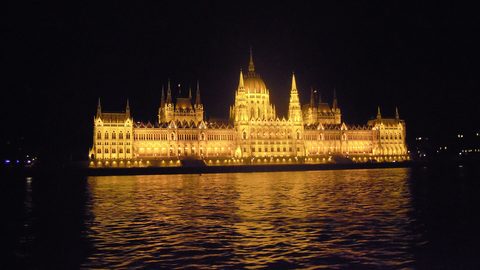 Budapest
 delivers grand Habsburg architecture and a kinetic ruin-bar scene, but first-timers often underestimate its sheer scale and the steep hills of Buda.
Budapest
Budapest delivers grand Habsburg architecture and a kinetic ruin-bar scene, but first-timers often underestimate its sheer scale and the steep hills of Buda.
-
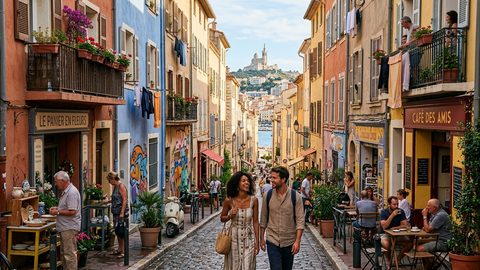 A Week in Marseille Beyond the Vieux-Port — Neighborhoods Worth Knowing
Most visitors never leave the harbor. This guide covers four Marseille neighborhoods worth a week of your time, with real prices from spring 2024.
A Week in Marseille Beyond the Vieux-Port — Neighborhoods Worth Knowing
Most visitors never leave the harbor. This guide covers four Marseille neighborhoods worth a week of your time, with real prices from spring 2024.
-
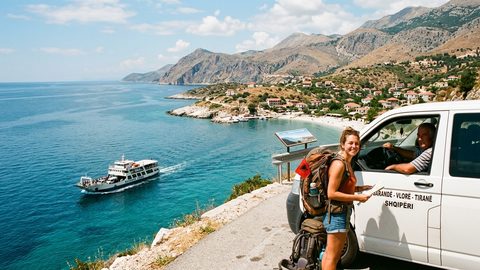 Albania by Furgon and Coastal Ferry for Independent Travelers
A practical overland guide to Albania by local furgon and Adriatic ferry — real logistics on stations, small-town accommodation, and staying connected.
Albania by Furgon and Coastal Ferry for Independent Travelers
A practical overland guide to Albania by local furgon and Adriatic ferry — real logistics on stations, small-town accommodation, and staying connected.