Verona, Where the Arena Still Works and Juliet's Balcony Is a 1930s Invention
Verona's Roman arena still fills with opera audiences each summer, and the Juliet balcony is a 1930s addition to a medieval house that never belonged to the Capulets.
- Flag
-

- ISO code
- IT
- Population
- 258,031
- Currency
- EUR
- Timezone
- Europe/Rome
The Arena Fills at 21:00, and the Stone Steps Are Still Roman
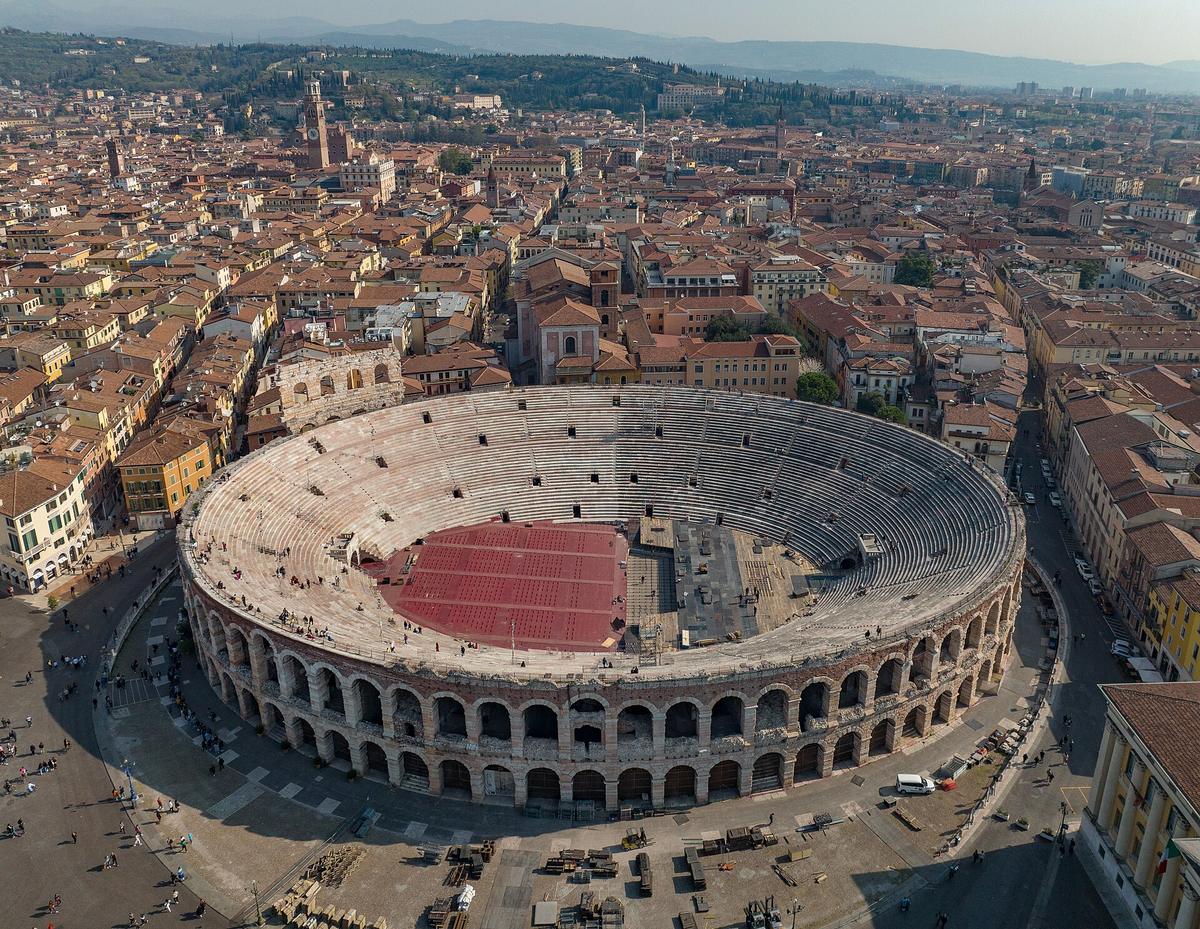
The sun drops behind the outermost arch of the Arena di Verona at quarter to nine. Fourteen thousand people sit on stone laid in AD 30. The gradinata, the unreserved upper tiers, is where you want to be. A ticket costs €25 to €45 for the 2026 Arena di Verona Opera Festival, which runs from 13 June to 6 September. Bring a cushion. You can rent one on site for about €3, but the queue moves slowly. Bring water and a fan. The opera starts at 21:00 and runs three to four hours with intervals. The stone holds the day's heat until the second act. This is not a museum piece. The Arena has been used for performances continuously for almost two thousand years, and the modern festival is the reason most Italians come. Tourists queue for Juliet. Italians queue for the Arena.
Juliet’s Balcony is a Stage Prop from 1936
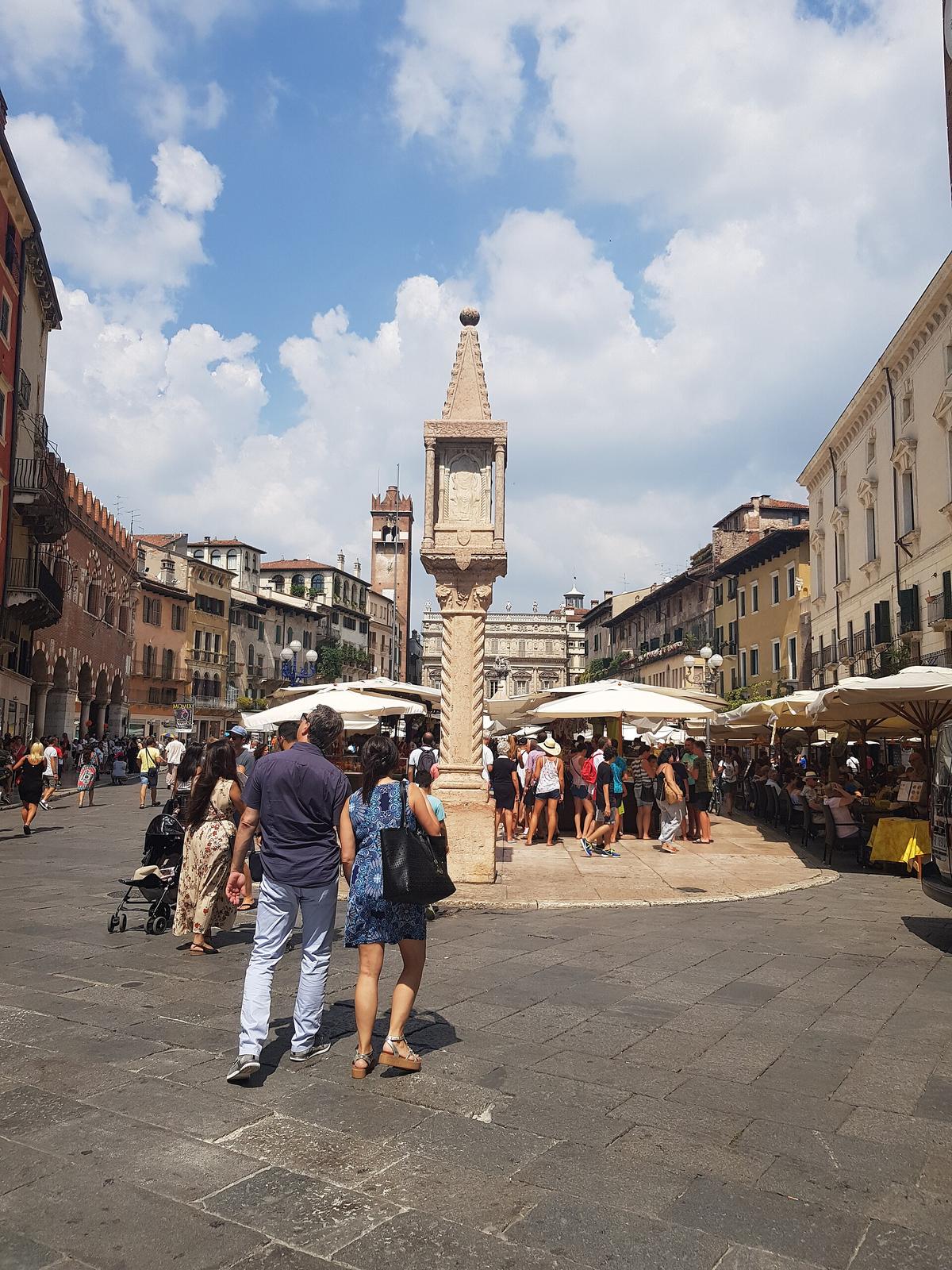
The marble slab bolted to the wall at Via Cappello 23 is a repurposed piece of a 14th-century sarcophagus. It was added in 1936 because tourists showed up expecting a balcony and the city gave them one. There is no historical link to Shakespeare’s character. The house, Casa di Giulietta, was a medieval inn, not a Capulet residence. Skip the queue, skip the bronze statue rubbing ritual, and save two hours. Walk past it on your way to Piazza delle Erbe, which is the actual Roman forum. The fountain in the centre, Fontana di Madonna Verona, uses a Roman statue from AD 380. The Torre dei Lamberti, begun in 1172, rises 84 metres above the square. Climb it for a view that includes the Arena, the Adige river bend, and the hills that produce Valpolicella wines.
Castelvecchio, the Roman Theatre, and the Scaliger Tombs
The Roman Theatre and San Pietro
Verona’s Roman layer runs deeper than the Arena. The Teatro Romano, on the north bank of the Adige, dates to the 1st century BC. It is smaller and less visited than the Arena. It holds summer performances in its own archaeological museum. Cross the river to reach it, then walk up through the medieval hill district of San Pietro.
Castelvecchio and the Ponte Scaligero
Castelvecchio, built between 1354 and 1356 by Cangrande II della Scala, is the better museum. The Museo di Castelvecchio was renovated between 1958 and 1974 by Carlo Scarpa. His interventions, concrete, steel, and light, are as much the exhibit as the medieval paintings and sculpture. The castle’s bridge, the Ponte Scaligero, is the only medieval bridge in Verona that the retreating Germans did not destroy in 1945. Walk across it at dusk.
The Scaliger Tombs
The Scaliger Tombs sit in the courtyard of Santa Maria Antica, a Romanesque church a short walk from Piazza delle Erbe. They are a cluster of Gothic funerary monuments for the della Scala family, the lords who ruled Verona in the 13th and 14th centuries. The tomb of Cangrande I is topped with an equestrian statue. The iron grille that surrounds the compound is a detail most visitors miss because they are on the way to Juliet.
The Night Train to Budapest
Verona Porta Nuova station connects to the European night train network. The direct sleeper to Budapest via Vienna runs daily. Board in Verona around 22:00, sleep through the Austrian border crossing, and arrive at Budapest Keleti around 08:00. Book a couchette or sleeper compartment on the ÖBB Nightjet service at least three weeks ahead in summer; the route fills with travellers connecting from Milan and Venice. This train is not a luxury option. It is a time-saving logistics move. You save a hotel night and a day of transit, and you wake up in a city that shares Verona’s Habsburg architectural underlay. Budapest’s Castle District and Gellért Hill require a full day and more walking than the map suggests. The best views of Pest are from Buda at sunset, and the thermal baths are a genuine daily ritual, not a tourist show. The BudapestGO app handles your metro tickets. Validate them, or the plainclothes inspectors will fine you 12,000 HUF on the spot. The free public Wi-Fi on trams works well enough for route planning.
Wine, Lake Garda, and the Roman City Underfoot
The Valpolicella and Soave Wine Zones
Valpolicella DOC was established in 1968. The wine zone begins a short drive north of Verona. Five styles matter: Valpolicella Classico (light, drink young), Valpolicella Superiore (more structure), Valpolicella Ripasso (partially re-fermented on Amarone skins), Amarone della Valpolicella DOCG (dried grapes, high alcohol, 15% or more), and Recioto della Valpolicella DOCG (sweet red, same grapes stopped early). Soave, on the eastern side of the region, produces white wines from Garganega. Soave Superiore DOCG dates to 2001. Both zones have tasting rooms that require a car or a hired driver, but a few enotecas in Verona’s centre offer flights by the glass.
Lake Garda in an Afternoon
Lake Garda, called Lago di Garda in Italian, is 25 kilometres from Verona. The nearest town is Peschiera del Garda, reachable by train from Verona Porta Nuova in 15 to 20 minutes. The lake is wide, the water is cold even in August, and the shoreline is developed. If you have one afternoon, take the train to Peschiera, walk the fortress walls, and swim from the public beach at the southern end. If you have a full day, rent a bike and ride north toward Sirmione.
The Roman City Underfoot
The Roman city underneath Verona is visible in several places. The Arena is the obvious one. The Porta Borsari, at the entrance to Corso Porta Borsari, is a 1st-century city gate with an inscription that names the emperors who built it. The Porta Leoni, near Piazza delle Erbe, has exposed Roman masonry built into a medieval wall. The archaeological museum at the Teatro Romano holds mosaics and inscriptions that trace the city’s transformation from a Gallic settlement to a Roman colony to a free commune. None of these charge more than €8. None have a queue.
What It Costs and How It Works
Milan to Verona Porta Nuova takes 1 hour 10 minutes to 1 hour 30 minutes on Trenitalia Frecciarossa or Italo. Venice to Verona takes 1 hour to 1 hour 15 minutes on the same corridor. Verona Porta Nuova is the main station; all high-speed trains stop here. For the Arena opera festival, book your gradinata ticket on the official Arena di Verona website, not through a reseller. The 2026 season dates are set: 13 June to 6 September. The gradinata is unreserved, so arrive by 19:30 to claim a spot near the centre. The numbered seats (poltrone) in the lower sections cost more and sell out faster, but the gradinata gives you the same acoustics and a better view of the sky.


Who the Verona Arena Opera Experience Suits and Who Should Look Elsewhere
The Verona Arena opera experience is for you if you want a Roman city that is still in use, not roped off. You prefer a functioning amphitheatre to a fake balcony. You plan to combine northern Italy with Central Europe via the night train, and you want a practical route that uses your sleep time. You care about wine regions with controlled appellations and a history that predates the labels.
The Verona Arena opera experience is not for you if your main interest in Verona is Shakespeare tourism, the shopping on Via Mazzini, or a single-day bus tour that checks the balcony and the Arena in the same hour. If you have severe mobility issues, the gradinata steps and the Castelvecchio staircases will be difficult. If you want pristine, orderly streets, avoid the evening crowds around Piazza Bra during opera season and the student-heavy lanes near the university.
Frequently Asked Questions
Is the Arena opera worth it for someone who doesn't speak Italian?
Yes. Most operas are performed in Italian, but the experience is about the setting, not the libretto. Pick a well-known opera like Aida or Carmen. Read the synopsis before you go. The gradinata ticket (€25 to €45) is the cheapest way to access a two-thousand-year-old entertainment venue.
How long should I spend in Verona?
Two full days. One for the Arena, the Roman theatre, and Castelvecchio. One for wine tasting and a half-day trip to Lake Garda. If you are taking the night train to Budapest, that departure counts as your second evening, so you need three nights of accommodation.
Can I visit the Arena without seeing an opera?
Yes. The Arena is open for daytime tours during the festival period, but the interior is partially obstructed by stage equipment and seating. The museum in the building gives you the same Roman engineering detail. The opera is the proper reason to enter.
Do I need a car for the Valpolicella wine region?
Not if you take a guided tour from Verona. Several operators run half-day trips that include two or three wineries and a tasting. Driving yourself is possible but risky: the wine roads are narrow, and the tasting limits are legal.
What is the best time of year for the Arena opera?
Late June or early September. July and August bring temperatures above 35°C, and the stone steps retain the heat past midnight. September evenings are cooler. Book for a Wednesday or Thursday performance; weekend shows sell out first.
Is Juliet's house a complete waste of time?
If you have children who know the story, the courtyard is free and takes ten minutes. The interior museum is a collection of bed frames and costumes with no connection to Shakespeare. Skip the queue and spend the time at Castelvecchio instead.
How do I get from Verona to Lake Garda by public transport?
Take a regional train from Verona Porta Nuova to Peschiera del Garda. The journey is 15 to 20 minutes. Trains run at least once per hour. From Peschiera, walk to the lake in 10 minutes or take a local bus to Sirmione.
Read next
-
 Northern Italy by Rail: Verona, the Lombard Lakes and the Veneto Hinterland
Northern Italy by rail works best when Verona anchors a loop through Lake Garda, Palladian Vicenza, and the prosecco hills of the Veneto hinterland.
Northern Italy by Rail: Verona, the Lombard Lakes and the Veneto Hinterland
Northern Italy by rail works best when Verona anchors a loop through Lake Garda, Palladian Vicenza, and the prosecco hills of the Veneto hinterland.
-
 A Week in Marseille Beyond the Vieux-Port — Neighborhoods Worth Knowing
Most visitors never leave the harbor. This guide covers four Marseille neighborhoods worth a week of your time, with real prices from spring 2024.
A Week in Marseille Beyond the Vieux-Port — Neighborhoods Worth Knowing
Most visitors never leave the harbor. This guide covers four Marseille neighborhoods worth a week of your time, with real prices from spring 2024.
-
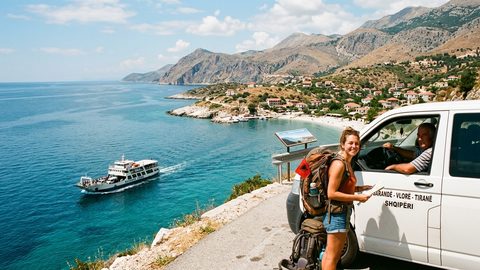 Albania by Furgon and Coastal Ferry for Independent Travelers
A practical overland guide to Albania by local furgon and Adriatic ferry — real logistics on stations, small-town accommodation, and staying connected.
Albania by Furgon and Coastal Ferry for Independent Travelers
A practical overland guide to Albania by local furgon and Adriatic ferry — real logistics on stations, small-town accommodation, and staying connected.