What Visiting Lviv Means Now, From the Coffee Houses to the Air Raid Sirens
Lviv carries the Habsburg imprint in its cobbled streets and coffee houses, and the train from Budapest still runs, though the journey now carries different weight.
- Flag
-
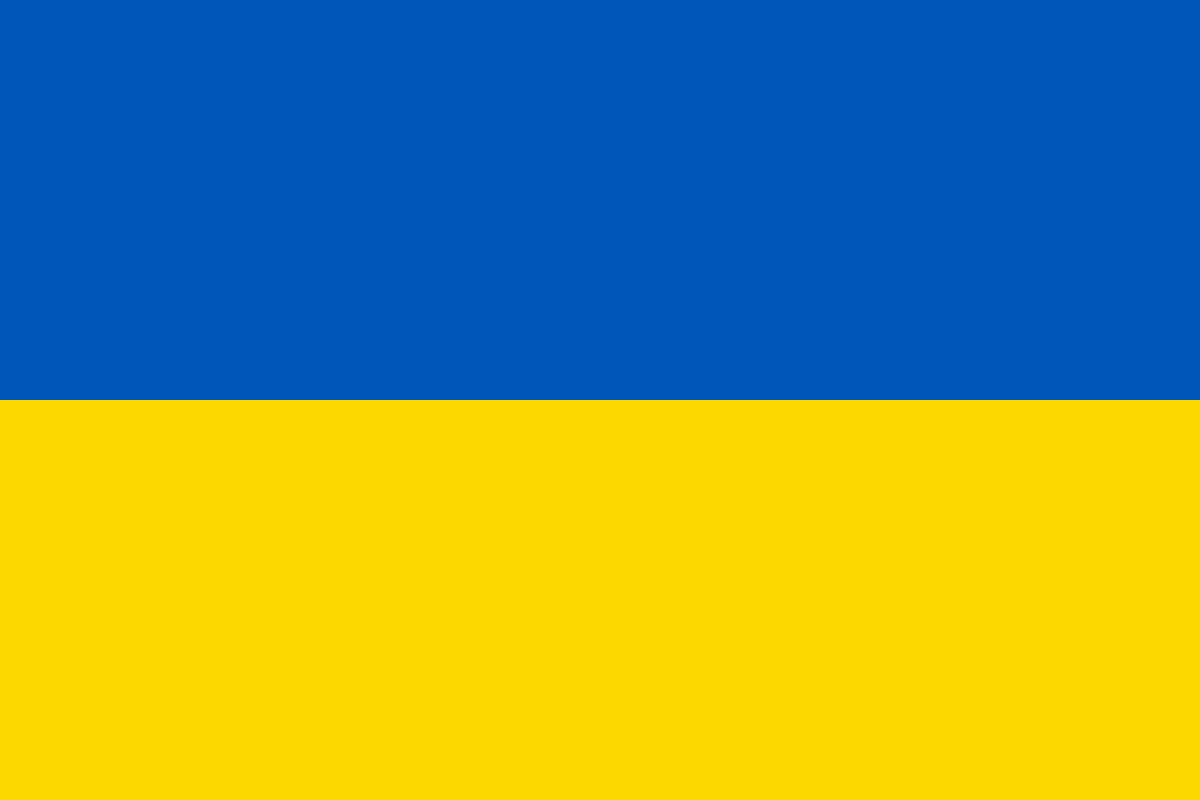
- ISO code
- UA
- Currency
- UAH
What Visiting Lviv Means Now, from the Coffee Houses to the Air Raid Sirens
The morning tram from the main station drops you on Svobody Avenue before the sirens do. You have maybe ten minutes before the alert app sounds. Enough time to watch a woman walk two miniature dachshunds past a baroque facade that has stood here since the city was called Lemberg. Then the sirens start. No one runs. A barista locks the street door of a coffee house that opened in 1775 and returns to the espresso machine. You take the basement stairwell with your drink still hot, find a wooden bench built when the Habsburgs ran this city, and wait. This is Lviv in 2026, a UNESCO World Heritage site inscribed in 1998 where the 18th-century coffeehouse tradition meets a 21st-century war routine.
The Habsburg Thread from Budapest to Lviv
Two Imperial Cities, One Blueprint
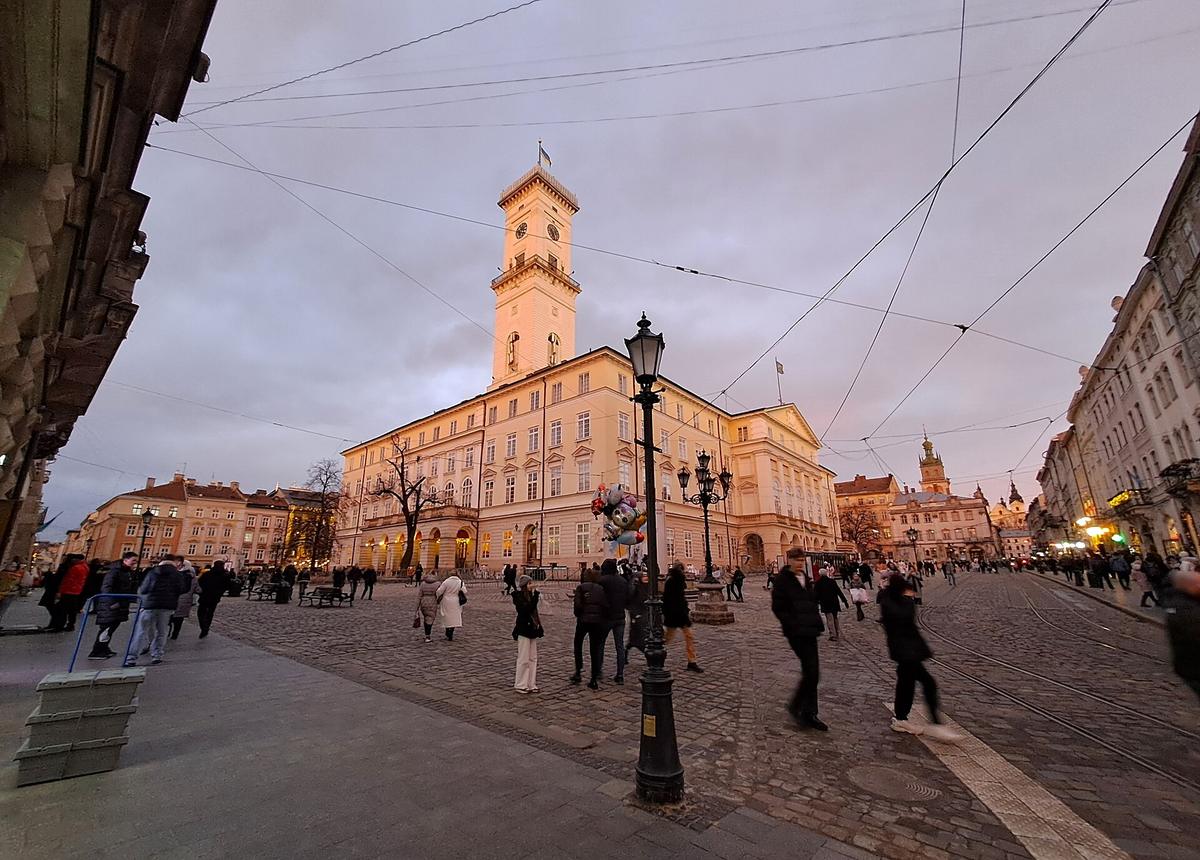
Budapest and Lviv share more than a train route. Both were imperial capitals of the Austro-Hungarian Empire, and both walk like it. The Hungarian capital delivered the grand boulevards and thermal baths you already know. Lviv delivered the same Habsburg bones in a tighter frame. The imperial period ran from 1772 to 1918, when the western Ukrainian city was Lemberg, capital of the Kingdom of Galicia and Lodomeria. That era stamped it with a Renaissance core, Baroque church facades, Classicism in the government buildings, and Secessionist flourishes that could pass for the Andrássy Avenue district. The difference is density. Budapest spreads its grandeur over the Danube's two banks. Lviv packs it into a walkable grid around Rynok Square, which measures 142 metres by 129 metres and acts as the city's living room. The town hall tower rises 65 metres above the square. Climb it before 10:00 to orient yourself before the crowds arrive. The view shows you the whole Habsburg inheritance at once: the Armenian Cathedral built between 1363 and 1370, the Greek Catholic St. George's Cathedral constructed from 1744 to 1760, and the Secessionist tenements that line the outer blocks.
How Long You Need
Nothing here is a half-day checkbox. Buda demands a full day and more walking than the map suggests. Lviv demands the same honesty. You need two days minimum for the historic centre alone, plus a third for the necropolis at Lychakiv Cemetery, established in 1787, covering 40 hectares with approximately 300,000 graves. The Habsburgs built it as a garden cemetery. Walk the alleys for the carved angels alone. The Polish aristocrats and Ukrainian nationalists buried here tell the layered story that Budapest's Heroes' Square tells in statuary.

Coffee, Chocolate and the Living Archive
The Coffeehouse Ritual
The first documented Lviv coffeehouse opened in 1775. The tradition has not stopped since. You do not visit a coffee house here for the speed of the service. You visit for the ritual of sitting in a room where the wood panelling dates to the Habsburg era and the ceiling mouldings survived two world wars. The Armenian Coffee House on Virmenska Street is the most famous. Arrive by 09:00 to claim a table in the main hall. The Turkish coffee comes with a glass of water and a piece of fruit preserve. Do not ask for a flat white.
Chocolate and the Train Snack
The Lviv Chocolate Factory flagship on Serbska Street, number 3, offers a different kind of caffeine. The shop sells drinking chocolate thick enough to stand a spoon in and cakes that reference the city's Polish and Jewish baking traditions. Buy the honey cake with walnuts. It travels well if you need a snack for the train back to Przemyśl.
The Siren as Background Music
The coffeehouse culture connects the two cities in a direct line. The Hungarian capital runs on espresso and fröccs. Lviv runs on Turkish coffee and liqueur. Both use the coffee house as a second living room. The difference is that in Lviv, the living room has air raid sirens as background music. When the alert sounds, the staff will direct you to the basement. Take your coffee with you. The local code is to treat the siren as an interruption, not a crisis. The nationwide Air Alert mobile app and municipal sirens can sound multiple times per day. The last major air strike on Lviv was 4 September 2025. Verify that date with the UK Foreign, Commonwealth & Development Office annual travel advice for Ukraine or the US Department of State travel advisory for Ukraine before you book. Both authorities publish updated risk assessments every year. Read the 2026 versions, not the old ones.
Practicalities for a City Under Martial Law
What Martial Law Means for You
The national government imposed martial law on 24 February 2022. It remains in effect. You will see military checkpoints on the roads into the city. You will hear sirens. You will find shelters marked in every public building. None of this means you should cancel a trip that makes sense for your risk tolerance and the FCDO or State Department advisory you have read. It does mean you carry your passport at all times, keep your phone charged with the Air Alert app installed, and know the location of the nearest shelter at your hotel.
Money and the Local Economy
The currency is the Ukrainian hryvnia. The August 2026 exchange rate sat at approximately 41 hryvnia to 1 US dollar. Cash is essential. Small cafes and market stalls do not take cards. The ATMs on Svobody Avenue work reliably but limit withdrawals per transaction. Take out cash twice on your first day to avoid running short. The local economy relies on IT services, manufacturing, and the spending of the approximately 250,000 registered internally displaced persons living in Lviv oblast, according to the 2024 IOM Ukraine annual report. Tourism is not the primary driver anymore. The hotels that remain open offer rooms at roughly 40 percent of their 2021 prices. Book directly. The third-party booking sites overcharge and the cancellation policies are worse than the hotel's own terms.
The Crowded, Functioning City
The current population of Lviv is approximately 717,000 based on the 2022 estimate from the Lviv City Council. That number shifts as people leave and return. The city feels more crowded than the number suggests because the displaced population adds density to the centre. The cafes are full. The trams are full. The city functions. It just functions under conditions you have not experienced before. If you are the kind of traveller who needs a pristine, orderly city where everything runs on schedule, Budapest in June is a better choice. Lviv in August will frustrate you. The graffiti on the facades, the potholes in the tram tracks, the sirens that interrupt your lunch. These are the realities of a city that has been this way for four years. Accept them or go somewhere else.


| Period | City Name | Ruling Power | Population Majority (1931 Census) |
|---|---|---|---|
| 1772 to 1918 | Lemberg | Austrian Habsburgs (capital of Galicia and Lodomeria) | Not applicable (pre census) |
| 1918 to 1939 | Lwów | Second Polish Republic | Approximately 50 percent Polish, 30 percent Jewish, 15 percent Ukrainian |
| 1939 to 1941 | Lvov | Soviet Union (first annexation) | Demographics disrupted by war and occupation |
| 1944 to 1991 | Lvov | Soviet Union (second annexation) | Demographics transformed by postwar population transfer |
| 1991 to present | Lviv | Independent Ukraine | Approximately 717,000 (2022 estimate) |
The Honest Caveat
Lviv is not Budapest with a different flag. The architecture connects them. The train connects them. The coffeehouse ritual connects them. But Budapest runs on the certainty of thermal baths that open every morning and ruin bars that close at dawn. Lviv runs on the uncertainty of a city that has been bombed, occupied, renamed, and rebuilt so many times that the people have developed a calm fatalism about it. You will sit in a basement cafe listening to a siren drone over the 18th-century ceiling mouldings and ask yourself why you came. The answer is that you came to see a living archive, not a preserved one. Lviv is still being written. The war is the current chapter, the Habsburg era is a previous one, the Soviet period is a scar, and the coffeehouse tradition is the binding that holds them all together. If that sounds like a trip you can make with your eyes open, book the train. If it sounds like too much, Budapest is a perfectly fine choice. It has not had a major air strike since 1945. You will have a better time there. You will not have the same story.
Common Questions
Is it safe to travel to Lviv right now?
Martial law has been in effect nationwide since 24 February 2022. Air raid alerts can occur multiple times per day. Read the most recent UK Foreign, Commonwealth & Development Office and US Department of State travel advisories for Ukraine before booking. The advisories are updated annually and are the only reliable source for the current risk assessment. If you accept the baseline risk of operating in a country under martial law with an active air alert system, and you have good travel insurance that covers war zones, you can travel to Lviv. If you need a guarantee of zero risk, do not go.
How do I get from Budapest to Lviv without flying?
Take the overnight train from Budapest Keleti station to Przemyśl Główny in Poland, then change to the Ukrainian train for Lviv Holovnyi. The full journey takes five to seven hours including border checks at Medyka Shehyni. Book four weeks ahead. The overnight sleeper sells out regularly.
What is the currency, and should I use cash or card?
The Ukrainian hryvnia is the only accepted currency. The August 2026 rate was approximately 41 hryvnia to 1 US dollar. Small cafes and market stalls require cash. ATMs limit withdrawals per transaction. Take out cash twice on arrival day.
How many days should I spend in Lviv?
Two full days for the historic centre, the coffee houses, and the architectural mix. A third day for the Lychakiv Cemetery and a side trip to the Lviv Chocolate Factory. If you are coming from Budapest via the overnight train, that third day is mandatory.
What happens during an air raid alert?
The nationwide Air Alert mobile app and municipal sirens notify you. You go to the nearest shelter, which is signed in every public building and most hotels. The locals treat it as an interruption. Carry your phone charged with the app installed. Know the shelter location at your accommodation before you arrive.
Read next
-
 Where to Stay in Lviv Safest Districts and Hotels Near Rynok Square
Lviv's old town core around Rynok Square remains the safest and most practical base, with hotels now clearly indicating shelter access.
Where to Stay in Lviv Safest Districts and Hotels Near Rynok Square
Lviv's old town core around Rynok Square remains the safest and most practical base, with hotels now clearly indicating shelter access.
-
 Lviv Things to Do Beyond Rynok Square from Coffee Houses to Lychakiv Cemetery
Lviv rewards those who leave Rynok Square behind, from the sculpted tombs of Lychakiv Cemetery to the underground coffee rituals of the old town.
Lviv Things to Do Beyond Rynok Square from Coffee Houses to Lychakiv Cemetery
Lviv rewards those who leave Rynok Square behind, from the sculpted tombs of Lychakiv Cemetery to the underground coffee rituals of the old town.
-
 Getting to Lviv and Getting Around the City by Tram from the Border and Airport
Most visitors reach Lviv overland from Poland; here is how the Przemyśl border crossing works and how to navigate the city by tram once you arrive.
Getting to Lviv and Getting Around the City by Tram from the Border and Airport
Most visitors reach Lviv overland from Poland; here is how the Przemyśl border crossing works and how to navigate the city by tram once you arrive.
-
 Lviv Food Guide Where to Eat Borscht Varenyky and Galician Coffee Culture
Lviv's Galician kitchen stands apart, from UNESCO-listed coffee rituals to sour cherry varenyky and borscht served with tiny vushka dumplings.
Lviv Food Guide Where to Eat Borscht Varenyky and Galician Coffee Culture
Lviv's Galician kitchen stands apart, from UNESCO-listed coffee rituals to sour cherry varenyky and borscht served with tiny vushka dumplings.
-
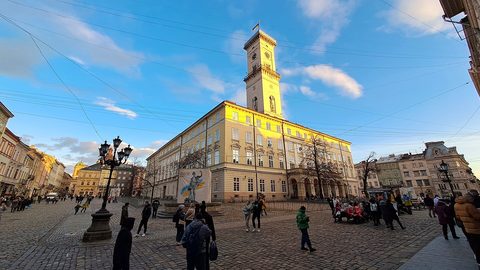 Ukraine Travel Now: What Visiting Means Today and Lviv When the Time Comes
Ukraine travel now demands clear-eyed awareness of the war, but Lviv's Habsburg streets and coffee-house culture endure as a city worth planning for.
Ukraine Travel Now: What Visiting Means Today and Lviv When the Time Comes
Ukraine travel now demands clear-eyed awareness of the war, but Lviv's Habsburg streets and coffee-house culture endure as a city worth planning for.
-
 A Week in Marseille Beyond the Vieux-Port — Neighborhoods Worth Knowing
Most visitors never leave the harbor. This guide covers four Marseille neighborhoods worth a week of your time, with real prices from spring 2024.
A Week in Marseille Beyond the Vieux-Port — Neighborhoods Worth Knowing
Most visitors never leave the harbor. This guide covers four Marseille neighborhoods worth a week of your time, with real prices from spring 2024.
-
 Albania by Furgon and Coastal Ferry for Independent Travelers
A practical overland guide to Albania by local furgon and Adriatic ferry — real logistics on stations, small-town accommodation, and staying connected.
Albania by Furgon and Coastal Ferry for Independent Travelers
A practical overland guide to Albania by local furgon and Adriatic ferry — real logistics on stations, small-town accommodation, and staying connected.