Northern Italy by Train: Verona, Lake Garda, and the Veneto Beyond Venice
Northern Italy by rail works best when Verona anchors a loop through Lake Garda, Palladian Vicenza, and the prosecco hills of the Veneto hinterland.
- Flag
-

- ISO code
- IT
- Population
- 60,431,283
- Currency
- EUR
- Dial code
- +39
The Inland Spine of Northern Italy
Most Northern Italy itineraries treat Venice as the magnetic centre. Milan, a dash through Verona, surface at the Rialto, done. That approach skips the real rail logic of the region. The Milano-Venezia line strings together cities that deserve full days, not pit stops. Verona, Vicenza, Padua, Mantua. These are not suburbs of Venice. They are the reason Northern Italy has an inland spine.
The route flips the focus. Use Verona as a walking base. Travel by local train to Lake Garda. No car needed. Reach Palladian villas in the Veneto countryside and prosecco hills that most train tourists miss. Venice sits thirty minutes east of Padua. See it on a day trip. But the lagoon is optional, not central.
.jpg)
Verona as Your Base
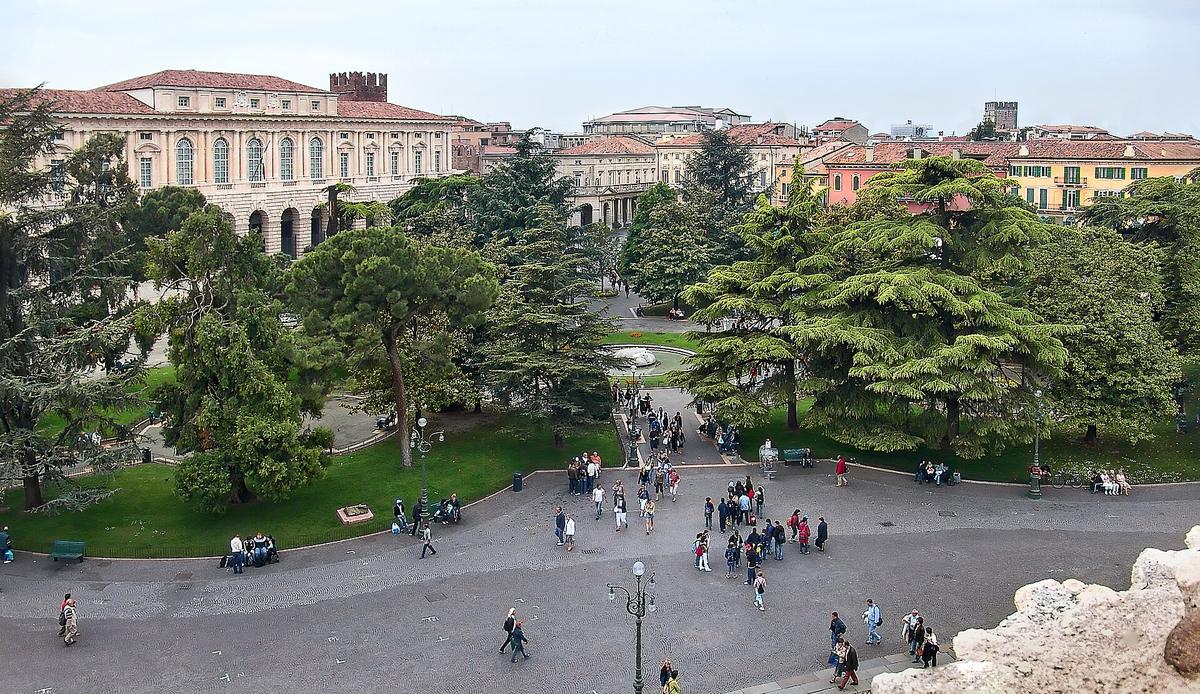
Verona Porta Nuova is the hinge. Fourteen platforms, direct local trains to every lake and every Veneto city you need, and a fifteen minute walk to the Roman Arena. You do not need a car. You do not need a bus. You need a validated paper ticket and an understanding of how local rail works here.
Buy your Trenitalia Regionale or Regionale Veloce ticket from the machine or app. Paper tickets must be validated in the yellow box on the platform before you board, not after. The validation window is four hours for trips under 200 kilometres. The fine for an unvalidated ticket is €50 plus the ticket price if you pay on the spot, €100 within five days, €200 after five days. Inspectors are efficient and unsympathetic. Validate immediately.
Stay within the walled centre. The Arena, Piazza delle Erbe, and the Scaliger Tombs sit inside a compact Roman grid. The opera season runs from mid June to early September, with performances in the Arena. If you are not attending, that period still raises hotel prices and foot traffic. Book accommodation six weeks ahead.
The Lakes by Rail
Each lake attaches to a train stop, and each lake behaves differently. Choose by your agenda, not by reputation.
Lake Garda, The Accessible One
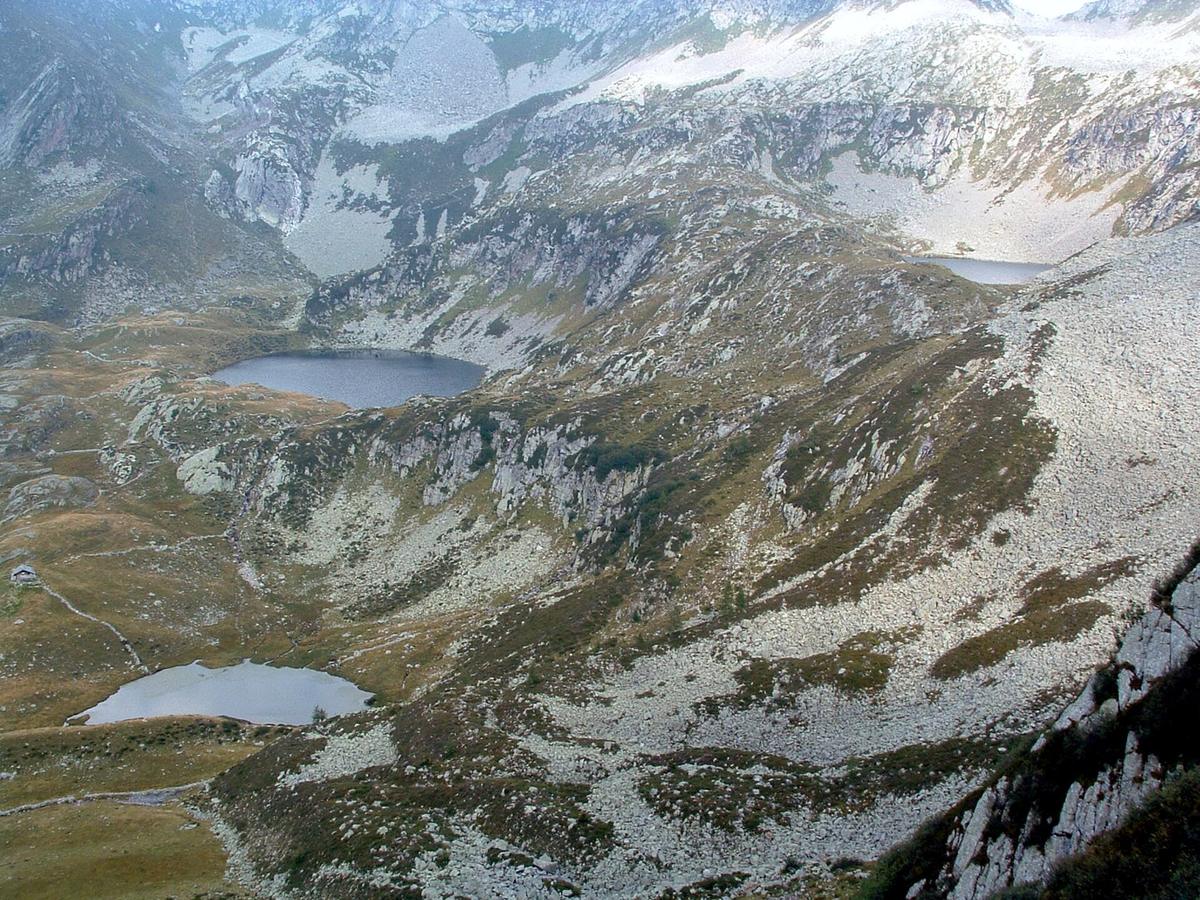
Desenzano del Garda on the Milano-Venezia line puts you on the southwestern shore in under twenty minutes from Verona. This is the lake for families, cyclists, and windsurfers. The ferry operator Navigazione Lago di Garda runs seasonal services between towns from April to October. In July and August, water temperatures reach 22 to 26 Celsius, ideal for swimming, but the crowds and heat peak the same weeks. The best hiking and cycling windows are April, May, late September, and October. Water temperature in October drops to 18-20 Celsius. The eastern shore towns of Bardolino, Malcesine, and Torri del Benaco are reachable by ferry from Desenzano, not by direct train. The ferry schedule shrinks sharply from late October to March, with reduced routes and frequency.
Lake Como, The Vertical One
Como is not a day trip from Verona. The local connection runs through Milan, adding ninety minutes each way. Come here for the sheer alpine drama. The mountains drop straight into the lake. The ferry between Como town and Bellagio, Varenna, and Menaggio is the only way to see the shoreline. Rail access is limited to Como San Giovanni at the southwestern tip. Do not attempt to tour Como and Garda on the same trip. Pick one and commit.
Lake Maggiore, The Quiet One
Maggiore sits further west, reachable via Milan or direct from Verona on the Frecciarossa to Stresa in about two hours. This is the lake for Borromean island hopping. The Isola Bella palace and gardens take a half day. The ferry network is smaller than Garda's and quieter than Como's. If you want lakeside calm without the July queue at the ferry dock, Maggiore is the choice.
The Veneto Interior: Vicenza, Padua, Mantua
The cities between Verona and Venice are the region's real depth. They are connected by Regionale Veloce trains that run every thirty to sixty minutes and cost roughly €5 to €10 per leg.
Vicenza: Palladian Precision
Vicenza is twenty five to fifty five minutes east of Verona Porta Nuova by Regionale Veloce. The core of the city is a single architectural system. Andrea Palladio designed the Basilica Palladiana, the Teatro Olimpico, and a dozen palazzi within walking distance of each other. The UNESCO inscription from 1994 covers both the city and the surrounding villas. The Villa Rotonda sits two kilometres outside the walls. You will need a bus or a thirty minute walk. Do not skip it. Allocate a full day. Vicenza is compact enough that you can see the Teatro Olimpico in the morning, walk to the Villa Rotonda by early afternoon, and return to Verona by dinner.
Padua: Giotto, Gardens, and a Relic
Padua is fifteen to twenty five minutes beyond Vicenza. The Scrovegni Chapel holds Giotto's fresco cycle completed in 1305. You must book a timed entry slot online at least three days ahead. Same day tickets sell out by 10:00. The chapel limits visits to fifteen minutes and holds fewer than thirty people per slot. Arrive fifteen minutes early for the mandatory pre visit cooling room video. The Orto Botanico, founded in 1545 and UNESCO listed in 1997, is the world's oldest academic botanical garden. Allow two hours. Padua is also the most practical city for a Venice day trip: twenty five to fifty minutes by Regionale Veloce to Venezia Santa Lucia, no metro, no transfer.
Mantua: The Overlooked One
Mantua sits off the Milano-Venezia line. You reach it by local service from Verona via the Mantova-Verona line, a direct route that takes about forty five minutes. The Ducal Palace is one of the largest palace complexes in Europe. The Camera degli Sposi frescoes by Mantegna are the reason to come. Mantua is a half day city unless you are a Renaissance painting devotee, in which case it will demand a full day. The public transport connection back to Verona ends earlier than you expect. Last trains run around 21:00. Check the departure board at Mantova before you start the palace tour.
Prosecco Hills and Palladian Villas Without a Car
The prosecco region around Valdobbiadene and Conegliano is the hardest piece of this itinerary to execute by rail alone, but it is possible. Take a Regionale from Padua to Conegliano, roughly sixty minutes. From Conegliano, a local bus runs uphill through the vineyards to the prosecco tasting cellars. The service is roughly hourly on weekdays and sparse on Sundays. Plan to return before 17:00. Bring euros for tasting fees. This is not a wine tour business. These are agricultural cooperatives. You pay per glass and stand at a counter.
For Palladian villas in the countryside, the Villa Emo at Vedelago and Villa Barbaro at Maser are reachable by bus from Castelfranco Veneto, which is on the Vicenza-Padua line. The buses are infrequent. Download the Moovit app or check the Busitalia schedule at the stop information office. Miss the last return bus and you are looking at a €40 taxi. These are day trips for the patient traveller who values frescoed interiors over speed.

| Destination | Station | Train Type | Travel Time | Frequency |
|---|---|---|---|---|
| Vicenza | Vicenza | Regionale Veloce | 25-55 min | Every 30-60 min |
| Padua | Padova | Regionale Veloce | 40-70 min | Every 30-60 min |
| Venice | Venezia Santa Lucia | Regionale Veloce | 75-90 min | Hourly |
| Desenzano del Garda | Desenzano del Garda | Regionale | 17-25 min | Every 30-60 min |
| Peschiera del Garda | Peschiera del Garda | Regionale | 12-20 min | Every 30-60 min |
| Mantua | Mantova | Regionale | 45 min | Hourly |
| Conegliano (for prosecco) | Conegliano | Regionale | 55-70 min | Every 60-90 min |
An Honest Caveat
This itinerary works best for travellers who trust the printed schedule and have the patience for local rail. Trenitalia's Regionale trains run late more often than high speed services do. A ten minute delay on a connection from Desenzano back to Verona means you miss the 18:15 train and wait thirty minutes for the next one. That thirty minutes matters when the last ferry from Malcesine departs at 18:30. The system rewards flexibility and loose plans. If you need every arrival guaranteed, book Frecciarossa tickets with assigned seats and accept that the lakes become harder to reach. The trade off is real: deeper access to the inland Veneto requires slower connections, and the schedule will not bend for you.
Frequently Asked Questions
Do I need to validate a Frecciarossa or Italo ticket the same way as a Regionale?
No. Frecciarossa and Italo tickets have assigned seats and do not require validation at a platform machine. Only Trenitalia Regionale and Regionale Veloce paper tickets must be validated before boarding. Italo operates high speed trains only and has no local service.
Can I visit Lake Garda and Lake Como in one itinerary?
Not efficiently. The rail connection between Garda and Como passes through Milan, a transfer that adds at least ninety minutes. Each lake requires a full day. Commit to one lake for depth or accept that you will spend your afternoon in transit.
How do I reach the prosecco hills without a car?
Take a Regionale from Padua to Conegliano, then a local bus uphill to Valdobbiadene. Buses run hourly on weekdays. Return before 17:00. Tasting rooms in the hills expect cash and do not have set tour times.
Is the Verona Arena opera worth attending if I am not an opera fan?
The experience is more about the setting than the music. The 2025 season runs mid June to early September. Seats on the stone steps cost €25 to €90. Cushions rent for €2. The sound is indifferent. The crowd is large. If you do not know the opera, skip it and visit the Arena during daytime for the standard €10 entry.
When does Lake Garda become too crowded?
Mid June to early September. The worst heat and humidity run from July to mid August. May and late September offer water temperatures around 20 Celsius, fewer people, and better hiking conditions.
Can I use a single rail pass for all these connections?
A Trenitalia pass or Italia in Tour card covers local trains, but you must factor the seat reservation fees for high speed trains. For a Verona-lakes-Vicenza-Padua itinerary, buying individual Regionale tickets is cheaper and more flexible. The pass only breaks even if you take three or more Frecciarossa rides.
What happens if the last train from Mantua back to Verona is full?
The last direct local train departs Mantova around 21:00. After that, you can take a bus to Verona from the Mantova bus station, which runs until 22:30 on weekdays. Check the ATV bus schedule at the station. A taxi costs roughly €60.
Read next
-
 A Week in Marseille Beyond the Vieux-Port — Neighborhoods Worth Knowing
Most visitors never leave the harbor. This guide covers four Marseille neighborhoods worth a week of your time, with real prices from spring 2024.
A Week in Marseille Beyond the Vieux-Port — Neighborhoods Worth Knowing
Most visitors never leave the harbor. This guide covers four Marseille neighborhoods worth a week of your time, with real prices from spring 2024.
-
 Albania by Furgon and Coastal Ferry for Independent Travelers
A practical overland guide to Albania by local furgon and Adriatic ferry — real logistics on stations, small-town accommodation, and staying connected.
Albania by Furgon and Coastal Ferry for Independent Travelers
A practical overland guide to Albania by local furgon and Adriatic ferry — real logistics on stations, small-town accommodation, and staying connected.