Bosnia and Herzegovina: Ottoman Bridges, Austro-Hungarian Cafés, and a Conflict You Can Still Read in the Streets
Navigate Bosnia and Herzegovina's layered history from Ottoman-era bazaars and Austro-Hungarian boulevards to the siege scars still visible on Sarajevo's streets.
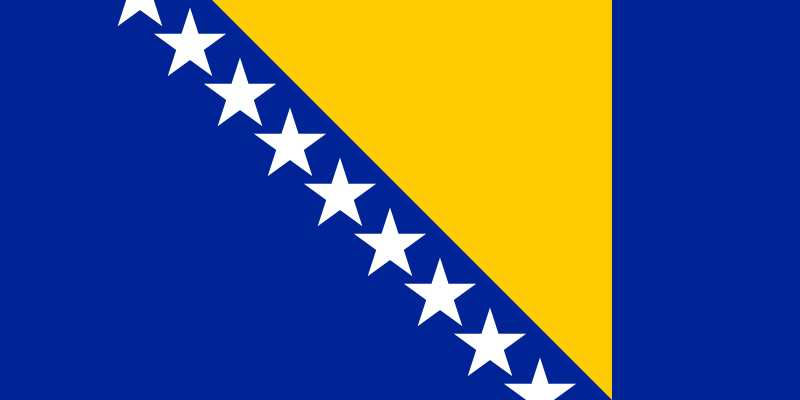
- Flag
-
- ISO code
- BA
- Population
- 3,323,929
- Currency
- BAM
- Dial code
- +387
Sarajevo and Mostar: Ottoman Bridges, Austro-Hungarian Cafés, and a Conflict You Can Still Read in the Streets
The wrong assumption about Bosnia and Herzegovina is that you visit for "healing" or "moving on." That you come to see a country that has rebuilt and left its war behind. The truth is the opposite. You come here because the war is still visible. Shell impacts pockmark Sarajevo facades. The rebuilt Stari Most in Mostar carries the memory of its deliberate destruction in 1993. The emotional scars are part of the landscape, not hidden behind it. This is not a place for voyeurism or disaster tourism. It is a place where history is tangible, not abstract, and where the Ottoman and Austro-Hungarian layers sit alongside the 1990s without contradiction.
Sarajevo and Mostar reward the traveller who wants to read the streets. Who wants to understand how a 16th-century stone arch became a target in a 20th-century war, and how a city that hosted the 1984 Winter Olympics endured a siege lasting 1,425 days. You will not find sanitised narratives here. You will find a country that demands you navigate the dual narratives of cultural richness and recent conflict with respect and understanding. The country is complex. Your itinerary should be too.

The City That Sits on a Fault Line: Sarajevo
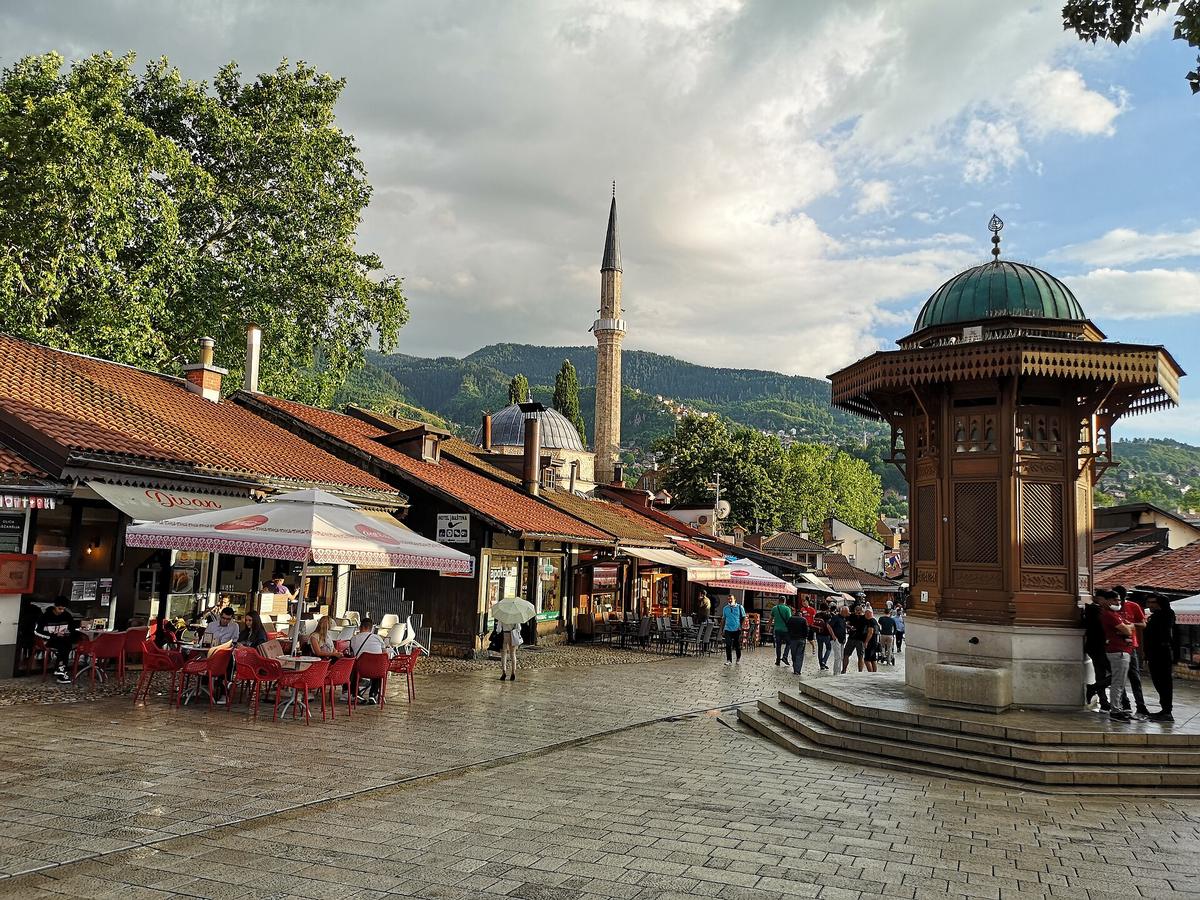
Start in Sarajevo. The city sits at 500 metres elevation, where the Ottoman east meets the Austro-Hungarian west. The fault line is Ferhadija street. Walk it from the Eternal Flame, unveiled in 1946, east toward Baščaršija. On one side you get Austro-Hungarian facades. On the other, the 15th-century Ottoman bazaar. The architecture shifts at the street. So does the history.
Where to Begin
Book the Gazi Husrev-beg Mosque (built 1530-1531) and the Sebilj fountain in Baščaršija. The mosque requires modest dress. Remove shoes at the entrance. The clock tower next to it is 16th-century Ottoman. From the fountain, walk south to the Latin Bridge. This is where Gavrilo Princip assassinated Archduke Franz Ferdinand on 28 June 1914. The museum on the corner is small but effective. Allow 45 minutes.
The Siege You Can See
The Siege of Sarajevo lasted from 5 April 1992 to 29 February 1996. That is 1,425 days. The Research and Documentation Center Sarajevo records 11,541 deaths including 1,601 children. You cannot miss the marks. Look at the ground for Sarajevo Roses. These are mortar impact craters filled with red resin. Of the original markings, fewer than 100 remain. They are fading. Look now.
The War Tunnel Museum is essential. It sits in Dobrinja. Take tram line 1 toward Ilidža from Baščaršija. The Tunnel of Hope runs roughly 800 metres, dug from March to June 1993 under the airport runway. You walk through the preserved section. The entrance fee is 10 BAM. Open 09:00 to 17:00 daily. Arrive before 10:00 to avoid the midday tour group crush.
Up the Mountains
The Sarajevo cable car reopened in 2018. It runs from the Old Town up to Trebević mountain, lifting you 2,100 metres. One-way fare is 15 BAM, return 20 BAM. At the top, the abandoned bobsleigh track from the 1984 Winter Olympics is graffitied and war-damaged. Walk on the concrete. Do not leave the path. Landmines remain a real concern. The suspected hazardous area was approximately 965 km² in 2022 according to BH MAC. The strategic goal is a mine-free country by 2027. Until then, stay on marked paths and hard surfaces. Do not enter abandoned buildings or unmarked verges in flagged areas.
Museums That Tell the Truth
The National Museum of BiH, founded in 1888, holds the Sarajevo Haggadah from the 14th century. It survived the war. The museum re-opened after closure. Check hours before going. The House of Terror concept from Budapest does not exist here. The museums are quieter, less polished, more direct. The 11/07/95 Gallery in the city centre documents Srebrenica. Go in the morning. Allow two hours. It is not a feel-good stop.
Eat at a small baščaršija ćevabdžinica. Ćevapi are the default: bread, meat, onions, yoghurt. Petica Ferhatović or Željo are reliable. Expect to pay around 10 BAM for a portion. Carry cash. Many smaller places still require it. ATMs are widely available. Card acceptance is common in Sarajevo but not universal in rural areas or small shops.
Mostar: the Bridge That Became an Icon
Mostar is 125 kilometres from Sarajevo. Take the train. The rail line runs through the Neretva valley and the scenery is worth the 2-hour journey. The fare is 14 BAM one way. Two to three daily departures each way. If you take the bus, budget 2.5 hours and 20-25 BAM. In summer, buses run roughly hourly. The train is slower but the view of the Neretva river and the gorge into Jablanica justifies the time.
The Old Bridge
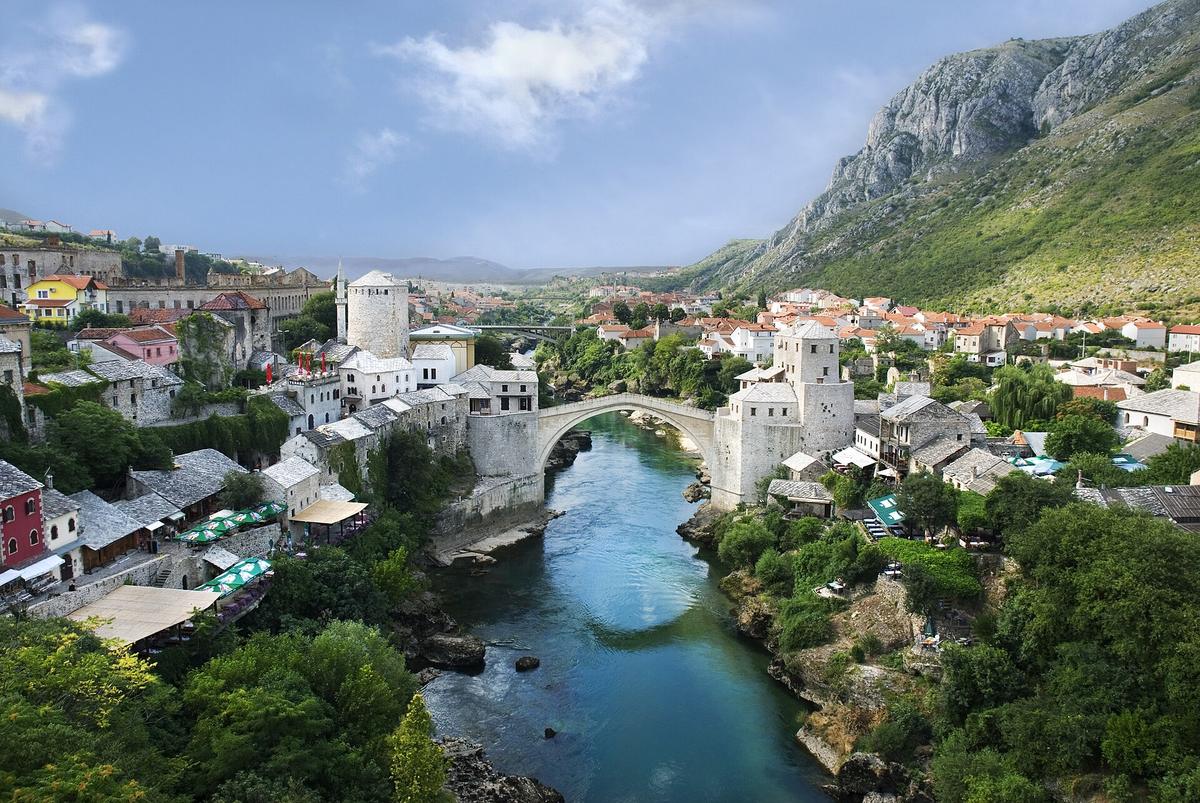
Stari Most was built in 1566 by Mimar Hayruddin, an Ottoman architect. Its arch spans 28.7 metres and stands 20 metres above the summer water level. Croatian Defence Council shelling destroyed the bridge on 9 November 1993, during the Bosnian-Croat conflict. It was rebuilt and reopened on 23 July 2004. UNESCO listed it in 2005. You walk across the same stones, but you know the history. That is the point.
The bridge jump tradition dates back to at least 1664. Members of the Mostari diving club jump from the 24-metre height into the Neretva. You can arrange to jump yourself, but only with club supervision. The fee is 25 to 50 BAM. Do not jump alone. The river is cold and fast.
Crowd Management
The largest coach groups arrive in Mostar between 10:00 and 17:00. The old town becomes a corridor of selfie sticks. Arrive before 09:00 or stay after 18:00. The streets thin markedly after dinner in summer. The old town is small. You can see the bridge, the Koski Mehmed Pasha Mosque, and the riverfront in a concentrated area. The mosque entry includes a minaret climb for the view. Skip the midday heat.
Around Mostar
Blagaj sits 12 kilometres from Mostar. The tekija, a Dervish house built around 1520, clings to the rock at the Buna river spring. Entry is 5 BAM. The spring gushes cold green water from the cliff. This is the best small trip from Mostar. Take a taxi. Negotiate the price before starting. Expect around 25-30 BAM one way.
Kravica waterfall is 40 kilometres away. The falls drop roughly 25 metres into a pool. Summer entry fee is 20 BAM. It is a swimming spot, not a wilderness. Expect crowds in July and August. Go early in the day.
Počitelj is 30 kilometres south. An Ottoman-era fortified village on a hillside, on the UNESCO tentative list since 2007. The stone houses climb the hill. Walk to the top for the view over the Neretva. Forty-five minutes is enough.
Travnik, Jajce, and the Ottoman Interior
From Mostar, go north. The route through the Neretva valley toward Jablanica and Konjic is the corridor that connects the south to Sarajevo and points north. Konjic has a 1682 Ottoman stone bridge. Jablanica has the collapsed railway bridge from the 1943 Battle of Neretva. These are 20-minute stops. Worth seeing, not worth moving hotels for.
Travnik
Travnik sits at 514 metres elevation. It was the capital of Ottoman Bosnia from 1699 to 1850. The fortress dates from medieval origins, expanded by the empire in the 15th century. The Sulejmanija mosque from 1757 is called the coloured mosque for its painted interior. The birth house of Ivo Andrić, who won the Nobel Prize in Literature in 1961, is a museum opened in 1974. Travnik is quiet. It gets almost no international tourists. That is its value.
Eat here. The local speciality is travnički sir, a dry white cheese, and the ćevapi differ slightly from the Sarajevo version. The pace is slow. The fortress view over the valley is worth the climb. Stay for lunch then move on.
Jajce
Jajce has a 22-metre waterfall in the centre of town. The waterfall drops into the Pliva river. The town was the site of the 29 November 1943 AVNOJ session, the founding meeting of socialist Yugoslavia. The fortress is 14th-century with catacombs and a Romanesque church of St Mary. The Pliva lakes, 5 kilometres from town, hold 20 small wooden watermills on the river. Jajce is off the main tourist route. That is why you go.
From Jajce, loop back to Sarajevo or continue toward Banja Luka. The road distances are manageable: Sarajevo to Jajce is 160 kilometres, Mostar to Jajce is 140 kilometres, Travnik to Jajce is 70 kilometres. Rent a car in Sarajevo or Mostar. Public transport between these towns is infrequent. Bus schedules are erratic. A car gives you control over timing, especially if you want to stop at the bridge in Konjic or the waterfall at Jajce before the afternoon heat.
The Landmine Reality
This is the one thing you cannot ignore. Bosnia and Herzegovina remains mine-affected. The suspected hazardous area was approximately 965 km² in 2022 according to the Bosnia and Herzegovina Mine Action Centre. The strategic goal is a mine-free country by 2027, but until then, the rule is absolute: stay on marked paths and hard surfaces. Do not enter abandoned buildings or unmarked verges in flagged areas. This applies to hillsides, verges, and abandoned infrastructure like the Trebević bobsleigh track. The country marks its danger zones with red and white tape. Heed them.

Practicalities: Currency, Transport, and Timing
The currency is the Bosnia and Herzegovina convertible mark, code BAM. It is fixed to the euro at 1 BAM = 0.51129 EUR. Some tourist spots in Mostar and Sarajevo accept euros informally, but change is given in BAM. Do not rely on this. ATMs are widely available in cities but not in rural areas. Card acceptance is common in hotels, restaurants, and supermarkets in Sarajevo and Mostar. Carry cash for small shops, taxis, and rural areas. Prices are low. A restaurant meal in Sarajevo costs roughly 15-20 BAM. A tram ride is 1.6 BAM.
Time zone is Central European. The emergency number is 112. Drive on the right. EU, US, and UK citizens get visa-free entry for up to 90 days within 180 days. The country is an EU candidate since December 2022. A standard Schengen visa does not cover Bosnia. Check your specific nationality before booking.
Getting Around
Sarajevo International Airport (SJJ) is 12 kilometres from the centre. Mostar Airport (OMO) is small. Tuzla (TZL) and Banja Luka (BNX) are regional options. The train from Sarajevo to Mostar is the best transport experience in the country. It runs along the Neretva river through gorges and tunnels. Two to three daily departures. Buy the ticket at the station. No online booking system works reliably.
When to Go
Visit in May-June or September-October. Summer in Mostar hits 33-35°C in July and August. Sarajevo winter lows drop to -5 to -10°C in January. Mostar receives 1,500 mm of rain annually, making it one of the wettest cities in the country. The Neretva valley gets afternoon thunderstorms in summer. Pack accordingly.
Common Questions
How many days do I need in Bosnia and Herzegovina?
Minimum five days: three for Sarajevo with a day trip to the War Tunnel and Trebević, two for Mostar with Blagaj and Kravica. Add two more if you want Travnik and Jajce. The country is small by road but slow by public transport.
Is it safe to travel in Bosnia and Herzegovina?
Yes for violent crime. No for landmines. Street crime is low in cities. The danger is on unmarked hillsides and abandoned buildings. Do not leave marked paths. Do not enter flagged zones. The BH MAC publishes risk maps online.
Do I need to speak Bosnian, Croatian, or Serbian?
No. English is widely spoken in Sarajevo and Mostar among younger people, hotel staff, and restaurants. In Travnik and Jajce, fewer people speak English. Learn hvala (thank you) and dobar dan (good day). It helps.
Can I see the war sites without being disrespectful?
Yes. Do not take selfies at the Srebrenica memorial. Do not smile for photos at the Tunnel of Hope. Do not ask locals to recount their trauma for your Instagram. The war is everywhere. You do not need to seek it out. Just look.
Read next
-
 A Week in Marseille Beyond the Vieux-Port — Neighborhoods Worth Knowing
Most visitors never leave the harbor. This guide covers four Marseille neighborhoods worth a week of your time, with real prices from spring 2024.
A Week in Marseille Beyond the Vieux-Port — Neighborhoods Worth Knowing
Most visitors never leave the harbor. This guide covers four Marseille neighborhoods worth a week of your time, with real prices from spring 2024.
-
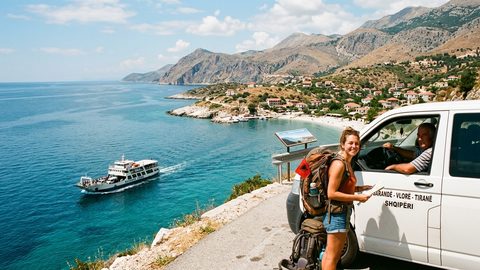 Albania by Furgon and Coastal Ferry for Independent Travelers
A practical overland guide to Albania by local furgon and Adriatic ferry — real logistics on stations, small-town accommodation, and staying connected.
Albania by Furgon and Coastal Ferry for Independent Travelers
A practical overland guide to Albania by local furgon and Adriatic ferry — real logistics on stations, small-town accommodation, and staying connected.