A Week in Marseille Beyond the Vieux-Port — Neighborhoods Worth Knowing
Most visitors never leave the harbor. This guide covers four Marseille neighborhoods worth a week of your time, with real prices from spring 2024.
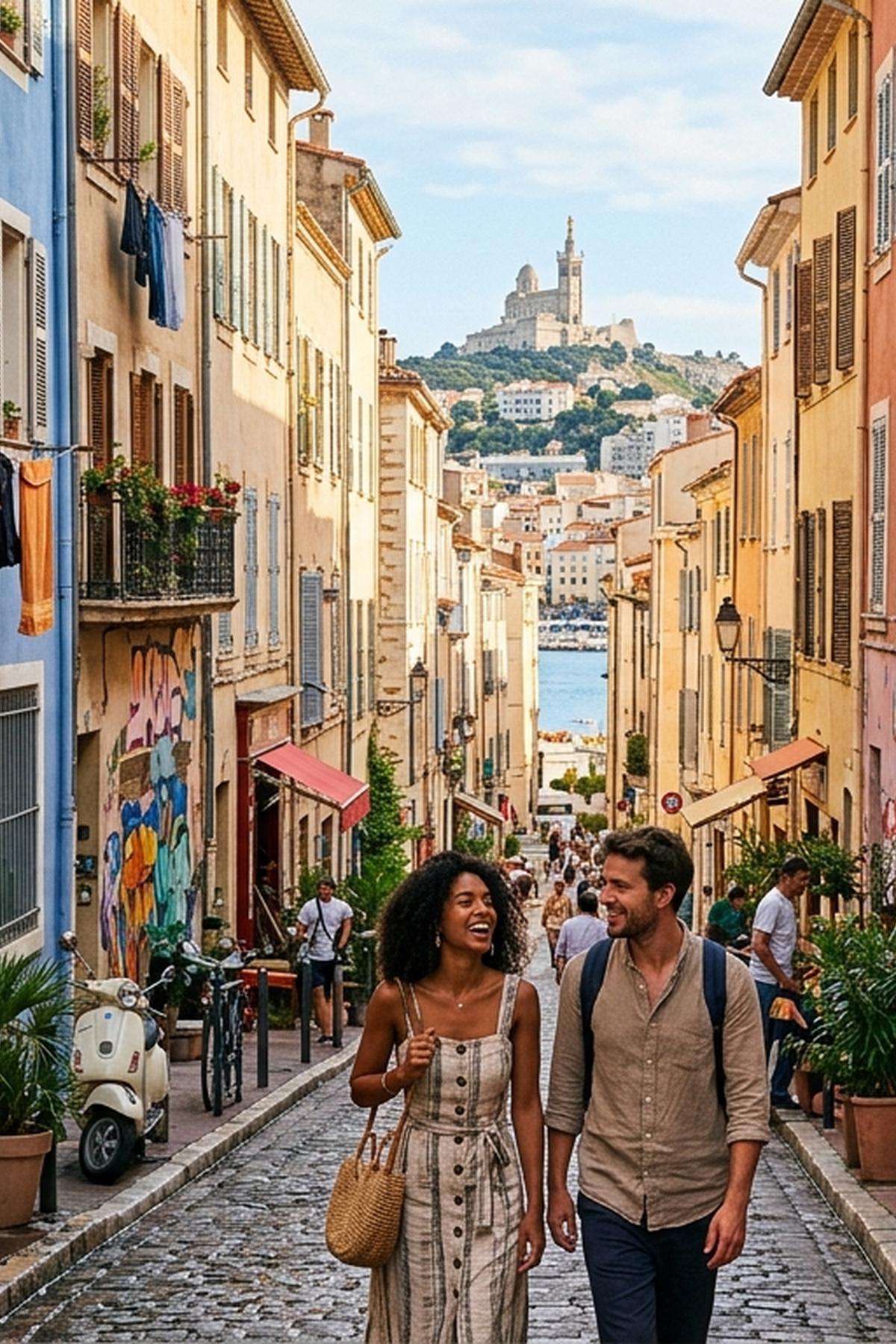
Marseille gets misread. Most visitors arrive, spend two days circling the quayside, eat a bowl of bouillabaisse at the first restaurant with a chalkboard menu, and leave convinced they understood the city. They didn't. Marseille is gritty, layered, and genuinely absorbing once you push a few blocks away from the postcard harborfront. The city's real personality lives in its residential neighborhoods, its market streets, and in the gaps between transit stops that most itineraries never make time for. This guide is for people who want to spend a real week here, not just pass through.
The Neighborhood Compass
This guide moves through four districts most visitors skip entirely: Le Panier, Cours Julien, Noailles, and L'Estaque. Each has its own rhythm, its own best time to arrive, and its own transport logic. Prices reflect what I paid during a spring 2024 visit. Marseille runs notably cheaper than Paris or Lyon, and the food, particularly around Noailles, is some of the most interesting street eating you'll find in France. Bring cash for the markets.
How Marseille Fits into a Wider French Itinerary
Before getting into the neighborhoods themselves, a word on placement. Marseille works well as the southern anchor of a longer French trip. The TGV connects it to Paris in roughly three hours, with advance fares starting as low as 40 euros if you book a few weeks out. Lyon sits about one hour forty minutes north by high-speed rail, and Nice is a comfortable two and a half hours east along the coast.
That positioning matters if you're still deciding where to base yourself. A thorough France travel guide will help you map out intercity rail connections before you commit to Marseille as a hub. Marseille turns out to be more central to a southern French itinerary than people assume, and it sits at the gateway to the Calanques and within easy striking distance of Aix-en-Provence, which keeps your options open without requiring a car.
The Honest Assessment of the Vieux-Port
The Vieux-Port is not bad. It's just not Marseille. The old harbor is fine for a morning coffee with a view of the ferry traffic, and the fish market that runs along the northern quay on weekend mornings is worth setting an early alarm. But the restaurants lining the waterfront charge Paris prices for middling plates of seafood. The souvenir shops are indistinguishable from those in any other French coastal city. Most of your time will go toward sidestepping other tourists doing exactly what you're doing.
Give the Vieux-Port one morning. Then put it behind you and head uphill.
Le Panier: The Oldest Streets in a Very Old City
Marseille is an ancient port city, one of the oldest continuously settled urban sites in Western Europe, founded as the Greek colony of Massalia around 600 BCE. Le Panier sits roughly where that earliest settlement took shape. The streets are steep and narrow, the buildings lean at odd angles toward each other, and the staircases connecting the different levels catch you off guard on the first morning.
The neighborhood's wartime history is severe. During the German occupation in 1943, the entire district was forcibly evacuated and large sections were demolished. What rebuilt afterward came back patchy, and some of that patchiness is still visible today in the contrast between freshly repainted facades and walls that look untouched since 1950. That contrast is part of what makes the area interesting to walk through. It doesn't feel curated, and that's the point.
For accommodation in Le Panier, expect small guesthouses and a handful of boutique hotels. A double room in a well-run guesthouse on Rue du Panier ran around 85 euros per night in spring 2024, including breakfast. That puts you within walking distance of the ferry terminal and the main metro connections, which matters when you're splitting your time across multiple neighborhoods.
For lunch, skip the tourist-facing spots near Place des Moulins. Head instead toward the smaller counters on the eastern side of the hill. A pan bagnat, the pressed Marseillais sandwich of tuna, olives, egg, and vegetables, came to about 7 euros at a counter near the top of Montée des Accoules in spring 2024. It is one of the more honest lunches you'll find in France at that price.
Cours Julien: Where the Creative Class Eats Breakfast
Ten minutes' walk southeast of Le Panier sits Cours Julien, the neighborhood where Marseille's artists, musicians, and younger residents have planted themselves for the past two decades. The street art concentration here is denser than you'd expect from a city this size. The market that fills the main square on Wednesday and Saturday mornings sells organic produce, second-hand books, and hand-formed ceramics at prices that suggest people actually shop here year-round rather than browse on a weekend whim.
Restaurants on and around Cours Julien cover a useful range. Vietnamese canteens, natural wine bars, and wood-fired pizza spots all operate within a few blocks of each other. A full dinner with a couple of glasses of wine at a mid-range spot came to around 28 euros per head in spring 2024. The neighborhood gets considerably louder after 9 pm on Thursday through Saturday nights. If you're a light sleeper, choose accommodation on the quieter side streets rather than facing the main square directly.
The metro stop Cours Julien, on line 2, puts you six minutes from the Vieux-Port and twelve minutes from Saint-Charles station. That connectivity makes this the most practical base in the city if you're planning to cover serious ground across different neighborhoods on the same day.
Noailles: Where the City Actually Feeds Itself
Noailles sits directly south of the Vieux-Port and is the neighborhood most shaped by Marseille's long North African connection, which goes back well over a century. The market spills across several blocks around Rue d'Aubagne and Rue Longue-des-Capucins, running most mornings from around 7 am through early afternoon. This is where Marseille does its actual grocery shopping, not its tourist browsing.
A few things worth knowing before you arrive:
- Spice stalls along Rue Longue-des-Capucins sell freshly mixed blends unavailable packaged elsewhere in the city, including ras el hanout ground to order for 3 to 4 euros per 100g
- Brik pastry shops near the market entrance sell hand-formed parcels of egg, tuna, and herbs for around 1.50 euros each, eaten standing at the counter
- Fruit and vegetable prices run roughly 30 to 40 percent lower than a supermarket chain, which tells you this is a functioning daily market rather than a staged experience
- Halal butchers and independent fishmongers are scattered through the side streets and operate Tuesday through Sunday, with a full selection by 8 am
Overnight accommodation in Noailles is limited to budget hotels in the 55 to 70 euro range. The neighborhood is not quiet at night. If you want access to the market without the noise, Cours Julien one metro stop away gives you a workable compromise.
L'Estaque: A Fishing Village at the Edge of the City
L'Estaque sits at Marseille's northern edge, technically within city limits but feeling entirely separate from the urban center. A regional train from Saint-Charles reaches it in about twenty minutes, running roughly every thirty minutes during the day. The fare is covered by the standard transit pass if you have the right zone extension.
The village is small and not configured for overnight visitors. It has a working harbor, a handful of restaurants serving grilled fish, and a particular quality of afternoon light that attracted painters for generations. Paul Cézanne worked here repeatedly through the 1870s and 1880s, returning to paint the view across the Golfe de Marseille. Georges Braque arrived in 1906 and produced a series of landscapes that critics later identified as early signals of Cubism. Stand on the path above the harbor in late afternoon and the connection to those paintings becomes legible in a way that no gallery label fully captures.
Grilled sea bass with aioli at one of the harbor-facing restaurants came to about 18 euros in spring 2024. Walk the elevated path above the village after lunch, stay for the light shift around 4 pm, and catch a train back before the early evening crowd thickens the return journey.
Getting Around Without Overpaying or Getting Lost
Marseille's public transit network covers more ground than most visitors assume. Two metro lines connect the main residential areas to the center, with tram lines and buses filling the gaps. The small ferry crossing the Vieux-Port cost 50 cents in spring 2024 and is one of the best-value rides in France purely for the perspective it gives you on the harbor. Before you arrive, check the official route planner for current coverage and fares, since zone pricing updates periodically.
Practical transit facts for the first day:
- The Carte Liberté day pass gives unlimited travel on metro, tram, and bus, and pays for itself after two or three journeys if you're moving between neighborhoods
- Night buses replace the metro after around 11 pm on most routes, running until roughly 1 am on weekdays and later on weekends
- Taxis from Saint-Charles run about 12 to 18 euros to Le Panier or Cours Julien depending on traffic, useful to know for late arrivals
- The airport shuttle connects to Saint-Charles in approximately 25 minutes for 10 euros, making it almost always the better option over a taxi from arrivals
Four Neighborhoods That Justify the Journey
A week spent across Le Panier, Cours Julien, Noailles, and L'Estaque gives you something that two days at the Vieux-Port never will: a working sense of how Marseille actually functions as a city. The history sits in Le Panier's uneven staircases and wartime gaps. The contemporary creative life concentrates around Cours Julien's market square and side streets. Noailles gives you a full sensory account of a market culture that has operated for decades without needing to perform for outside visitors. L'Estaque earns a half-day for the harbor quiet and the painter's light alone.
The honest version of Marseille is noisier, more complex, and considerably more rewarding than the harborfront version most itineraries describe. It requires walking uphill, taking trams to stops you've never heard of, and occasionally ordering lunch by pointing at things you can't name in French. None of that is particularly difficult. All of it is worth the effort.