Slovenia: A Capital, Alpine Peaks, and the Adriatic in a Single Morning
Plan a Slovenia trip that connects Ljubljana's riverfront cafes, the Julian Alps hiking trails, and the Venetian-flavoured Adriatic coast without wasting hours in transit.
- Flag
-
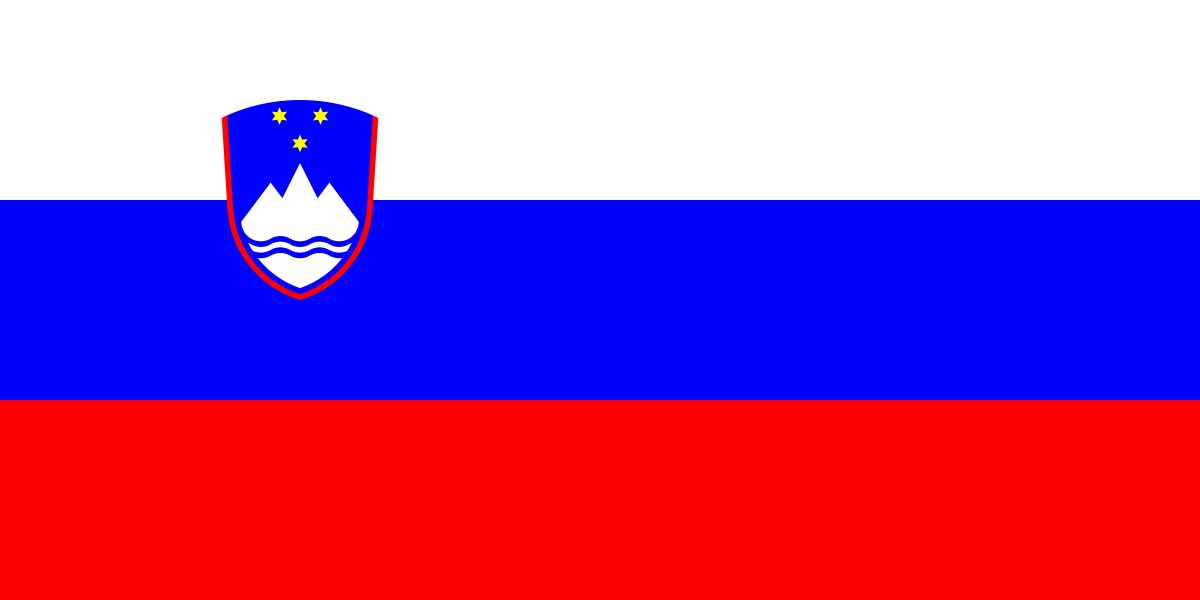
- ISO code
- SI
- Population
- 2,067,372
- Currency
- EUR
- Dial code
- +386
Slovenia’s Compact Geography: Capital, Alps, and Coast in a Single Morning
You are sitting at a wrought iron table on a cobbled square in Ljubljana, coffee finished, pastry crumbs on the plate. By noon you could be on a hiking trail beneath the limestone walls of the Julian Alps. By sunset your feet could be in the Adriatic off the coast of Piran. That is not a marketing slogan. It is a logistical fact: the maximum driving distance across Slovenia is roughly 250 kilometres, and you can cover that in about three hours. The country is the size of Wales, but it packs a capital, a mountain range, and a coastline into a space where transit is counted in minutes, not half days.
Slovenia works best as one interconnected destination. You do not choose between the city, the Alps, and the coast. You sequence them. The question is not whether you can do all three in a single trip. It is how to arrange the order so you waste none of the advantage. The answer is a clockwise loop starting in Ljubljana, climbing into the mountains, then dropping to the sea.

Start in Ljubljana: the Capital That Does Not Eat Your Time
Ljubljana is not a capital you need three days to decode. With a population of 296,228 (Statistical Office of the Republic of Slovenia, 2024), it is small enough that the historic core is walkable in a couple of hours. The Ljubljanica river bends through the centre, and the castle sits on a hill you can climb in ten minutes or reach by funicular in four. This is not Budapest. Buda's hills are steep and Pest's boulevards are long. Ljubljana is compact. That is the point: you are not meant to linger for days. You are meant to use it as the hinge.
One full day in the capital is enough. Use the morning for the castle, the Triple Bridge, and the Central Market. Book lunch at a restaurant on the river. Then consider your exit. The train to Lake Bled takes 50 to 70 minutes from Ljubljana's main station. The bus to Lake Bohinj takes about two hours. Eat a mid-afternoon pastry in the city and be on a trail above the lake before dinner. That is the entire argument for starting here: Ljubljana gives you everything a capital offers and then releases you.
The Julian Alps: Two Lakes, One National Park
From Ljubljana you head northwest into the Julian Alps. Triglav National Park covers 839.8 square kilometres and contains the country's highest peak, Triglav, at 2,864 metres. You are not required to summit it. Two lakes give you the maximum return for minimum effort: Bled and Bohinj.
Lake Bled: The Famous One, Handled Efficiently
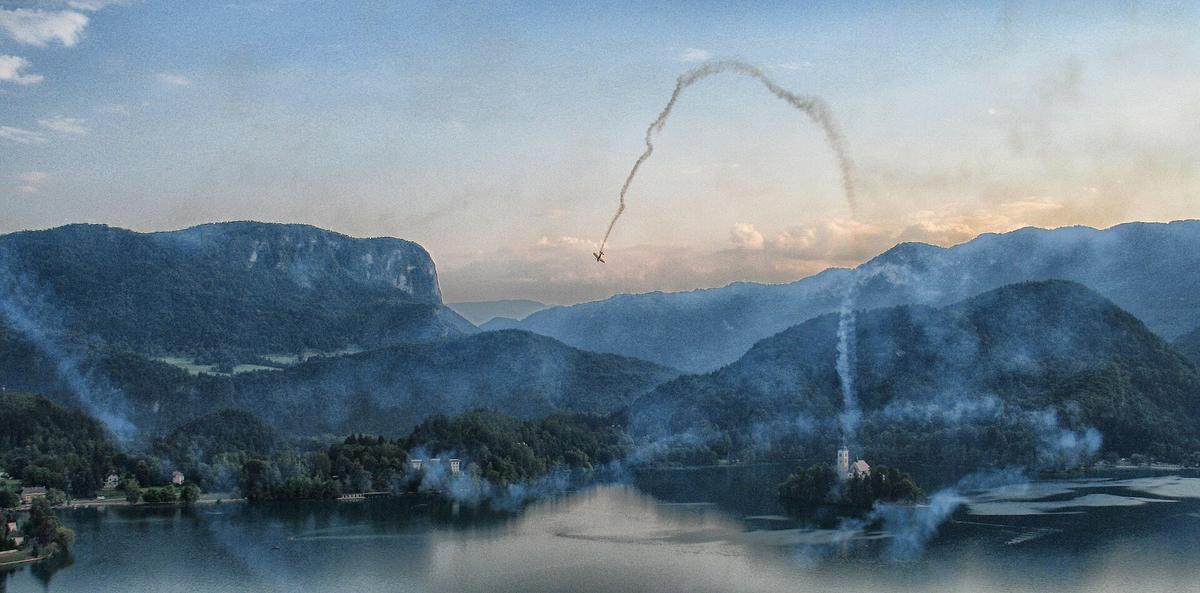
Lake Bled has a maximum depth of 30.6 metres and a tiny island of 0.82 hectares on its surface. The island church, the castle perched on the cliff, the pletna boats. It is photogenic, it is crowded, and it is worth exactly one day. Arrive by train at Lesce Bled station, then take a local bus or taxi the remaining four kilometres to the lake. Do the castle first. The entry fee is worth it for the view. Take a pletna boat to the island. Walk the 6 kilometre perimeter trail. That is the entire program. Do not book a hotel here. The charm fades after the day trippers leave and you are left with a small town whose only draw is the lake itself. Push on.
Lake Bohinj: The Better Base for Hiking
Lake Bohinj is 45 metres deep at maximum, covers 3.18 square kilometres, and sits inside Triglav National Park proper, which Bled does not. It is less developed, less photographed, and more useful as a base. The water is colder. The crowds are thinner. The trails into the park start from the far end of the lake. If you want to hike, stay here. If you want a postcard, stay in Bled. The decision is that simple.
From Bohinj take the cable car up to Vogel for a panoramic view of the lake and the surrounding peaks. Or drive the Vršič Pass, the highest mountain pass in Slovenia, which connects to the Soča Valley. That valley with its emerald river is a separate day if you have it. If you do not, skip it and head for the coast.
The Coast: Piran and the 46 Kilometre Line
Slovenia has 46.6 kilometres of coastline. That is slightly longer than the distance from London Heathrow to the M25 orbital. You can drive it in under an hour. The only town you need is Piran, with a municipal population of 18,079 (Statistical Office of the Republic of Slovenia, 2024). It is a Venetian-era fishing port built on a peninsula, and the old town is car-free. Park in the garage outside the walls and walk in. That is mandatory.
Piran gives you Tartini Square, the town walls, and a small harbour with seafood restaurants. The water is clean enough to swim from the rocks below the walls. Do not expect the Croatian coast. Expect a single, self-contained town that requires an afternoon and an evening. Watch the sunset from the tip of the peninsula. Then drive back to Ljubljana in about 90 minutes, or fly out of Trieste airport just across the Italian border. If the Adriatic feels too neat, Bulgaria’s Black Sea coast offers a rougher, wider kind of seaside with Roman ruins just inland.

The Alps to the Adriatic: the Drive That Makes it Work
The connection between the Julian Alps and the coast is the A1 motorway and then the H4 expressway, or the slower route through the Vipava Valley and Goriška Brda wine regions. Both are designated Protected Designation of Origin (PDO) areas. The fast route takes about 90 minutes from Bled or Bohinj to the coast. The slow route takes two to three hours and goes through vineyards, hill towns, and karst landscapes. If you have the time, take the slow route. If you do not, the motorway is fine. Leave the mountains after breakfast and eat seafood on the Piran waterfront by lunch. That distance is the entire reason this trip works.
Two Caves Worth the Detour
You could also connect via Postojna Cave, which has a total length of 24,120 metres and a visitor route of about 5 kilometres, partly by electric train. It is 60 minutes from Ljubljana by train and sits directly on the route from the capital to the coast. Or stop at the Škocjan Caves, a UNESCO site since 1986, with an underground canyon up to 146 metres deep through which the Reka River flows. Both are worth a halt. Neither requires a full day. They are the kind of detour that makes a three-hour drive take five hours, and that is the kind of day you should plan for.
The Honest Caveat
This itinerary works because Slovenia is small. But small does not mean instant. The train from Ljubljana to Koper is a slow regional line that crawls through the karst. The bus from Bohinj to the coast requires a change in Ljubljana. And the three-hour driving maximum assumes clear roads and no stops. Add a lunch in the Vipava Valley and a cave tour at Postojna, and that three-hour drive becomes a full day. Plan for the day, not the distance. The geography gives you the option, not the shortcut.
Common Questions
How many days do I need for this Ljubljana Alps coast trip?
Four days minimum: one for Ljubljana, one for Bled, one for Bohinj and the drive to the coast, one for Piran and the return. With three days you skip Bohinj and drive directly from Bled to Piran.
Should I rent a car or use public transport?
Public transport works for the main route: train Ljubljana to Bled, bus from Bled to Bohinj, then a bus from Bohinj to the coast via Ljubljana. That last leg is slow. A rental car saves three hours and lets you stop at the caves and wineries.
What is the best time of year to do this route?
June and September. July and August bring crowds to Bled and Piran, and the mountain trails are packed. May is rainy. October risks snow on the Vršič Pass. September gives you warm lake swimming and empty coastal streets.
Can I visit the coast without a car?
Yes. The bus from Ljubljana to Piran runs via Nomago and takes about two and a half hours. The train to Koper takes about two hours and 20 minutes, then a local bus to Piran. Both are viable but inflexible.
Read next
-
 A Week in Marseille Beyond the Vieux-Port — Neighborhoods Worth Knowing
Most visitors never leave the harbor. This guide covers four Marseille neighborhoods worth a week of your time, with real prices from spring 2024.
A Week in Marseille Beyond the Vieux-Port — Neighborhoods Worth Knowing
Most visitors never leave the harbor. This guide covers four Marseille neighborhoods worth a week of your time, with real prices from spring 2024.
-
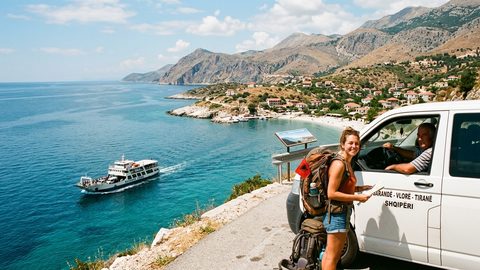 Albania by Furgon and Coastal Ferry for Independent Travelers
A practical overland guide to Albania by local furgon and Adriatic ferry — real logistics on stations, small-town accommodation, and staying connected.
Albania by Furgon and Coastal Ferry for Independent Travelers
A practical overland guide to Albania by local furgon and Adriatic ferry — real logistics on stations, small-town accommodation, and staying connected.