Budapest Public Transport and the Ticket Rules That Trap Tourists
Master Budapest's BKK network: validate paper tickets before boarding, use the BudapestGO app offline, and know which metro lines inspectors patrol most.
The Validation Rule That Costs First Timers 12,000 Forint
Validate Before You Sit
You board a tram, drop onto a seat, and open your phone. A man in a jacket sits down beside you, flashes a badge, and demands to see your ticket. If you haven't validated it, you owe 12,000 forint on the spot. No excuse about being a tourist will reduce that. This happens on the M1 metro line and along Tram 2 more than anywhere else in the network.
The single rule: validate your paper ticket at a machine before boarding the metro or inside the tram or bus the moment you step on. Every vehicle change means a fresh validation. Digital passes through the BudapestGO app sidestep this entirely. Validation happens when you scan the QR code at the station entrance or show it to the validator screen, and the app timestamps it automatically.

Paper Tickets Vs. BudapestGO: Which One Protects Your Wallet
Paper: Cheaper Per Ride, Costlier Per Mistake
A single paper ticket costs 450 forint in 2026 if you buy it from a BKK ticket machine before boarding. Buy it on the vehicle from the driver and the price jumps to 600 forint. A block of ten paper tickets costs 4,000 forint, but you must keep track of the stubs and validate each one on every vehicle change. The 24-hour travel card at 2,500 forint in 2026 covers unlimited metro, tram, bus, and suburban HÉV trains within the city limits for one full day. The 72-hour card costs 5,500 forint. If you stay longer, the monthly Budapest pass costs 9,950 forint and the monthly student pass costs 3,450 forint, both at 2026 rates published by BKK.
Digital: One Scan, No Stubs
Download the BudapestGO app before you arrive. It works offline once you download the city map. Buy passes inside the app with a card; the app stores the digital ticket. When you board a tram or enter a metro station, open the app and show the QR code to the scanner on the validation pillar. On a tram platform, scan the code printed on the vehicle door. The app also shows live departures, route changes, and which stations have lifts. Plain-clothes inspectors accept digital passes the same as paper, but they can check the timestamp on your phone screen without waiting for you to find a stub. If your phone battery dies, you are travelling without a valid ticket. Carry a backup paper ticket or a power bank.
Three Lines That Will Fine You and One That Will Save Your Night
M1: The Tourist Trap Below Andrássy
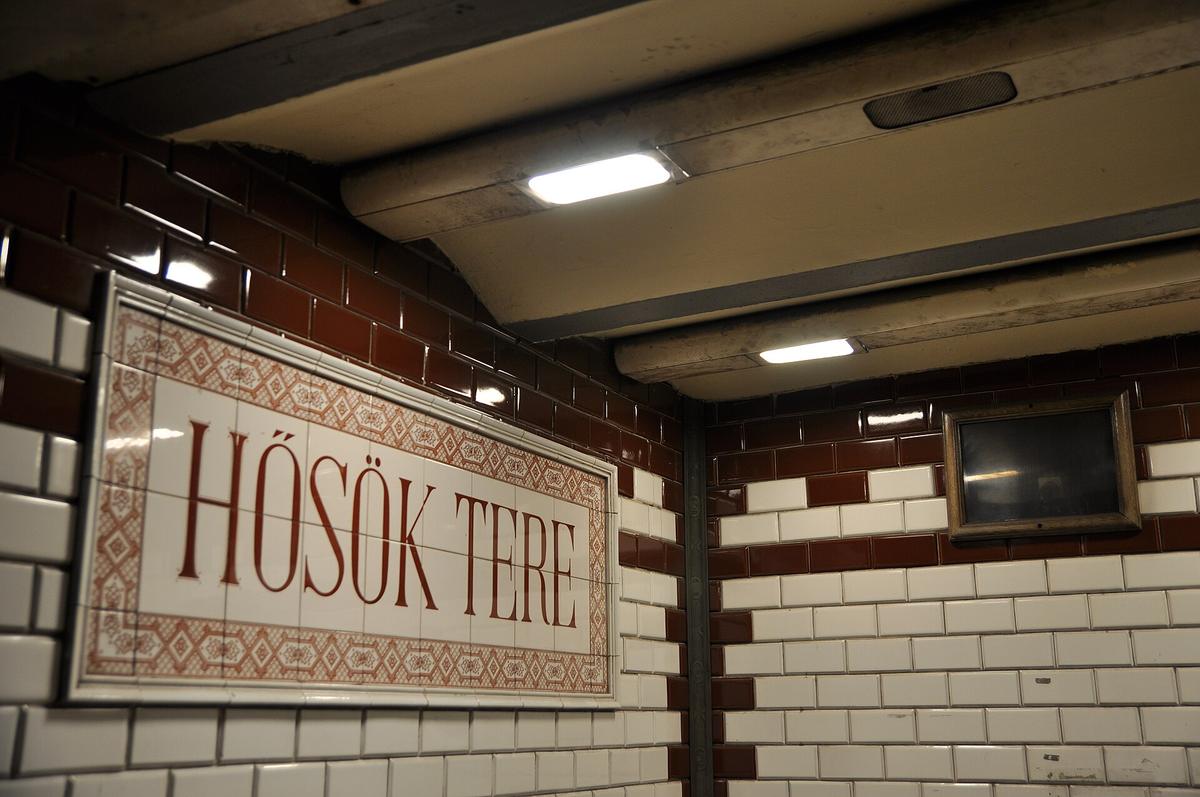
Inspectors concentrate on the M1 line and Tram 2 because both carry high volumes of tourists who assume validation rules are optional. The M1, the Millennium Underground Railway opened in 1896, runs 4.4 km from Vörösmarty tér to Mexikói út with 11 stations, all marked in yellow on maps. It is the oldest metro on mainland Europe and a Unesco-listed site. But it also runs small, shallow trains where inspectors board every few stops between Deák Ferenc tér and Hősök tere. Validating your ticket before descending to the platform is mandatory, not a suggestion.
Tram 2: The Danube Route With a Catch
Tram 2 runs the entire Pest embankment of the Danube from Jászai Mari tér to Közvágóhíd, passing the Parliament building and the Central Market Hall. It is the city's scenic tram, so visitors ride it with an unvalidated ticket in hand. Inspectors board at the front during peak hours and walk through the carriage. Validate by inserting your ticket into the orange box mounted on the pole by the door. Do it immediately after boarding, not when you see the inspector.
Tram 4-6: Your All-Night Artery
Tram 4-6 runs along the Nagykörút, the Grand Boulevard, from Széll Kálmán tér to Újbuda központ. It runs 24 hours a day with a headway of 2 to 3 minutes at peak and 4 to 6 minutes off peak. It is your nightlife artery. When the metro closes at 23:59, Tram 4-6 keeps going all night, and 24-hour and 72-hour passes cover it. Validate the same way, at the orange box by the door.
| Product | Price | Valid For |
|---|---|---|
| Single ticket (machine) | 450 HUF | One ride, one vehicle, validate on each change |
| Single ticket (onboard) | 600 HUF | Same as above, penalty for not purchasing before boarding |
| Block of 10 tickets | 4,000 HUF | Ten separate rides, validate each before first use |
| 24 hour travel card | 2,500 HUF | Unlimited rides for 24 hours from validation |
| 72 hour travel card | 5,500 HUF | Unlimited rides for 72 hours from validation |
| Monthly Budapest pass | 9,950 HUF | Unlimited rides for 30 days |
| Monthly student pass | 3,450 HUF | Unlimited rides for 30 days, valid student ID required |
| 100E airport bus ticket | 2,200 HUF | Single ride between airport and Deák Ferenc tér, not valid on other BKK services |

Your Best Arrival and the Lines That Connect Everything
The Airport Run: 100E or Nothing
The 100E airport bus is your best arrival option. It departs from Terminal 2 outside the arrivals hall and runs to Deák Ferenc tér in the centre in 35 to 45 minutes. The 2026 ticket price is 2,200 forint. Buy it separately from a BKK machine or on the BudapestGO app. It is not a standard BKK pass, so a 24-hour card does not cover it. The bus runs from 04:00 to 01:20 depending on direction, with headways of 10 to 20 minutes. If your flight lands after 01:00 and the 100E has stopped, take a 200E bus to Kőbánya-Kispest metro station and ride the M3 line into town. This adds 40 minutes and requires a validated ticket.
Official taxis from the Főtaxi booth inside the terminal cost 10,000 to 12,000 forint to central Pest. Ignore anyone approaching you in the arrivals hall. They are unlicensed drivers charging double or triple the official fare. If you cannot find the Főtaxi booth, walk past the rows of waiting cars to the taxi rank signposted outside the terminal doors.
Four Lines, One System
The metro has four lines: M1 yellow, M2 red, M3 blue, M4 green. Trains run from 04:30 to 23:59 daily. At peak, headway is 2 to 3 minutes. Off peak it drops to 5 to 10 minutes. The M3 line connects Kőbánya-Kispest to the centre and is the line you take from the 200E night bus. The M2 line connects Déli station on the Buda side to Keleti station on the Pest side, where trains to Vienna, Bratislava, and Kraków depart. The M4 line serves the southern Buda side and stops at Fővám tér, steps from the Central Market Hall.
Crossing the River
You need to cross the Danube far more often than you expect. Buda's hills look walkable on a map but the climb from the Chain Bridge up to the Castle District is steep and the cobbles are uneven. The M2 metro crosses under the river. Buses 16 and 16A climb to the Castle District from Deák Ferenc tér. Save a full day for Buda, not a half day. The best views of Pest are from Buda at sunset, and you do not want to be rushing back down the hill without a validated ticket on the bus.
Common Questions
Where exactly do I validate a paper ticket on a tram?
Find the orange box mounted on the pole beside the door. Insert your paper ticket into the slot until you hear a click and the machine prints the time and date on the stub. Do this the moment you step on, not after you sit down, because inspection often happens at the first stop after you board.
Can I use a single ticket for a transfer?
No. A single ticket is valid for one vehicle ride only. If you change from a tram to a metro line, you need a second ticket or a validated transfer pass. A 24-hour or 72-hour card covers unlimited vehicle changes, which is why most visitors buy the 24-hour card for 2,500 forint.
What happens if an inspector fines me and I don't have 12,000 forint in cash?
Inspectors carry card terminals. They will not accept excuses or a promise to pay later. If you cannot pay on the spot, they issue a penalty notice for 25,000 forint if paid immediately or 50,000 forint if you pay after the deadline. They note your passport details.
Is the BudapestGO app enough, or do I need a paper ticket as backup?
The app is sufficient if your phone has battery. But if your phone dies during a ride, you are technically travelling without a valid ticket. Carry a paper 24-hour card as a backup, or bring a power bank. Free public WiFi is available on trams and in metro stations, but it does not charge your phone.
How do I ride the 100E airport bus?
Buy a separate 100E ticket for 2,200 forint from the red BKK machine at the airport bus stop or on the BudapestGO app. Standard BKK passes do not work on the 100E. Board at Terminal 2 and it goes direct to Deák Ferenc tér in 35 to 45 minutes.
Why do inspectors target the M1 and Tram 2 specifically?
Both lines carry a disproportionate number of tourists who do not know the validation rules. The M1 is 4.4 km long with shallow platforms and small carriages where inspectors can walk through quickly. Tram 2 runs along the Danube past the Parliament, making it the default sightseeing tram for first-time visitors.
What do I do when the metro closes at midnight?
The metro stops at 23:59. Tram 4-6 runs 24 hours along the Grand Boulevard, connecting the Buda side at Széll Kálmán tér to south Pest at Újbuda központ. It runs every 4 to 6 minutes even at 3am. Validate your ticket the same way.
Read next
-
 Budapest Hotels With Thermal Baths, Danube Views and Design Cred
Budapest hotels that deliver real thermal-bath access, Danube panoramas, and design character, from the Gellért's Art Nouveau spa wing to Palace Quarter sleepers.
Budapest Hotels With Thermal Baths, Danube Views and Design Cred
Budapest hotels that deliver real thermal-bath access, Danube panoramas, and design character, from the Gellért's Art Nouveau spa wing to Palace Quarter sleepers.
-
 Where to Stay in Budapest for First-Timers Who Want the Right Vibe
Match your Budapest district to your travel style, from grand Belváros cafes to the ruin-bar hum of Erzsébetváros, with honest notes on noise and hill climbs.
Where to Stay in Budapest for First-Timers Who Want the Right Vibe
Match your Budapest district to your travel style, from grand Belváros cafes to the ruin-bar hum of Erzsébetváros, with honest notes on noise and hill climbs.
-
 Budapest Flights and Airport Transfer Traps to Avoid in 2025
Which budget airlines serve Budapest Ferenc Liszt Airport, how to get from BUD to the centre, and the taxi and bus ticket traps that catch first-timers.
Budapest Flights and Airport Transfer Traps to Avoid in 2025
Which budget airlines serve Budapest Ferenc Liszt Airport, how to get from BUD to the centre, and the taxi and bus ticket traps that catch first-timers.
-
 Budapest Things to Do That Are Not Just the Parliament and a Bath
Go beyond the Parliament and thermal baths with Budapest's nuclear bunker museum, exiled Soviet statues, ruin-bar farmers markets, and City Park boat rides.
Budapest Things to Do That Are Not Just the Parliament and a Bath
Go beyond the Parliament and thermal baths with Budapest's nuclear bunker museum, exiled Soviet statues, ruin-bar farmers markets, and City Park boat rides.
-
 When to Visit Budapest Around the Sziget Crush and the Christmas Markets
Plan Budapest around the Sziget Festival accommodation spike, the August 20 fireworks gridlock, and the F1 squeeze, then find the quiet-season spa mornings.
When to Visit Budapest Around the Sziget Crush and the Christmas Markets
Plan Budapest around the Sziget Festival accommodation spike, the August 20 fireworks gridlock, and the F1 squeeze, then find the quiet-season spa mornings.
-
 A Budapest Itinerary That Crosses the Danube More Than You Expect
A Budapest itinerary that respects the scale: one full day for Buda's hills, one for Pest's Jewish Quarter depth, and a thermal-bath rest day in between.
A Budapest Itinerary That Crosses the Danube More Than You Expect
A Budapest itinerary that respects the scale: one full day for Buda's hills, one for Pest's Jewish Quarter depth, and a thermal-bath rest day in between.
-
 Hungary Beyond Budapest: Danube Bend Towns and the Great Plain
Hungary beyond Budapest packs Roman ruins, Baroque riverside towns, and the vast Puszta plain into a country you can cross by train in half a day.
Hungary Beyond Budapest: Danube Bend Towns and the Great Plain
Hungary beyond Budapest packs Roman ruins, Baroque riverside towns, and the vast Puszta plain into a country you can cross by train in half a day.
-
 What Budapest and Central Europe Actually Cost Now, From a Lángos to a Thermal Bath Pass
Budapest still runs at roughly half the cost of Vienna for accommodation, meals, and attractions, but prices have risen sharply in the Jewish Quarter and Castle District.
What Budapest and Central Europe Actually Cost Now, From a Lángos to a Thermal Bath Pass
Budapest still runs at roughly half the cost of Vienna for accommodation, meals, and attractions, but prices have risen sharply in the Jewish Quarter and Castle District.
-
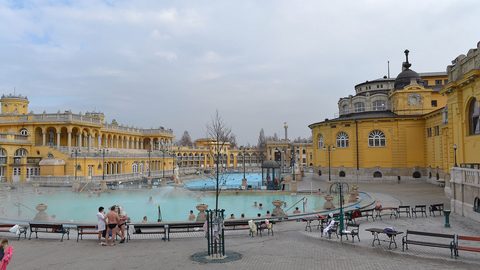 Budapest Thermal Baths Compared Which One and How It Works
Széchenyi, Gellért, Rudas, Király, or Lukács—which Budapest thermal bath fits your trip based on architecture, crowds, gender rules, and local authenticity.
Budapest Thermal Baths Compared Which One and How It Works
Széchenyi, Gellért, Rudas, Király, or Lukács—which Budapest thermal bath fits your trip based on architecture, crowds, gender rules, and local authenticity.