Exploring Plovdiv: Ancient Ruins, Creative Lanes and the City's Seven Hills
Plovdiv layers Thracian ruins, Roman spectacle, Ottoman architecture and Kapana's street art across seven hills you can walk in a single day.
Plovdiv Things to Do Seven Hills Kapana
You have seen the Roman Theatre photos. You have walked the main pedestrian street. Now you need to know what else makes Plovdiv worth three days. The answer is the city's layered identity: a Thracian fortress hill, an Ottoman-era crafts district turned street-art laboratory, a National Revival mansion packed with 40,000 ethnographic objects, and a commitment to climbing at least three of the seven hills to understand how this city sits on the landscape. Plovdiv is not a one-sight town. It is a city you read by walking its topography.
The Roman Theatre is the Headliner, Not the Whole Show
Start With the Stadium, Not the Theatre
The Roman Theatre draws the crowds, and it should. Built in the late 1st century AD under Emperor Trajan, it held between 5,000 and 7,000 spectators. Rediscovered in the 1970s when a landslide revealed the structure, it now hosts performances during the Plovdiv International Fair and the Opera Open festival each year. Book tickets for an evening show if you can. The acoustics are genuine Roman engineering.
But the Roman Stadium, dating from the 2nd century AD under Hadrian, is easier to miss and more instructive. It ran 240 meters and held 30,000 spectators. Only the northern curved end, the sphendone, is visible above ground under ul. Knyaz Alexander I. The accessible section sits in Dzhumaya Square via an underground walkway open to the public. Go there first. It is free, it is almost never crowded, and it shows you how much of Roman Plovdiv still sits below the modern street.
The Revival Houses Tell a Different Story
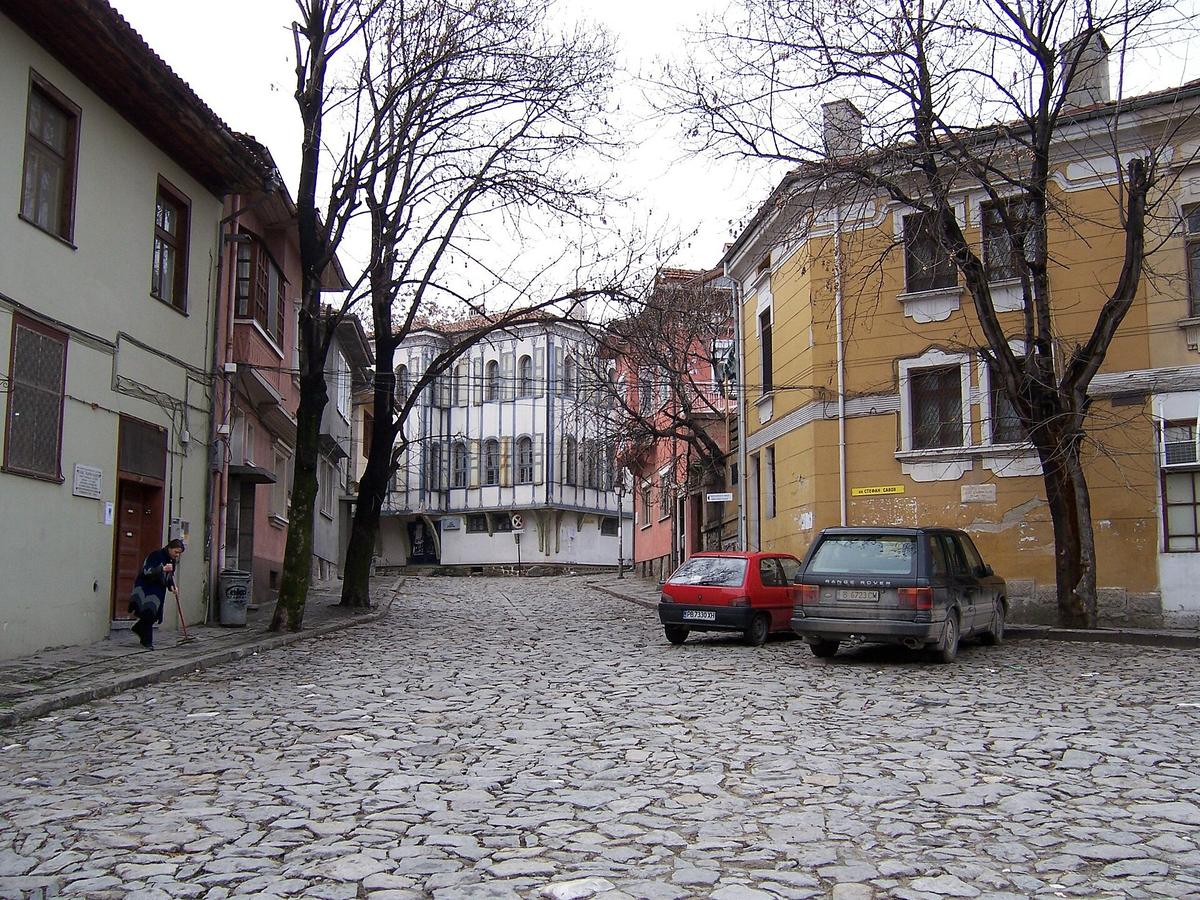
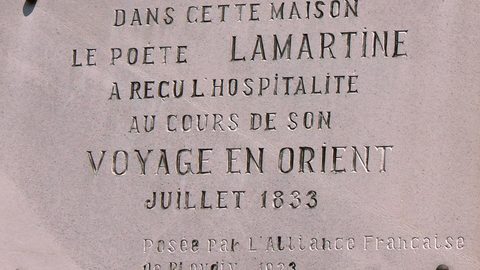
Do not spend your whole day on Roman ruins. The city's Revival-era houses, over 150 in the Old Town architectural reserve, tell a different story. The Kuyumdzhioglu House, built in 1847 and now the Regional Ethnographic Museum at ul. Doctor Stoyan Chomakov 2, holds over 40,000 items. Budget 45 minutes for the museum. The Hindliyan House (1835), Balabanov House (early 19th century), Georgiadi House (1848), and Nedkovich House (1863) are all open to the public as museums or cultural venues. Lamartine House operates as a creative writing centre, commemorating the poet's 1833 stay.
.jpg)
Kapana: the Arts District That Runs on Narrow Lanes
What the 2019 Capital of Culture Left Behind
Kapana means "the trap" in Bulgarian, a name earned by its irregular, narrow lanes that were once a merchant quarter. The 2019 European Capital of Culture programme pushed Kapana into its current identity as an arts and crafts district. Pedestrian zone expansion was a permanent legacy of that year. Now you walk into Kapana and find street art on every wall, independent galleries in former workshops, and small courtyard bars that fill after dark.
The failure case: rain or a 1am arrival means Kapana is quiet. The street art is still visible, but the galleries close by 19:00. Come between 11:00 and 18:00 on a weekday or Saturday. The Kapana Fest, an annual street festival that continued after 2019, is the best time to visit, but accommodation near the district books out weeks ahead. Check the festival dates for the current year before you book.
The Two Venues Worth Your Time
Do not confuse Kapana with the main pedestrian street. It is two blocks south, behind the Dzhumaya Mosque. The 2019 ECoC left two permanent legacy venues: SKLAD, a tobacco warehouse converted to a cultural space at ul. Ekzarh Yosif 16, and the Regional Centre for Contemporary Art "The Ancient Bath" at Chifte Banya, ul. Chetvarti Yanuari 3. The Bishop's Basilica of Philippopolis visitor centre opened in 2021 as a post-ECoC project. It is a modern archaeology museum over a 4th-century mosaic floor. For a contrast in Roman amphitheatre scale, Verona’s arena still fills with opera crowds while Plovdiv’s theatre opens to a quieter hillside panorama.
Climbing the Seven Hills: Nebet Tepe First
Nebet Tepe: The One Hill You Must Climb
The Seven Hills define Plovdiv's geography. You cannot understand the city from street level. You need the height. Nebet Tepe, at 203 meters above sea level, is the hill to climb first. It holds the earliest settlement evidence on the site: Neolithic occupation from the 6th millennium BC, followed by Thracian fortification walls from the 5th to 4th centuries BC. The climb takes 10 to 15 minutes from the Old Town. The reward is a panorama of the entire city and the Rhodope Mountains to the south. Go for sunset. The light hits the red-tiled roofs of the Revival houses and the Kapana district below.
Three Hills Is the Minimum
Three hills is the minimum to claim you have done them. Nebet Tepe, Dzhambaz Tepe, and Taksim Tepe form the Trimontium, the three hills that gave Roman Plovdiv its name. The other four hills outside the old centre require more time and less obvious paths. Budget 90 minutes for a Nebet Tepe visit including the summit and the descent. If mobility is a concern, skip the outer hills. The cobbles on Nebet Tepe are uneven and there are no handrails.
| Hill | Elevation | Key Feature | Walking Time From Old Town |
|---|---|---|---|
| Nebet Tepe | 203 m | Thracian walls, Neolithic settlement, sunset view | 10–15 min |
| Dzhambaz Tepe | 190 m | Roman Theatre, panoramic platform | 5 min |
| Taksim Tepe | 190 m | Revival houses, Ethnographic Museum | 5 min |
| Bunardzhik Tepe (Youth Hill) | 210 m | Soviet monument 'Alyosha', Rhodope view | 25 min |
| Sahat Tepe (Clock Hill) | 180 m | Clock tower, residential lanes | 20 min |
| Danov Tepe | 160 m | Green space, less visited | 30 min |
| Markovo Tepe | 150 m | Not easily accessible, mostly built over | N/A |

Beyond the City: One Afternoon in the Rhodopes
Bachkovo Monastery: The Reliable Day Trip
The Bachkovo Monastery is 30 km south of Plovdiv, a 40-minute drive or a bus from the South Bus Station. Founded in 1083 AD by the Byzantine military commanders Gregory Pakourianos and his brother Abas, both of Georgian origin, it is one of the oldest Eastern Orthodox monasteries in Europe. The ossuary, built in the late 11th to early 12th century, contains 12th-century frescoes. The monastery is still active. Dress appropriately: shoulders and knees covered. The bus costs roughly 5 BGN each way. The monastery grounds are free. The ossuary may have a small entry fee.
If you have a full day, push further south into the Rhodope villages: Kosovo, Narechenski Bani, Hvoyna, Orehovo, and Smolyan. These are not tourist stops. There is no signage in English. If you arrive at 1am, nothing is open. The monastery is the only reliable daytime destination from Plovdiv.
If You Only Have One Morning for the Monastery
Leave Plovdiv by 08:00. Take the first bus from South Bus Station. Arrive before 09:30. The crowd arrives from 10:30 onward in summer. Visit the ossuary first, then the main church. The monastery shop sells honey and wine. Buy the honey if you can carry it. The wine is mediocre. Return to Plovdiv by 13:00.
Common Questions
How many days do I need for Plovdiv?
Two full days: one for the Roman Theatre, Old Town, and Nebet Tepe; one for Kapana and a half-day trip to Bachkovo Monastery. Three days if you want to hike all seven hills or visit the Rhodope villages.
When is the best time to visit Kapana?
Late morning to early evening on a weekday or Saturday. Galleries close by 19:00. The annual Kapana Fest is the best time for street events, but check the 2026 dates before booking.
Can I see the Roman Theatre without a show?
Yes. The theatre is open for daytime visits. Entry costs approximately 5 BGN. If no performance is scheduled, you can walk the seating tiers and the stage. Arrive by 09:00 to avoid tour groups.
Is the Ethnographic Museum worth the entry fee?
Yes, if you have 45 minutes. The collection of 40,000 items covers costume, crafts, and daily life from the National Revival period. The building itself, the Kuyumdzhioglu House from 1847, is worth seeing for its painted ceilings and carved woodwork.
What do I do if I only have one day?
Start at the Roman Theatre at 09:00. Walk to the Roman Stadium underpass at Dzhumaya Square. Climb Nebet Tepe by 10:30. Spend two hours in Kapana before lunch. Visit one Revival house museum in the afternoon. Skip Bachkovo Monastery.
Read next
-
 Where to Stay in Plovdiv Kapana District or Old Town for the Best Base
Plovdiv's Old Town offers atmosphere and views but steep climbs, while Kapana delivers cafe culture at the cost of late-night noise.
Where to Stay in Plovdiv Kapana District or Old Town for the Best Base
Plovdiv's Old Town offers atmosphere and views but steep climbs, while Kapana delivers cafe culture at the cost of late-night noise.
-
 Getting Around Plovdiv Without a Car: Buses, Taxis and Walking the Hills
Plovdiv is best explored on foot but buses and taxis connect the hills and outlying districts. Learn the routes, fares and taxi traps before you go.
Getting Around Plovdiv Without a Car: Buses, Taxis and Walking the Hills
Plovdiv is best explored on foot but buses and taxis connect the hills and outlying districts. Learn the routes, fares and taxi traps before you go.
-
 Bulgaria Travel Guide: Plovdiv Roman Layers, Rhodope Villages and the Coast
Bulgaria layers Thracian tombs, Roman theatres, and Rhodope Mountain villages into a compact country where Plovdiv anchors any serious itinerary.
Bulgaria Travel Guide: Plovdiv Roman Layers, Rhodope Villages and the Coast
Bulgaria layers Thracian tombs, Roman theatres, and Rhodope Mountain villages into a compact country where Plovdiv anchors any serious itinerary.
-
 Plovdiv or Sofia Which Bulgarian City Should You Base Yourself In
Plovdiv and Sofia offer two different Bulgarias: one an intimate arts city with a Roman theatre, the other a sprawling capital with mountain access. Which one suits your trip.
Plovdiv or Sofia Which Bulgarian City Should You Base Yourself In
Plovdiv and Sofia offer two different Bulgarias: one an intimate arts city with a Roman theatre, the other a sprawling capital with mountain access. Which one suits your trip.
-
 A Week in Marseille Beyond the Vieux-Port — Neighborhoods Worth Knowing
Most visitors never leave the harbor. This guide covers four Marseille neighborhoods worth a week of your time, with real prices from spring 2024.
A Week in Marseille Beyond the Vieux-Port — Neighborhoods Worth Knowing
Most visitors never leave the harbor. This guide covers four Marseille neighborhoods worth a week of your time, with real prices from spring 2024.
-
 Albania by Furgon and Coastal Ferry for Independent Travelers
A practical overland guide to Albania by local furgon and Adriatic ferry — real logistics on stations, small-town accommodation, and staying connected.
Albania by Furgon and Coastal Ferry for Independent Travelers
A practical overland guide to Albania by local furgon and Adriatic ferry — real logistics on stations, small-town accommodation, and staying connected.