A Budapest Jewish Quarter Walk That Connects the Food and the History
A practical guide to A Budapest Jewish Quarter Walk That Connects the Food and the History.
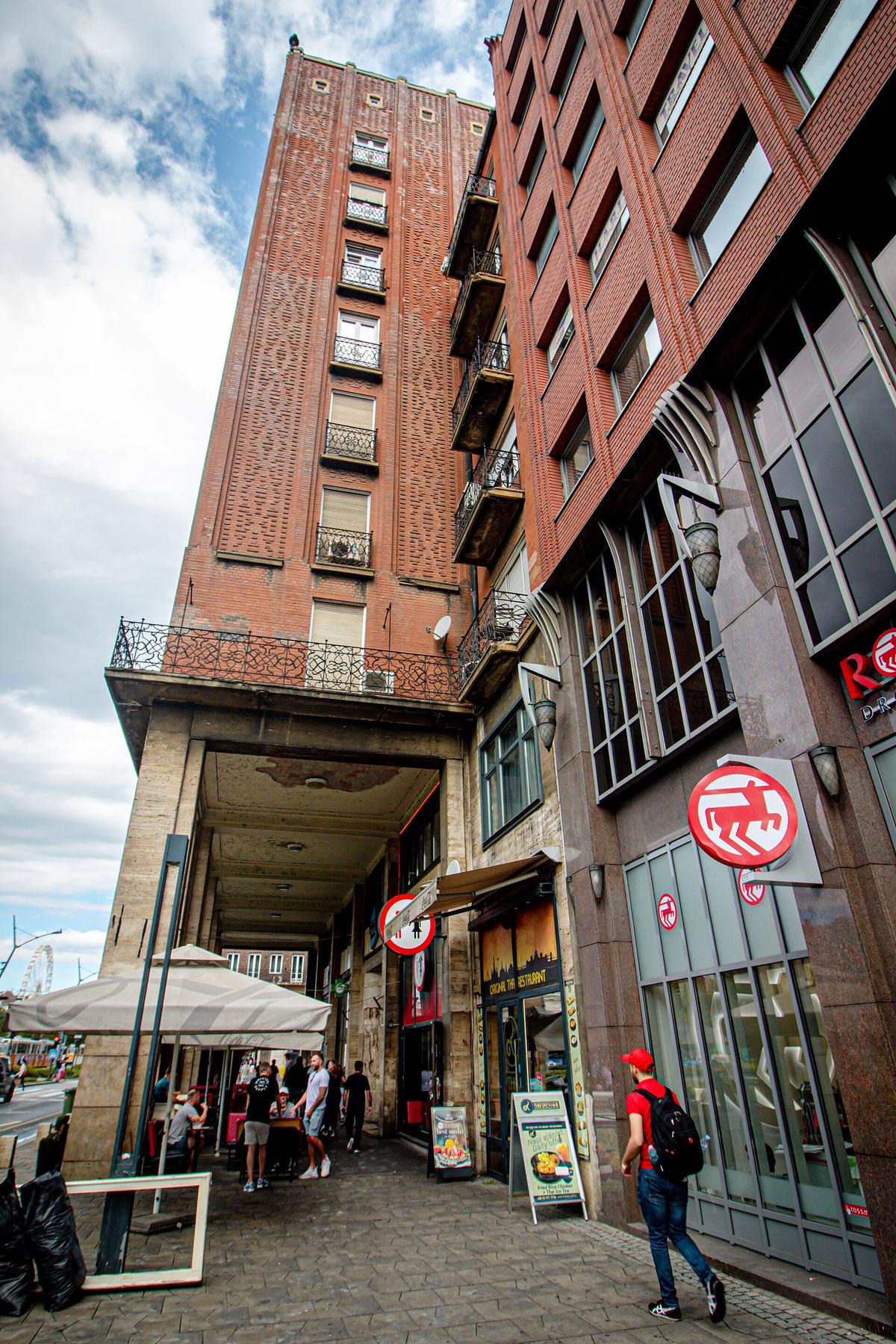

A Walk Through Time and Taste
This route strings together the essential stops in Budapest's Jewish Quarter, the compact inner section of District VII bounded by Király utca, Erzsébet körút, Dohány utca, and Károly körút. By 1910, more than 23 percent of Budapest's population was Jewish, numbering over 200,000 people and making the city the second-largest Jewish community in Europe after Warsaw. The neighbourhood still carries that density in its architecture, its memorials, and its kitchens. The walk moves from grand sacred spaces through quiet courtyards to the lively food and market stalls that define the quarter today, pairing each landmark with a nearby flavour worth seeking out.
The Dohány Street Synagogue Complex
Begin at the Dohány Street Synagogue, completed in the 1850s for the Neolog community and still the largest synagogue in Europe, with seating for roughly 3,000 people. A single ticket gives access to the entire complex, which includes the Hungarian Jewish Museum, the Raoul Wallenberg Memorial Park, and the Heroes' Temple. In the park, look for the Emmanuel Tree of Life Holocaust Memorial, a weeping willow sculpture by Imre Varga unveiled in 1991, its metal leaves inscribed with the names of victims. The Holocaust Cemetery and the Forced Labour Memorial sit within the same grounds. Because opening hours and admission prices shift seasonally and the synagogue closes on Saturdays for Shabbat, check the current schedule through the MAZSIHISZ tourism office before setting out. If you arrive hungry, the area immediately around the synagogue is dense with cafés, but the more distinctive food stops lie deeper inside the quarter.
The Synagogue Triangle
A short walk north and east brings you to the two other corners of what is often called the Synagogue Triangle, a cluster born from the 1869 Hungarian Jewish Congress split. On Rumbach Street stands the moderately orthodox Rumbach Street Synagogue, designed by Otto Wagner and inaugurated in 1874. After decades of decay, it was restored and reopened in 2021 and now serves as a place of worship, a concert and exhibition space for the Jewish Museum and Archives, and a kosher café. Public access can be limited; at the time of writing, seasonal Sunday hours apply, and group visits require prior arrangement, so confirm the latest details through the official ticket platform. A few blocks further, at Kazinczy utca 29-31, the strictly orthodox Kazinczy Street Synagogue was built between 1912 and 1913 in Art Nouveau style by the Löffler brothers. Its complex remains the active religious centre of Budapest's Orthodox Jewish community and includes a mikveh, a kosher slaughterhouse, and the Hanna kosher restaurant. Kosher certification and restaurant operating status can change, so verify directly with the Federation of Hungarian Jewish Communities if you plan to eat here.
Memorials in the Streets
From Kazinczy Street, head west toward Dob utca. At number 10, you will find the Carl Lutz Memorial, a bronze sculptural group by Tamás Szabó unveiled in 1991. It marks a spot near one of the former entrances to the Budapest ghetto and commemorates the Swiss Vice-Consul who saved tens of thousands of Jews through protective documents and safe houses in 1944. The memorial is unmissable but easy to walk past if you are not looking for it. Pause here before continuing toward the courtyards; the contrast between the weight of this sculpture and the cheerful bustle of the next stop is part of what makes the quarter so layered.
Gozsdu Udvar and the Ghetto Walls
Walk a few minutes west to Gozsdu Udvar, a passage of seven interconnected buildings and courtyards stretching between Király utca and Dob utca. Built between 1900 and 1901 by the Gozsdu Foundation to the design of Győző Czigler, this complex was enclosed within the walled Budapest ghetto from November 1944 until the Soviet army liberated the area in January 1945, an act that saved its residents from mass deportation to Auschwitz. During that winter, roughly 70,000 Jews were confined inside the ghetto walls. Today Gozsdu Udvar is a UNESCO World Heritage Site filled with restaurants, bars, and shops. It is the most concentrated dining strip on the walk, making it a practical midday stop. The choice is between grabbing a table at one of the sit-down spots lining the courtyards or browsing the smaller food counters for something quick. The tradeoff is atmosphere versus speed: the full-service restaurants let you linger inside the historic passage, while the takeaway options free up time for the market hall ahead.
Klauzál Square Market Hall
End the walk at the Klauzál Square Market Hall on Akácfa utca, a neighbourhood market operated by the Municipality of Erzsébetváros. Unlike the grand central market halls that draw tour buses, this one serves the daily grocery needs of District VII residents. Stalls sell fresh produce, cured meats, pastries, and prepared Hungarian dishes. It is a working market, not a food court, so the selection depends on the day and the season. Opening hours can vary; check the official Klauzál X Garay website before visiting. If you want to assemble a picnic from market finds, this is the place to do it. If you prefer a plated meal, consider eating in Gozsdu Udvar first and treating the market as a final browse.
Szimpla Kert and the Evening
No walk through the Jewish Quarter ignores Szimpla Kert, Budapest's first ruin bar, at Kazinczy utca 14. It opened in 2002 and moved in 2004 to a former residential building and stove factory that had been slated for demolition. Today it hosts film screenings, live music, and a farmers' market alongside its bar operations. The interior is a labyrinth of mismatched furniture, art installations, and open courtyards. Because it sits close to the Kazinczy Street Synagogue, you can loop back here easily after the market hall. Whether you stop for a drink or simply walk through to see the space, it is a fitting close to a route that moves from 19th-century sacred architecture to the improvised, resilient culture that defines the quarter now.
Sources and verification
- offbeatbudapest.com — Research source checked for this guide
- jewishtourhungary.com — Research source checked for this guide
- bookasher.com — Research source checked for this guide
- hungaryunlocked.com — Research source checked for this guide
- cja.huji.ac.il — Research source checked for this guide
- gozsduudvar.hu — Research source checked for this guide
Read next
-
 Budapest Hotels With Thermal Baths, Danube Views and Design Cred
Budapest hotels that deliver real thermal-bath access, Danube panoramas, and design character, from the Gellért's Art Nouveau spa wing to Palace Quarter sleepers.
-
 Where to Stay in Budapest for First-Timers Who Want the Right Vibe
Match your Budapest district to your travel style, from grand Belváros cafes to the ruin-bar hum of Erzsébetváros, with honest notes on noise and hill climbs.
-
 Budapest Flights and Airport Transfer Traps to Avoid in 2025
Which budget airlines serve Budapest Ferenc Liszt Airport, how to get from BUD to the centre, and the taxi and bus ticket traps that catch first-timers.
-
 Budapest Things to Do That Are Not Just the Parliament and a Bath
Go beyond the Parliament and thermal baths with Budapest's nuclear bunker museum, exiled Soviet statues, ruin-bar farmers markets, and City Park boat rides.
-
 When to Visit Budapest Around the Sziget Crush and the Christmas Markets
Plan Budapest around the Sziget Festival accommodation spike, the August 20 fireworks gridlock, and the F1 squeeze, then find the quiet-season spa mornings.
-
 Getting Around Budapest Without Getting a 12000 Forint Fine
Master Budapest's BKK network: validate paper tickets before boarding, use the BudapestGO app offline, and know which metro lines inspectors patrol most.
-
 Hungary Beyond Budapest: Danube Bend Towns and the Great Plain
Hungary beyond Budapest packs Roman ruins, Baroque riverside towns, and the vast Puszta plain into a country you can cross by train in half a day.
-
 Budapest Public Transport Tickets Validators and the Fine Everyone Fears
A practical guide to Budapest Public Transport Tickets Validators and the Fine Everyone Fears.
-
 How to Do the Budapest Thermal Baths Without Looking Like a First Timer
A practical guide to How to Do the Budapest Thermal Baths Without Looking Like a First Timer.