One Month in Central Europe With Four Bases and No Flights
A practical guide to One Month in Central Europe With Four Bases and No Flights.
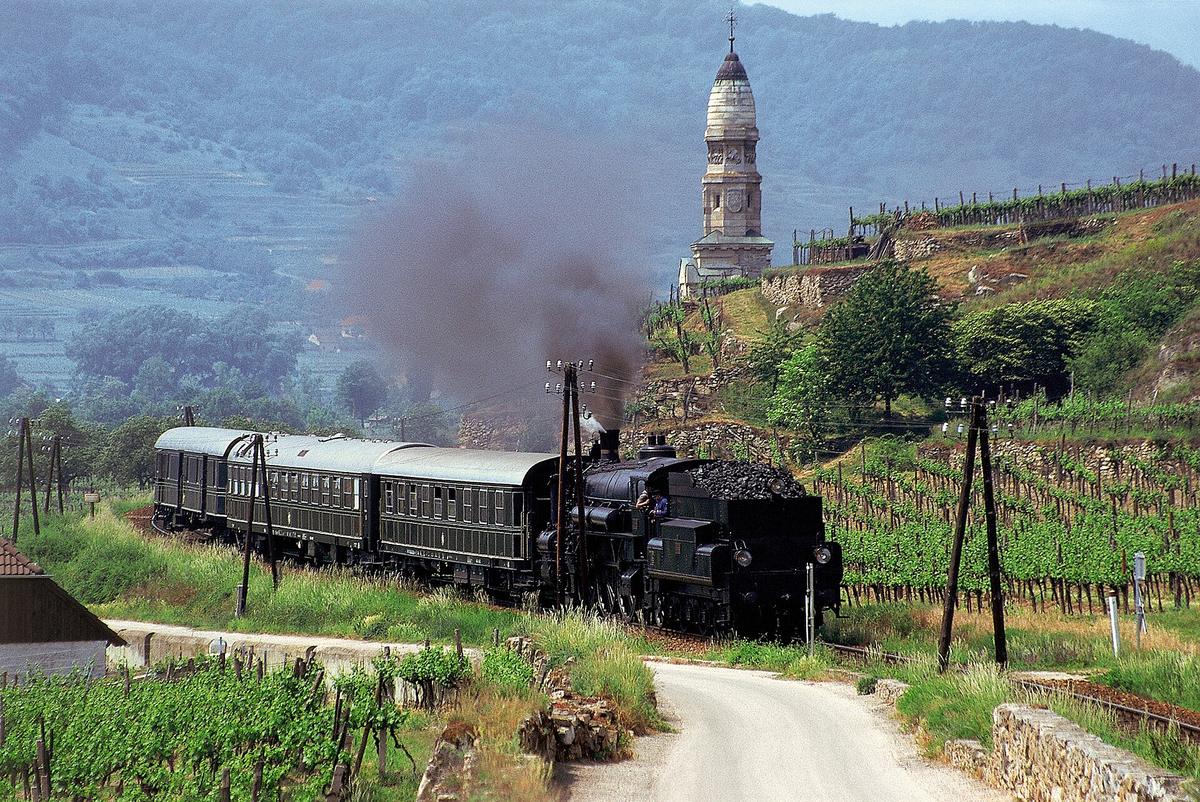

Why four bases work for a flight-free month
Central Europe rewards travellers who stay put. A single month split across four cities gives you time to learn neighbourhood rhythms, find a favourite café and still cover serious distance without ever stepping into an airport. The Czech Republic, Austria, Hungary and Poland sit inside the Schengen Area, so once you enter the region you face no passport checks at internal borders. That removes the friction that often makes multi-country trips feel rushed.
The rail network connecting these four capitals is dense and direct. You can move from Prague to Vienna, Vienna to Budapest, Budapest to Kraków and Kraków back to Prague on trains that run frequently enough to let you choose departure times that suit your pace. A one-month continuous Interrail Global Pass covers all four countries, and because the pass is valid in 33 European nations, you keep the freedom to add a day trip across a nearby border if curiosity strikes.
Slow travel here does not mean slow trains. The longest leg takes the better part of a day or an overnight sleeper, which still leaves you with three full weeks of waking hours in the cities themselves. The rhythm works because each base offers a distinct cultural register: Czech, Austrian, Hungarian and Polish. You are not chasing variety across a dozen stops; you are sinking into four places deeply enough that the differences become felt rather than ticked off a list.
Prague to Vienna on a riverside rail corridor
The first leg runs from Praha hlavní nádraží to Wien Hauptbahnhof on a direct ÖBB Railjet service that takes roughly four hours. Departures leave every two hours or so, which means you can book a mid-morning train and still arrive in central Vienna with the afternoon ahead of you. The route follows river valleys for long stretches, so a window seat on the left side heading south often rewards you with views of the Morava floodplain.
Because this is a daytime high-speed connection, a seat reservation is mandatory for Interrail pass holders. The reservation fee sits within the typical €3-€15 band that applies across the network, but the exact amount depends on the operator and the season. Before you travel, check the current reservation fee on the Interrail reservations page or directly with ÖBB. Do not assume the fee is fixed; it can shift with timetable changes.
Prague rewards a multi-day stay. You can spend mornings wandering the courtyards of Malá Strana and afternoons in Vinohrady’s quieter parks without feeling the pressure to compress everything into 48 hours. Vienna, by contrast, opens up differently when you treat it as a base rather than a stopover. A week lets you alternate between museum-heavy days and slow afternoons in the outer districts, where the city feels less like a postcard and more like a place people actually live.
Vienna to Budapest in under three hours
The Railjet or EuroCity service from Wien Hauptbahnhof to Budapest Keleti takes between 2 hours 37 minutes and 2 hours 40 minutes, with departures roughly every hour. That frequency gives you genuine flexibility. If you wake up and decide you want one more morning coffee in Vienna’s Freihausviertel, you can take a later train without derailing your plans.
Seat reservations are again required on these services for pass holders. The fee structure is set by the operating railway companies, so confirm the current cost through the Interrail reservation portal or the Hungarian operator MÁV before departure. The journey itself is short enough that the difference between a morning and an afternoon departure is more about how you spend your final hours in Vienna than about the travel experience.
Budapest rewards the slow traveller with thermal baths that make more sense when you visit them repeatedly rather than once. The city splits naturally into Buda’s hills and Pest’s flat boulevards, and a longer stay lets you cross between them at different times of day. A week here also opens up the possibility of a day trip within Hungary using your pass, though the core appeal is simply having time to let the city’s scale sink in.
Budapest to Kraków by day or night
This is the longest rail segment of the loop, and you have two direct options. The daytime EC 130 Báthory departs from Budapest-Nyugati and takes roughly 9 hours 30 minutes, running once daily. The overnight EN 476 Metropol leaves from the same station around 19:30 and arrives in Kraków Główny around 07:08 the next morning. Both trains cross northern Hungary and southern Poland through the Tatra foothills, a landscape that changes noticeably as you move from the Great Hungarian Plain into the Carpathian basin.
Choosing between them is a trade-off. The day train consumes a full waking day but spares you the cost of a night’s accommodation. The sleeper saves daylight hours and adds the experience of waking up in a new country, though a couchette or sleeper compartment costs extra and requires a reservation. Whichever you pick, confirm the current timetable and reservation requirements with MÁV or PKP Intercity before you travel. Schedules on this route are subject to seasonal adjustments and engineering works.
Kraków feels different from the three capitals that precede it. The scale is smaller, the architecture shifts from Habsburg to a mix of Gothic and Renaissance, and the city’s relationship to its Jewish quarter, Kazimierz, rewards unhurried exploration. A week here gives you time to take a local train to Wieliczka or simply to sit in Planty Park and watch the city move at its own pace.
Kraków back to Prague to close the loop
Direct trains from Kraków Główny to Praha hlavní nádraží run 9 to 10 times daily. The fastest service, operated by Leo Express, takes 5 hours 39 minutes, while ČD InterCity services take roughly 6 hours. The frequency means you can choose a departure that fits your energy level after a week of walking Kraków’s cobbled streets.
Reservation rules vary by operator on this route. Leo Express and ČD may have different policies and fee structures for Interrail pass holders, so check both the Interrail reservation portal and the operator’s own website before booking. The journey itself crosses the Czech-Polish border without passport control, a reminder of how seamless Schengen travel feels once you are inside the zone.
Returning to Prague at the end of the month creates a satisfying symmetry. You see the city with fresh eyes after three weeks in Vienna, Budapest and Kraków. The Vltava riverfront, the castle silhouette and the tram network all feel familiar but reframed by the comparisons you have unconsciously gathered. A final few days here let you revisit favourite spots and fill gaps you left at the start of the trip.
Making the rail pass work for four bases
The Interrail Global Pass one-month continuous option covers all the train journeys described here, but it does not cover seat reservations. On each of the four legs, you will need to budget for reservation fees that typically fall between €3 and €15 per train. The exact amounts depend on the route, the operator and the season. Before you commit to the pass, add up the likely reservation costs for your planned itinerary and compare the total against point-to-point tickets bought in advance. Sometimes the pass saves money; sometimes advance purchase tickets come close, especially if you book non-flexible fares.
Promotional discounts on the pass appear periodically, often in the 20-25% range. If your travel dates are flexible, waiting for a sale can reduce the upfront cost meaningfully. Check the Interrail Global Pass product page for current pricing and active promotions before you buy.
For non-EU nationals, two additional systems affect entry into the Schengen Area. The Entry/Exit System, which registers fingerprints and photographs, has been operational since 12 October 2025. ETIAS, a separate travel authorisation for visa-exempt visitors, is scheduled to launch in the last quarter of 2026 at a cost of €7, valid for three years. The exact launch date will be announced at least six months before the system goes live. If your trip falls after the ETIAS start date, factor in the application time. If it falls before, you only need to account for EES registration at your first Schengen entry point.
Pacing a month across four cities
There is no single correct way to divide 30 days among four bases, but the geography suggests a natural rhythm. Prague and Kraków bookend the trip, while Vienna and Budapest sit in the middle with the shortest rail leg between them. One approach is to allocate a full week to each city, using the remaining days as buffers for travel and for whichever place pulls you hardest. Another is to give Vienna and Budapest slightly more time because their size and cultural density reward longer immersion, while keeping Prague and Kraków at five or six days each.
The key editorial recommendation is to resist the urge to add a fifth base. The strength of this itinerary is depth, not coverage. Every extra stop shrinks the time you have to form a genuine connection with a place. If you feel restless, use the pass for a day trip from one of the four cities rather than uprooting entirely. The pass covers local and regional trains too, so a spontaneous outing to the Hungarian Danube Bend or a Moravian town from Vienna costs nothing beyond a possible small reservation fee.
Slow travel is not about seeing less. It is about seeing fewer places more completely. Four bases in a month gives you that without sacrificing the pleasure of movement that rail travel provides.
Sources and verification
- interrail.com — Research source checked for this guide
- interrail.com — Research source checked for this guide
- amsterdamtips.com — Research source checked for this guide
- interrail.com — Research source checked for this guide
- cd.cz — Research source checked for this guide
- everyrail.com — Research source checked for this guide
Common Questions
Do I need a passport to cross borders between these four countries?
No. The Czech Republic, Austria, Hungary and Poland are all full members of the Schengen Area, so there are no passport controls at internal borders. You should still carry valid identification, but you will not pass through border checks when travelling by train between these countries.
Is the Interrail pass the only ticket I need?
The pass covers your base fare on trains in all four countries, but it does not include seat reservations. On the high-speed and night trains described in this itinerary, reservations are mandatory and cost extra. You will need to book and pay for those separately.
How much should I budget for reservation fees?
Reservation fees for Interrail pass holders on international trains typically range from €3 to €15 per train, depending on the route and operator. Check the current fees on the Interrail reservations page or with the relevant national railway company before you travel, as amounts can change.
What if I am not an EU citizen?
Non-EU nationals entering the Schengen Area are subject to the Entry/Exit System, which has been operational since 12 October 2025 and involves fingerprint and photograph registration. Visa-exempt travellers will also need ETIAS authorisation once it launches, scheduled for the last quarter of 2026 at a cost of €7, valid for three years. Check the official ETIAS page for the confirmed launch date.
Can I do this trip in reverse?
Yes. The rail connections work in both directions. You can start in Kraków, Budapest, Vienna or Prague and follow the loop clockwise or counterclockwise. Train frequencies and journey times are comparable regardless of direction.
Read next
-
 The Balkans in Shoulder Season What Stays Open
A practical guide to The Balkans in Shoulder Season What Stays Open.
-
 Sarajevo to Mostar by Train and How to Plan the Rest of Your Trip
Plan Sarajevo to Mostar by train with dated rail details, station advice, ticket guidance, luggage tips, and realistic onward travel options.
-
 Krakow or Budapest for a Long Weekend
A practical guide to Krakow or Budapest for a Long Weekend.
-
 A Car Free Romania and Bulgaria Route by Train and Bus
A practical guide to A Car Free Romania and Bulgaria Route by Train and Bus.