Belgrade Sights, Riverbanks and the Splavovi Nightlife
Plan your time in Belgrade with a route from the Kalemegdan Fortress ramparts down to the Danube and Sava confluence, then onto the city's famous floating river clubs.
Belgrade Sights, Riverbanks and the Splavovi Nightlife
Kalemegdan and the splavovi are the two most obvious layers in a city where a Roman castrum, Habsburg towers, socialist housing blocks, and a floating nightlife economy coexist on the same patch of riverfront. Start at the park and walk downhill. You will cross twenty centuries in under a kilometre.
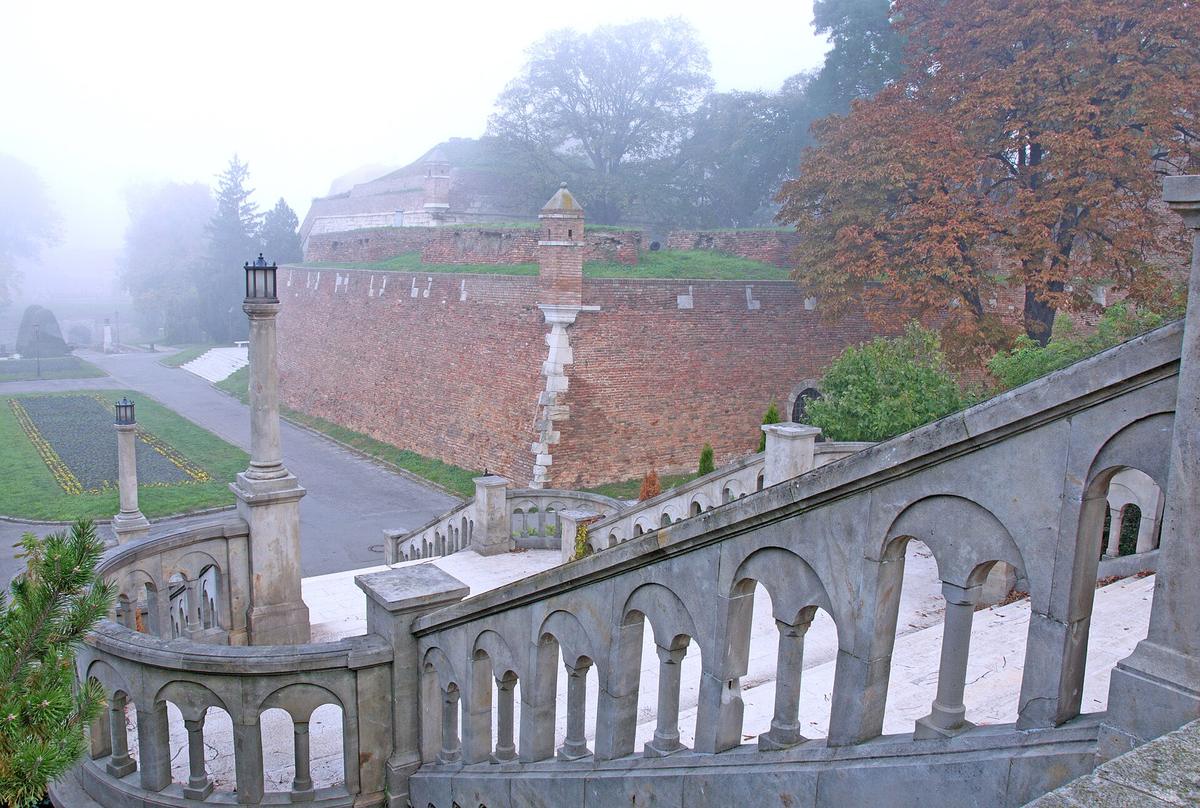
The fortress sits inside a 53-hectare park that opens at sunrise and never charges entry. The first construction phase was a Roman castrum called Singidunum in the 1st century AD; what you see now is mostly 18th-century Austrian and Ottoman additions. Skip the small paid museums inside the walls unless you have a specific interest in medieval weaponry. Walk directly to the tip of the promontory below the Victor monument, which the city installed in 1928. The monument itself is a bronze man holding a falcon and a sword. More useful is the view. From that point you see the Sava and Danube confluence, the low-slung Zemun peninsula to your left, and the concrete blocks of New Belgrade straight ahead. Arrive by 08:30 in summer. By 10:00 the ramparts flood with tour groups.
From the fortress, descend through the north gate toward the riverfront. That path puts you on the Sava promenade, a paved walkway that runs south past the bridge piers. Turn right at the Brankov Most footbridge and you reach Skadarlija in a fifteen-minute walk. Do not skip Skadarlija because it is touristy. The pedestrian cobbled section runs 400 metres from Despota Stefana Boulevard to Dušanova Street, and it contains roughly 15 traditional kafanas. The music is live brass, the waiters wear aprons, and the prices are inflated. Verify your bill. Main-season dinner prices run 40 to 60 percent higher than equivalent-quality restaurants 500 metres away in Dorćol or Vračar. Eat the grilled meat and the shopski salad here for the atmosphere, not for the value. One course and a drink, then move.

New Belgrade’s Brutalist Riverbank
Cross the Brankov Most bridge on foot to reach New Belgrade, the planned socialist district that fills the flat land between the Sava and the Danube. The difference is deliberate. On the old-city side you have 19th-century facades and kafana lanterns. On the New Belgrade side you have 20-storey concrete blocks separated by wide pedestrian plazas. The most useful building is the Genex Tower, the round 35-storey tower with a revolving restaurant that has not revolved in years. Photograph it from the riverbank at dawn. Do not try to enter.
The Splavovi: Belgrade's Floating Nightlife
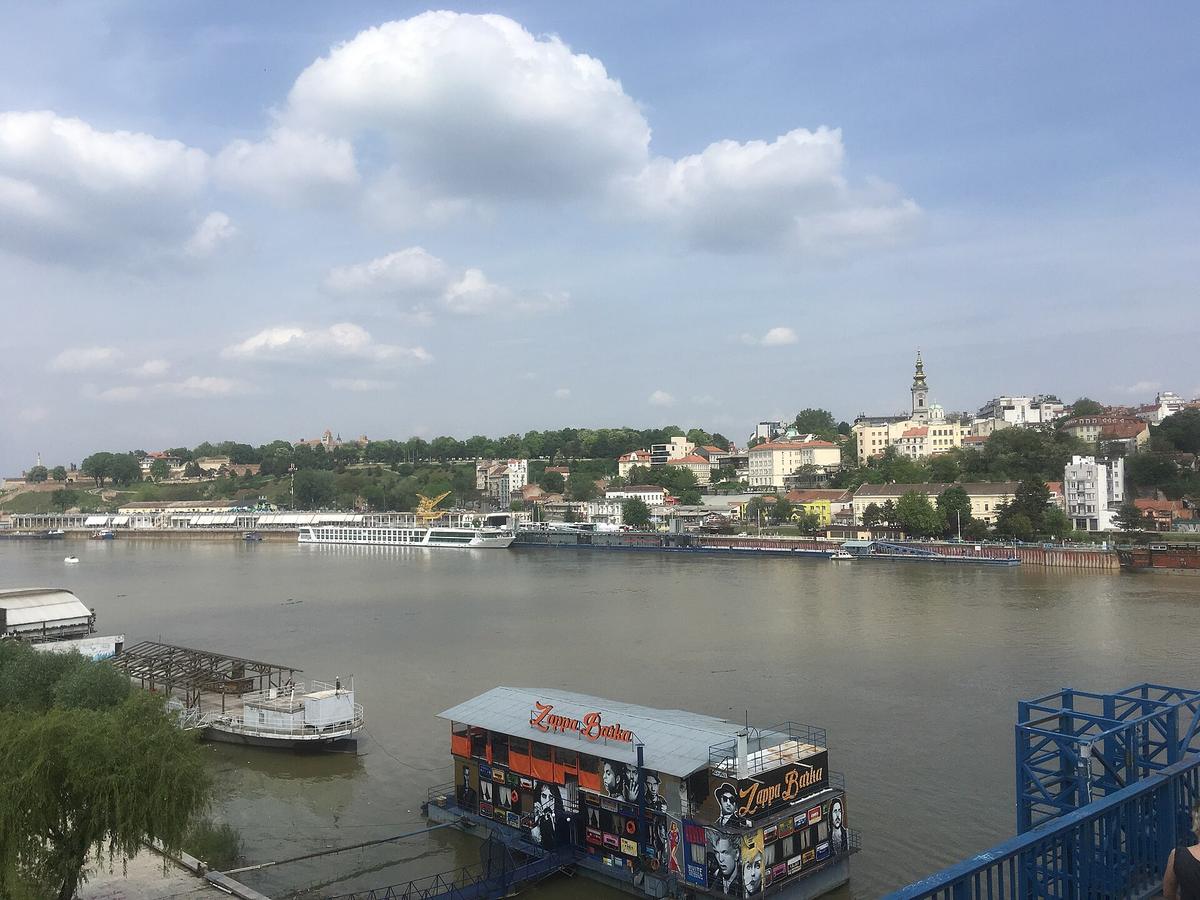
The real reason to cross the river is the splavovi on the Sava side below the Brankov and Gazela bridges. Splavovi are floating barges that operate as nightclubs and restaurants. Belgrade has about 200 of them scattered across both rivers, with roughly 30 to 40 open year-round. Entrance fees in summer 2026 run from RSD 500 to RSD 2,000. A beer costs RSD 400 to 700. The most reliable names for 2026 are 20/44 below Brankov Most, Shake 'n' Shake below Gazela Most, and Freestyler and Blaywatch on the Danube side near Zemun. Arrive before 22:00 if you want a seat on a deck rather than standing on the pier. After 01:00 the queues at 20/44 can exceed forty minutes.
The Zemun Detour
Zemun sits 6 kilometres northwest of the city centre and was a separate Habsburg town until 1934. Take bus 83 from the Zeleni Venac stop or a 15-minute taxi ride for around RSD 500. The historic core is compact and walkable: cobbled streets, a small fish market, and the Gardoš Tower built in 1896 as a Millennium Tower for the Hungarian empire. Climb the tower for a panorama of the Danube and the low islands. There is a small entry fee. From the tower you can see Freestyler and Blaywatch floating on the river below. It is the only place in Belgrade where you can photograph a 19th-century Austrian town with a nightclub barge in the same frame.
Zemun's fish restaurants on the Danube quay are the best value in the Belgrade area for grilled river fish. Skip the ones with English menus visible from the street. Walk one block inland to the family-run places where the daily catch is written on a chalkboard. A whole grilled carp with potatoes and salad costs around RSD 1,200. The standard failure is ordering it before checking if they have a fresh catch that day. Unlike Belgrade’s riverbank feasts, Tallinn’s dining scene pulls you away from ferry crowds into medieval courtyards where the old town gives way to quiet neighborhood kitchens.
| Sight | Entry Fee (2026) | Time Needed | Best For |
|---|---|---|---|
| Kalemegdan Fortress | Free (park); paid museums RSD 300-500 | 90 minutes | Viewpoint and Roman layers |
| Nikola Tesla Museum | RSD 800 guided tour | 60-75 minutes | Original equipment and ashes |
| Gardoš Tower | Small entry fee | 30 minutes | Danube panorama from Habsburg tower |

The Tesla Museum and Why You Book Ahead
The Nikola Tesla Museum at Krunska 51 holds roughly 160,000 original documents, 2,000 books and journals, and 1,200 historical technical exhibits. The urn containing Tesla's ashes arrived in 1957. The entry fee in 2026 is RSD 800, and that includes a guided tour on the hour in either Serbian or English. Summer hours from April through October are Tuesday to Sunday 10:00 to 18:00; winter hours from November through March are 10:00 to 17:00. The museum is closed Mondays.
This is the most popular museum in the country and it is small. The entire exhibition space holds maybe 30 visitors at a time. In peak summer the 10:00 English tour sells out by 09:30. Book online 48 hours ahead if you can. If it is sold out, the Museum of Vuk and Dositej near Studentski Trg costs RSD 200 and covers the Serbian literary revival with almost no queue.
What Things Cost in Belgrade
The cost level across the city is low. The average monthly net salary in Belgrade in 2025 was RSD 97,435. Compare that to a beer at RSD 280 to 450 in a regular bar, espresso at RSD 180 to 320, a single public-transport ticket for 90 minutes at RSD 89, and a taxi start fee of RSD 270 with RSD 96 to 130 per kilometre. Numbeo's Cost of Living Index for mid-2026 rated Belgrade the lowest-cost European capital of comparable size. That does not mean everything is cheap. It means you can afford to eat well and go out without checking your budget.
Common Questions
How do I get from Kalemegdan to the splavovi area?
Walk down the north ramp from the fortress to the Sava promenade, then cross the Brankov Most footbridge. The promenade continues under the bridge on the New Belgrade side, where splavovi like 20/44 are moored. The walk takes 20 minutes.
Is the Nikola Tesla Museum worth it if I do not know his work?
Yes. The guided tour demonstrates the rotating magnetic field with working models. You see the actual equipment. The urn in the main hall is presented without commentary. Expect 60 minutes, not a full afternoon.
How do I avoid the tourist prices in Skadarlija?
Eat one course and a drink for the atmosphere, then walk 500 metres east to Dorćol for the main meal. The same grilled meat and salad cost 40 to 60 percent less. Verify your bill either way.
What happens if the splav is full or the weather is bad?
The year-round barges like 20/44 and Shake 'n' Shake have indoor decks. If the queue exceeds 30 minutes, walk to Freestyler on the Danube Zemun side. It is larger and usually has space. Rain cancels the outdoor decks entirely.
Read next
-
 Serbia Travel Guide: Belgrade Nightlife, the Vojvodina North and the Overlooked South
Serbia runs from Belgrade's floating river clubs through Novi Sad's Austro-Hungarian squares to the skull tower and rock formations of the overlooked south.
Serbia Travel Guide: Belgrade Nightlife, the Vojvodina North and the Overlooked South
Serbia runs from Belgrade's floating river clubs through Novi Sad's Austro-Hungarian squares to the skull tower and rock formations of the overlooked south.
-
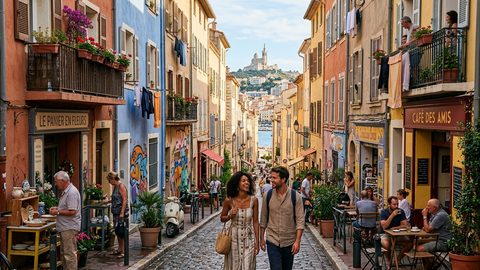 A Week in Marseille Beyond the Vieux-Port — Neighborhoods Worth Knowing
Most visitors never leave the harbor. This guide covers four Marseille neighborhoods worth a week of your time, with real prices from spring 2024.
A Week in Marseille Beyond the Vieux-Port — Neighborhoods Worth Knowing
Most visitors never leave the harbor. This guide covers four Marseille neighborhoods worth a week of your time, with real prices from spring 2024.
-
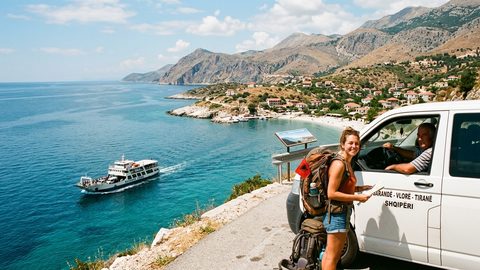 Albania by Furgon and Coastal Ferry for Independent Travelers
A practical overland guide to Albania by local furgon and Adriatic ferry — real logistics on stations, small-town accommodation, and staying connected.
Albania by Furgon and Coastal Ferry for Independent Travelers
A practical overland guide to Albania by local furgon and Adriatic ferry — real logistics on stations, small-town accommodation, and staying connected.